
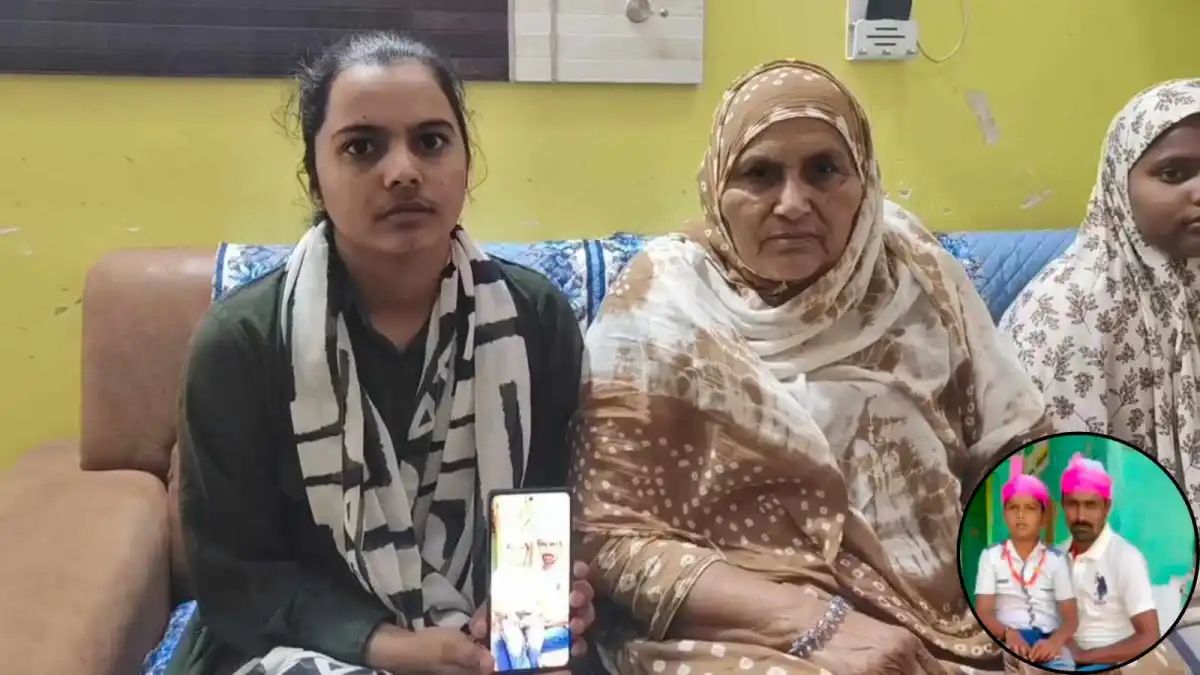
A court in Gujarat’s Surendranagar district has rejected a police closure report concerning the deaths of a wanted criminal and his minor son during a police operation in 2021, directing that a criminal case be registered against seven police personnel.
The order marks a significant development in a case that has remained under scrutiny over allegations surrounding the circumstances in which the two victims were killed. The court’s decision came after the wife of the deceased challenged the investigation’s conclusion and questioned the findings submitted by the Special Investigation Team (SIT).
Judicial Magistrate First Class KP Sharma, in an order issued on July 18, allowed a petition filed by Sohanaben, the wife of deceased Hanif Khan Malek. She had sought the rejection of the C-summary report submitted in the case involving seven police personnel.
A C-summary report is generally submitted by investigators when they conclude that a complaint cannot be treated as either completely true or completely false. In this case, however, the court declined to accept the closure report and ordered further criminal proceedings against the police personnel named in the case.
The court directed that a criminal case be registered against the seven policemen under Sections 302 and 114 of the Indian Penal Code. Summons were also issued to the accused police personnel, requiring them to appear before the court on August 8.
2021 Police Operation Under Scrutiny
The case dates back to November 6, 2021, when the incident took place in Gedia village in Dasada taluka of Surendranagar district.
According to the police version of events, a team had gone to arrest Hanif Khan Malek, who was described as a wanted criminal. During the operation, the police claimed that they came under attack from a mob and opened fire in response.
The police action resulted in the deaths of Malek and his minor son.
However, the family’s account of the incident differed sharply from the police narrative. The petitioner’s side alleged that the police personnel had opened fire without provocation while attempting to arrest Malek. According to this version, two rounds were allegedly fired indiscriminately, resulting in the deaths of both the father and his minor son.
The allegations raised questions about whether the firing was genuinely carried out in self-defence, as claimed by the police, or whether the circumstances of the deaths required a criminal investigation.
The family’s lawyer, Punit Dave, argued that the incident had initially been presented as a genuine police encounter and that repeated efforts to have a criminal case registered against the police personnel did not result in an FIR at the time.
FIR Registered After Court Intervention
The legal proceedings took a significant turn in May 2025, when an FIR was registered against seven police personnel following an order from the court.
After the FIR was registered, a Special Investigation Team was constituted to investigate the circumstances surrounding the deaths. The SIT was headed by JD Purohit, who was then serving as Deputy Superintendent of Police in Dhangadhra.
The investigation, however, concluded with the submission of a C-summary report. The report was filed approximately two months after the FIR was registered.
The deceased man’s wife challenged the SIT’s findings before the court, arguing that the closure report should not be accepted. Her petition alleged that the report effectively protected the police personnel accused in the case and failed to properly account for evidence relevant to the deaths. 
Court Examines Forensic and Eyewitness Evidence
During the proceedings, the petitioner’s side placed before the court evidence that included statements from eyewitnesses who were allegedly present when the incident took place, along with a report from the Forensic Science Laboratory (FSL).
According to the petitioner’s lawyer, the court examined both the eyewitness accounts and the forensic findings before deciding to reject the C-summary report.
The lawyer further claimed that the evidence available in the case did not support the police version that the firing had been carried out in self-defence.
The role of forensic evidence is particularly significant in cases involving alleged police encounters because scientific findings can help establish the sequence of events, the nature and direction of firing, and other circumstances surrounding a shooting. Eyewitness testimony can also be important in determining whether the official account of an incident is consistent with what witnesses observed.
In this case, the court’s consideration of the FSL report and eyewitness statements ultimately led to the rejection of the closure report submitted by the investigating agency.
Seven Police Personnel Face Criminal Proceedings
The court’s order applies to seven police personnel, including police sub-inspector VN Jadeja.
With the C-summary report rejected, the accused police personnel will now face criminal proceedings in connection with the deaths of Hanif Khan Malek and his minor son.
The court has summoned the seven accused and directed them to appear on August 8. The proceedings will determine the next legal steps in the case and provide an opportunity for the allegations and evidence to be examined through the judicial process.
The court’s decision does not by itself establish the guilt of the accused police personnel. The allegations will have to be tested during the criminal proceedings, and the accused will remain entitled to all legal protections available under the law.
Case Raises Questions Over Police Encounters and Accountability
The development has renewed attention on the issue of police accountability in cases involving deaths during law-enforcement operations.
Police encounters and use-of-force incidents often involve competing versions of events, particularly when the victims are alleged to have been involved in criminal activities. While police personnel are legally permitted to use force in circumstances where it is necessary and justified, the circumstances surrounding deaths during police action remain subject to investigation and judicial scrutiny.
The Surendranagar case is notable because the court has declined to accept the investigating agency’s closure report after considering evidence presented by the complainant’s side. The decision means that the allegations against the seven police personnel will now proceed through the criminal justice system.
The case also highlights the importance of independent investigations, forensic examination and eyewitness testimony in determining what happened during disputed police operations. The eventual outcome will depend on the evidence presented before the court and the findings reached during the judicial proceedings.
For the family of the deceased, the court’s decision represents a further step in their effort to seek a formal examination of the circumstances surrounding the deaths. For the accused police personnel, the proceedings will provide an opportunity to respond to the allegations and contest the evidence against them.
The next significant development is expected when the seven police personnel appear before the court on August 8.