
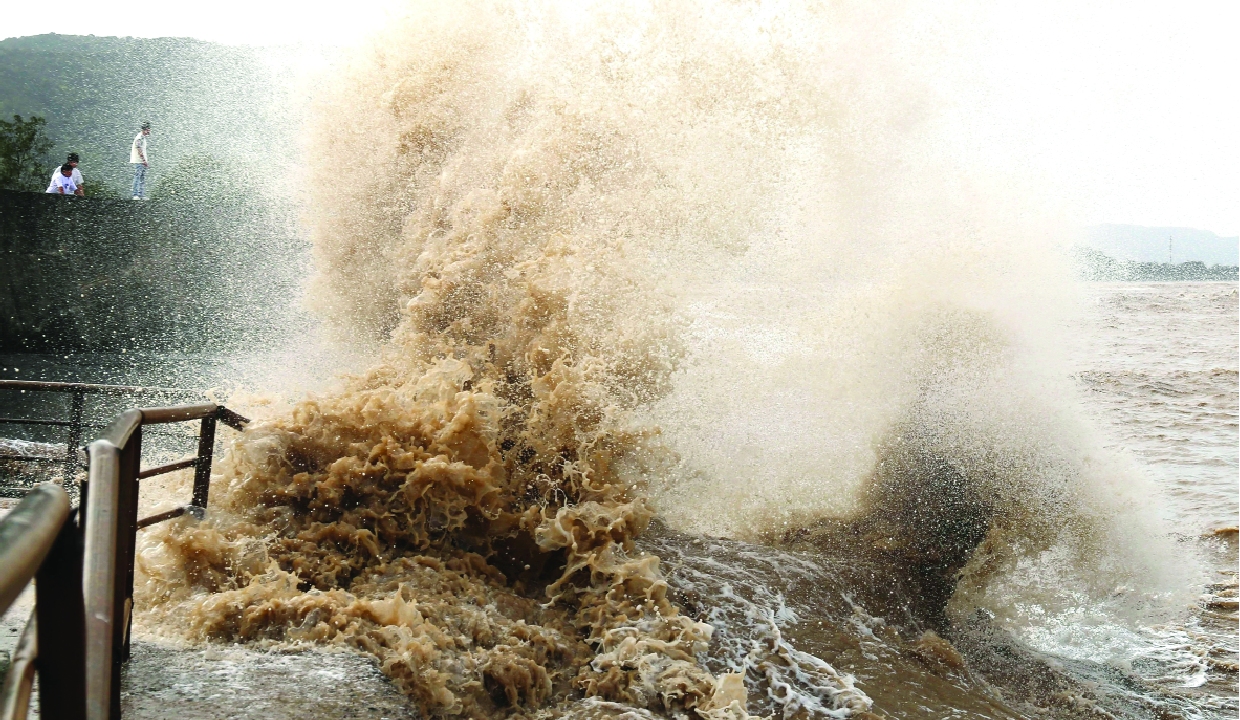
Typhoon Bavi has weakened after making landfall on China’s eastern coast, but authorities have warned that the storm continues to pose a serious threat as heavy rainfall, powerful winds, and flood risks affect several provinces. While the cyclone has lost some of its intensity, weather experts say the large amount of moisture it carries could still trigger dangerous flooding, landslides, and widespread disruptions in the coming days.
The storm made landfall along the eastern coastline before gradually weakening into a tropical storm as it moved inland. Despite the reduction in wind speed, officials stressed that heavy rainfall remains the greatest concern, particularly in areas already vulnerable to flooding and waterlogging.
Mass Evacuations Across Affected Regions
Chinese authorities launched extensive emergency operations ahead of the storm’s arrival to reduce the risk to life and property. More than 2.2 million people were evacuated from Zhejiang Province as a precaution.
In Shanghai, around 290,000 residents living in flood-prone and low-lying areas were relocated to safer shelters before the storm reached the region. Authorities in Fujian Province also evacuated more than 180,000 people, while emergency teams were deployed across coastal areas to respond quickly to any weather-related incidents.
The large-scale evacuations reflect the government’s efforts to minimize casualties and prepare for the impact of the storm.
Heavy Rainfall Remains the Biggest Threat
Although Typhoon Bavi has weakened, meteorologists have warned that it continues to carry significant amounts of moisture capable of producing torrential rain across eastern China.
Several provinces, including Zhejiang, Anhui, Fujian, Jiangsu, Jiangxi, and Shandong, are expected to experience heavy to very heavy rainfall. Authorities have warned that prolonged rain could lead to flash floods, overflowing rivers, urban flooding, and landslides in mountainous regions.
Emergency management agencies are closely monitoring water levels in rivers and reservoirs while local governments remain on high alert. 
Travel and Infrastructure Disrupted
The severe weather has caused widespread disruption to transportation and public infrastructure.
In Zhejiang Province, powerful winds uprooted more than 1,300 trees, blocking roads and affecting local traffic. Cleanup operations began immediately after conditions became safe enough for emergency crews to respond.
Air travel was also heavily impacted, with hundreds of domestic and international flights canceled or delayed at Shanghai’s major airports due to strong winds and poor weather conditions. Railway services and ferry operations in several coastal areas also experienced disruptions as authorities prioritized passenger safety.
Taiwan Also Felt the Storm’s Impact
Before reaching mainland China, Typhoon Bavi passed close to Taiwan, bringing strong winds and heavy rain across the island.
Officials reported that at least 134 people were injured, most of them in weather-related accidents caused by strong gusts, slippery roads, and falling objects. Although the storm did not make a direct landfall in Taiwan, it still caused significant disruption before moving toward mainland China.
Storm Expected to Continue Weakening
Weather agencies forecast that Typhoon Bavi will continue to weaken as it moves farther inland. However, experts caution that the danger is far from over, as the storm’s slow movement and widespread rain bands could continue producing intense rainfall over the next several days.
Flood-prone communities remain at particular risk because continuous rainfall may saturate the ground, increasing the likelihood of landslides and river flooding even after the storm loses further strength.
Authorities Urge Public to Remain Alert
Emergency officials have urged residents in affected regions to remain vigilant, follow official weather advisories, avoid flooded roads, and stay indoors during periods of severe weather.
Rescue teams remain on standby, while local governments continue to monitor the evolving situation and coordinate relief efforts wherever necessary. Authorities have emphasized that even a weakened tropical storm can cause significant damage through flooding and heavy rainfall, making public caution essential until weather conditions fully improve.