
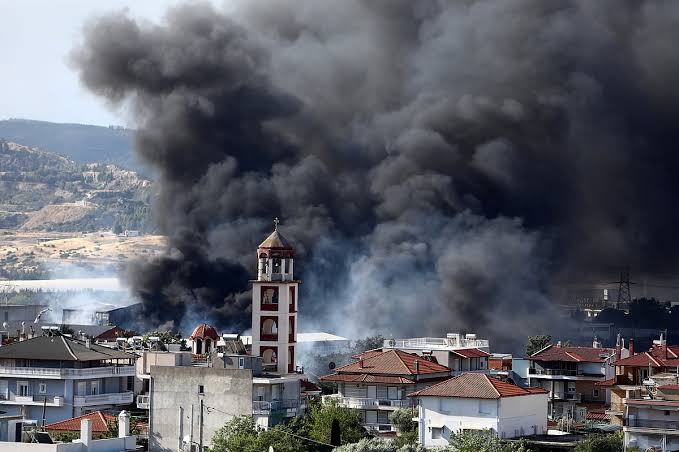
Widespread wildfires intensified across Southern Europe, engulfing large forested regions in Greece, Portugal, and Spain, as soaring temperatures and dry winds continue to fuel dangerous fire conditions. Authorities across the region have issued urgent health warnings after dense plumes of smoke spread across populated areas, raising concerns over air quality and public safety.
Fire crews have been battling multiple active fronts for days, with rapidly shifting winds complicating containment efforts. In several regions, residents were forced to evacuate their homes as flames advanced toward villages, agricultural land, and tourist zones. Emergency services remain on high alert as fire behavior remains unpredictable due to extreme heat and prolonged drought conditions.
Meteorological agencies have linked the severity of the fires to an extended period of heatwaves and below-average rainfall, which have left vegetation extremely dry and highly flammable. Strong winds in some areas have further accelerated the spread, creating fast-moving fire lines that are difficult to control even with aerial firefighting support.
In Greece, authorities reported several hotspots near forested hills and coastal communities, prompting precautionary evacuations and temporary road closures. Firefighters, supported by aircraft, have been working continuously to prevent flames from reaching densely populated zones and critical infrastructure.
Portugal is also facing significant fire pressure, particularly in inland rural regions where high temperatures have persisted for days. Fire services have deployed additional resources to contain multiple ignition points, while civil protection agencies have warned residents to remain vigilant and avoid unnecessary travel in affected areas.
Spain has similarly reported multiple wildfire outbreaks across several autonomous communities, with emergency units stretched as they respond to simultaneous incidents. Officials have urged the public to follow evacuation instructions promptly and adhere to fire safety advisories as smoke drifts across wider regions, affecting air quality in both rural and urban centers.
Health authorities across all three countries have cautioned vulnerable groups—including children, the elderly, and those with respiratory conditions—to limit outdoor exposure due to hazardous levels of airborne particles. Hospitals in affected regions have reported increased cases of respiratory discomfort linked to smoke inhalation.
Experts warn that the increasing frequency and intensity of such wildfires highlight the growing impact of climate change on Southern Europe’s ecosystems. Prolonged heatwaves, combined with changing rainfall patterns, are creating conditions that significantly elevate wildfire risks during the summer months.
Firefighting agencies across the region continue to coordinate cross-border support, sharing aerial resources and personnel in an effort to contain the spread. However, officials acknowledge that fully controlling the situation will depend heavily on weather changes, particularly reductions in wind speed and temperature.
As containment efforts continue, authorities remain focused on protecting lives, minimizing structural damage, and preventing further environmental loss in one of Europe’s most fire-prone summer periods.