
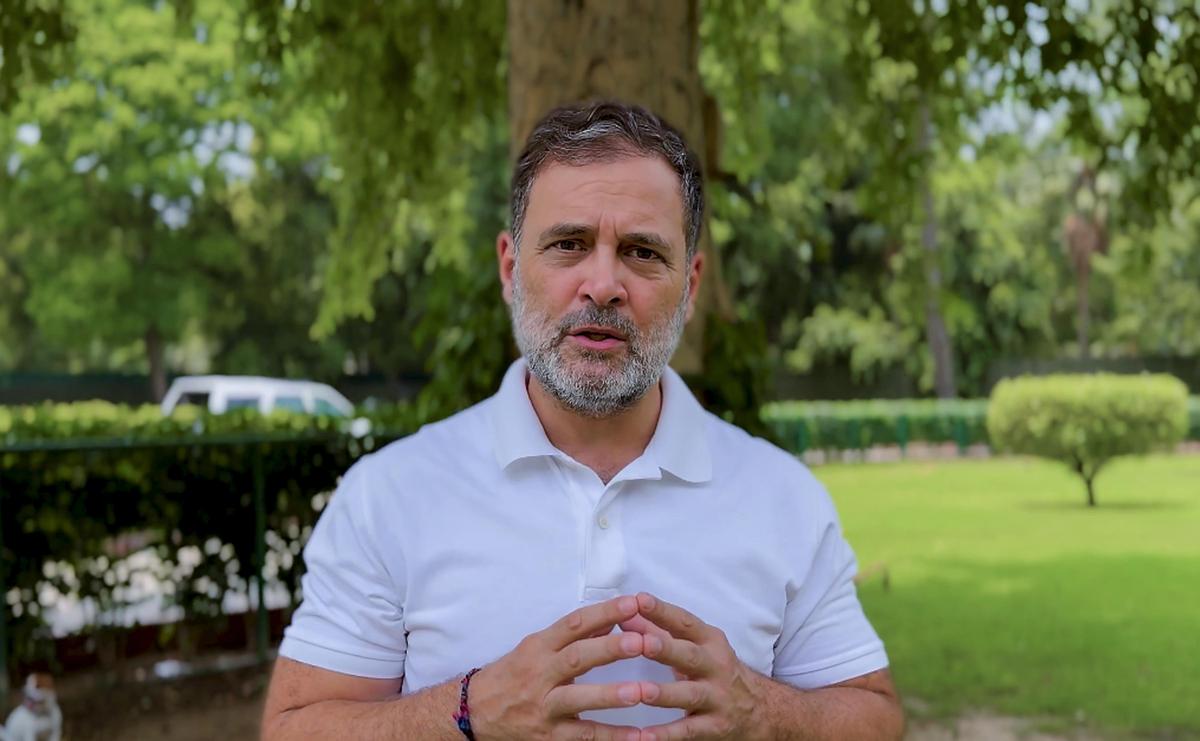
Senior political leader Rahul Gandhi has raised strong concerns over what he described as the “systematic strangulation” of micro, small and medium enterprises (MSMEs) in India, alleging that existing transport regulations are placing disproportionate pressure on small manufacturers, particularly those engaged in bus and truck body building.
In a sharply worded critique of regulatory frameworks governing the transport and automotive support sectors, he argued that small-scale industrial units are struggling to survive under a growing burden of compliance requirements, licensing procedures, and operational restrictions. According to him, these challenges are not isolated but part of a broader structural issue affecting India’s grassroots manufacturing ecosystem.
Concerns Over MSME Survival
Highlighting the importance of MSMEs as a backbone of employment generation and local industrial development, he stated that the sector is facing increasing financial and administrative stress. He alleged that policy implementation in the transport domain has become overly complex, making it difficult for small entrepreneurs to compete with larger, more resourceful firms.
He claimed that instead of enabling growth, current regulations are inadvertently pushing small bus and truck body builders into a survival crisis. Many of these businesses, often family-run or locally operated workshops, reportedly operate on thin margins and are highly sensitive to delays, compliance costs, and shifting regulatory standards.
Impact on Bus and Truck Body Builders
A major focus of the criticism is the niche but vital segment of bus and truck body manufacturing units. These workshops are responsible for custom-building and modifying commercial vehicle bodies based on transport needs, especially for regional and rural operations.
According to the concerns raised, frequent regulatory updates, inspection requirements, and approval processes have created bottlenecks for these units. Small operators allegedly struggle to keep up with evolving standards, which require technical upgrades, documentation, and certification processes that may not be financially feasible for micro enterprises.
The situation, he argued, is resulting in delayed production cycles, reduced competitiveness, and in some cases, shutdowns of small workshops that cannot absorb compliance-related costs. 
Broader Economic Implications
The criticism extends beyond individual businesses to the larger economic implications for India’s manufacturing and employment landscape. MSMEs collectively contribute significantly to industrial output and are among the largest sources of non-agricultural employment in the country.
He suggested that when regulatory frameworks become excessively complex or cost-heavy, the impact is disproportionately felt by smaller units rather than large corporations that have dedicated compliance departments and greater financial resilience.
This imbalance, he argued, could widen the gap between large-scale industrial players and small entrepreneurs, potentially weakening the diversity of India’s manufacturing base.
Call for Policy Reassessment
The remarks also included a call for a comprehensive reassessment of transport-related industrial policies. He urged policymakers to simplify compliance procedures, reduce bureaucratic delays, and design regulations that are sensitive to the operational realities of small enterprises.
He emphasized the need for a “pro-MSME policy approach” that supports innovation and entrepreneurship rather than restricting them through procedural complexity. According to his argument, regulatory reform should focus on enabling ease of doing business at the grassroots level, especially in sectors tied to essential services like transport.
Political and Policy Context
The statement comes amid ongoing national debates around industrial regulation, job creation, and the competitiveness of India’s small-scale manufacturing sector. MSME performance has frequently been cited as a key indicator of economic resilience, particularly in the context of global supply chain shifts and domestic employment needs.
Transport manufacturing, including vehicle body building, plays a crucial role in supporting logistics, public transport systems, and regional mobility infrastructure. Any slowdown in this sector, stakeholders argue, can have cascading effects on transportation costs and availability.
Conclusion
The remarks underscore a growing political focus on the challenges faced by MSMEs in India’s evolving regulatory environment. While the government has repeatedly emphasized reforms aimed at improving ease of doing business, concerns persist among critics that compliance burdens continue to affect smaller industrial players more severely than larger enterprises.
As the debate over regulatory balance continues, the future of small-scale transport manufacturing remains closely tied to how effectively policy frameworks can reconcile safety, standardization, and economic inclusivity.