
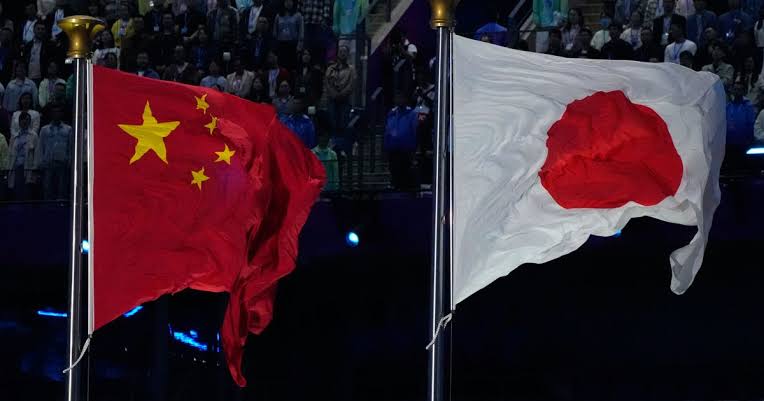
China has introduced sweeping export control measures targeting 40 entities linked to Japan, marking a significant escalation in already strained relations between the two East Asian powers. The move is expected to tighten restrictions on the flow of sensitive goods, technologies, and dual-use materials, further complicating an already fragile economic and diplomatic relationship.
The decision comes at a time when geopolitical tensions between Beijing and Tokyo have been steadily rising over a range of issues, including security alignments in the Indo-Pacific region, maritime disputes, and competing strategic interests in advanced technology supply chains.
Strategic Export Controls Signal Heightened Economic Pressure
The newly announced controls are widely seen as part of China’s broader strategy to regulate exports of materials and technologies deemed sensitive to national security or strategic industries. While details of the affected entities have not been fully disclosed publicly, such measures typically involve restrictions on high-tech components, critical minerals, and dual-use equipment that can serve both civilian and military purposes.
Analysts suggest that the inclusion of 40 Japanese-linked entities represents a notable expansion in the scope of China’s export control regime. It also underscores Beijing’s willingness to leverage its dominance in global supply chains as a tool of economic statecraft. 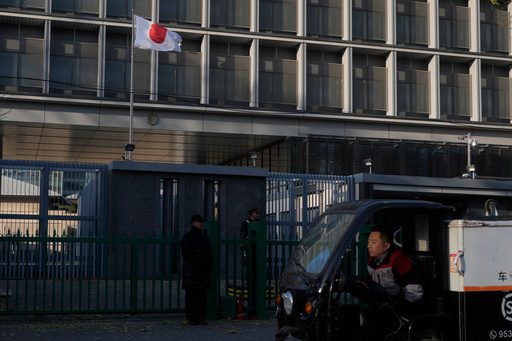
Rising Diplomatic Friction Between Beijing and Tokyo
The decision is unfolding against a backdrop of increasingly strained relations between China and Japan. In recent years, both nations have expressed concerns over each other’s military posturing and growing alignment with rival global powers.
Japan’s deepening security cooperation with the United States and participation in regional defense initiatives has been viewed cautiously in Beijing. At the same time, Tokyo has raised concerns over China’s expanding military presence in disputed maritime areas and its assertive regional policies.
The latest export restrictions are expected to further strain diplomatic communication channels and could prompt retaliatory or counterbalancing measures from Tokyo, depending on the scope and enforcement of the controls.
Potential Impact on Technology and Supply Chains
Japan remains a key global player in advanced manufacturing, semiconductors, precision engineering, and high-end electronics. Any disruption in export channels between China and Japanese-linked entities could have ripple effects across global supply chains.
Companies operating in sectors such as automotive production, robotics, telecommunications, and semiconductor manufacturing may face heightened compliance burdens and operational uncertainty. Even indirect exposure to restricted supply chains could result in delays or increased costs for multinational firms.
Experts warn that continued escalation in export controls and trade restrictions could accelerate supply chain diversification, with companies seeking to reduce dependency on politically sensitive trade routes.
Broader Implications for Regional Stability
The latest development highlights the growing intersection of trade policy and geopolitical rivalry in East Asia. Export controls, once primarily technical regulatory tools, are increasingly being used as instruments of strategic competition between major economies.
Observers note that such measures risk contributing to a cycle of reciprocal restrictions, potentially destabilizing trade flows in one of the world’s most economically interconnected regions.
As both China and Japan navigate a complex mix of economic interdependence and strategic rivalry, the outlook for bilateral relations remains uncertain. Diplomatic engagement will likely play a crucial role in preventing further escalation.
For now, the imposition of export controls on 40 Japanese entities marks another step in a steadily intensifying economic and geopolitical contest between the two nations.