
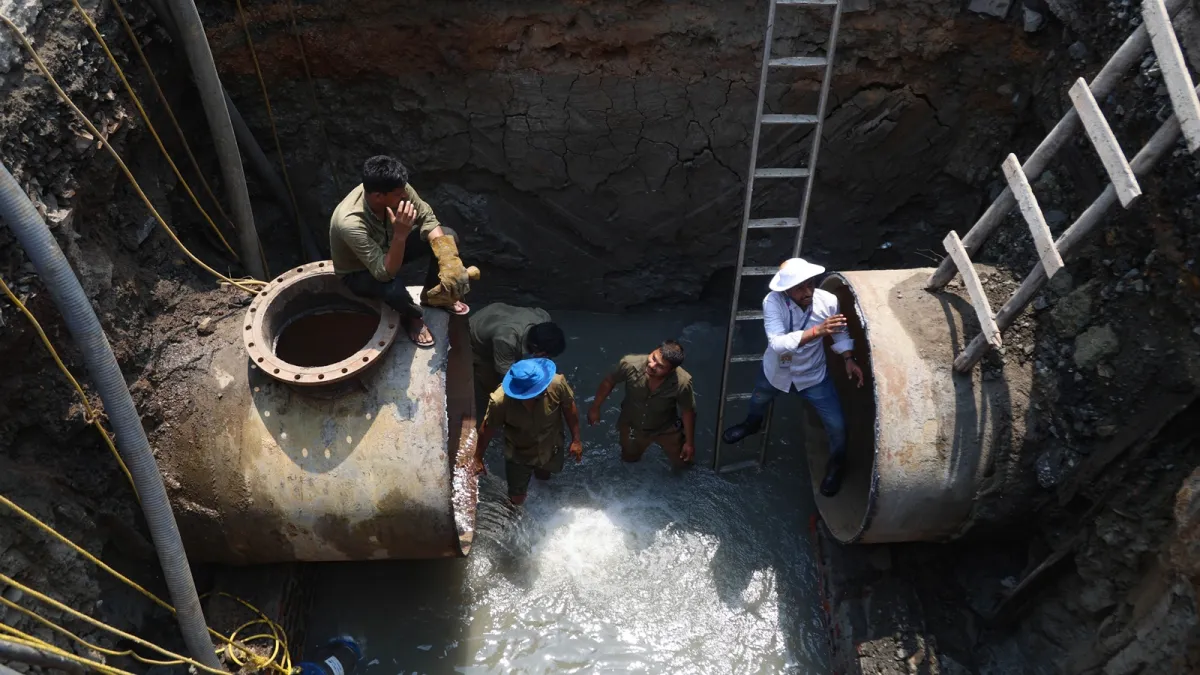
Mumbai’s water supply system is facing mounting pressure despite the arrival of the monsoon season, raising concerns about water availability for millions of residents across the city. While seasonal rains have provided some relief, officials continue to closely monitor reservoir levels, which remain below the desired benchmarks needed to ensure uninterrupted water distribution throughout the year.
The city’s drinking water needs are primarily met through a network of reservoirs located in surrounding districts. These lakes and dams collectively supply water to households, commercial establishments, and industries across the financial capital. However, uneven rainfall patterns and delayed replenishment of key reservoirs have created uncertainty over the adequacy of water reserves for the coming months.
Reservoir Storage Still Below Comfortable Levels
Although the monsoon has become active across several parts of Maharashtra, the cumulative water stock in Mumbai’s reservoir system has not yet reached levels that would eliminate concerns about future shortages. Authorities have noted that while inflows have improved compared to the pre-monsoon period, storage volumes remain lower than what is typically considered comfortable for this stage of the season.
Water experts point out that reservoir replenishment depends not only on rainfall over the city but also on precipitation in the catchment areas feeding the lakes. In some regions, rainfall distribution has been inconsistent, limiting the pace at which reservoirs can recover.
The city’s water management agencies continue to track inflows on a daily basis to assess whether additional conservation measures may be required if rainfall remains below expectations.
Areas Most Vulnerable to Supply Disruptions
Should reservoir levels fail to improve significantly in the coming weeks, residents in several parts of Mumbai could experience the effects through reduced water pressure, shorter supply durations, or precautionary water cuts.
Typically, neighborhoods located at higher elevations or those situated at the far end of distribution networks are more vulnerable during periods of water stress. Rapidly growing residential zones, where demand has increased substantially in recent years, may also face challenges if supply restrictions become necessary.
Commercial establishments, small businesses, and industrial users could also be impacted if authorities prioritize household consumption to safeguard essential drinking water requirements. 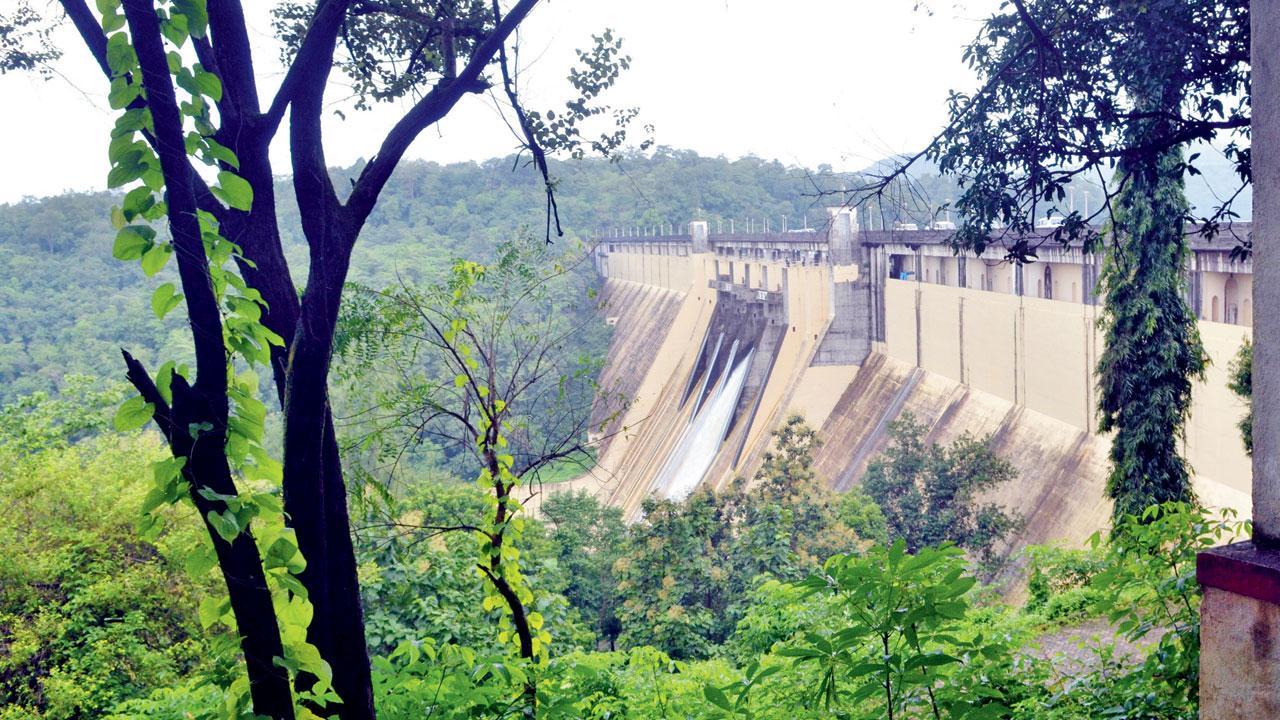
Growing Demand Adds to the Challenge
Mumbai’s water demand continues to rise due to population growth, urban expansion, and increasing commercial activity. Infrastructure planners have long warned that balancing supply and demand will become progressively more difficult without significant investments in new water sources, conservation initiatives, and distribution upgrades.
The challenge becomes particularly pronounced during years when reservoir replenishment is slower than expected. Even moderate deficits in storage levels can have significant consequences for a densely populated metropolis that relies heavily on a limited number of water sources.
Experts emphasize that efficient water management, leak reduction, rainwater harvesting, and responsible consumption are becoming increasingly important components of the city’s long-term water security strategy.
Authorities Monitoring Situation Closely
Municipal officials have assured residents that the situation remains under constant review and that contingency plans are in place should reservoir levels fail to improve. Water supply departments are regularly assessing rainfall trends, reservoir inflows, and projected consumption patterns to determine whether any restrictions may be required.
The coming weeks are expected to be crucial. Strong and sustained rainfall across the reservoir catchment regions could significantly improve storage levels and ease concerns. Conversely, weaker-than-normal precipitation could force authorities to consider additional conservation measures to preserve available reserves.
Importance of Catchment Rainfall
Meteorologists note that rainfall within reservoir catchment areas is often a more important indicator of future water availability than rainfall recorded within the city itself. Heavy showers over the reservoirs and their surrounding watersheds can rapidly increase storage volumes, while abundant rain in urban areas may have limited impact on drinking water reserves.
As the monsoon progresses, both civic officials and residents will be watching reservoir data closely. The extent to which these water bodies are replenished over the next several weeks will play a decisive role in determining whether Mumbai can avoid supply constraints during the remainder of the year.
Outlook for the Season
For now, the city’s water situation remains manageable but uncertain. Continued monsoon activity offers hope for substantial improvement, yet authorities remain cautious due to the gap between current reservoir levels and the volumes required for long-term security.
The performance of the monsoon during the peak rainfall months will ultimately determine whether Mumbai can comfortably meet its water needs or whether precautionary measures become necessary to safeguard supplies for its millions of residents.