
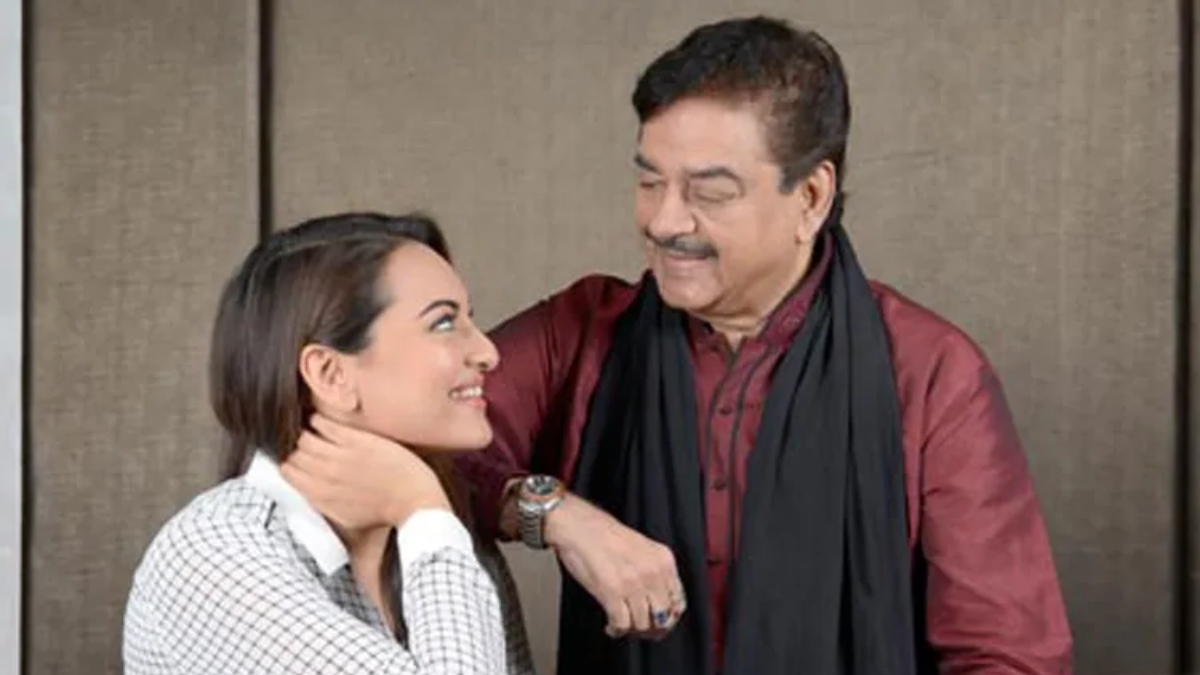
Bollywood actor Sonakshi Sinha has candidly spoken about her early struggles in the film industry, revealing that despite being the daughter of veteran actor and politician Shatrughan Sinha, she did not receive the kind of backing commonly associated with star children. Instead, she described her experience as “reverse nepotism,” explaining how her father intentionally chose not to intervene in her professional journey.
The actor, who is currently promoting her upcoming project System, reflected on the challenges she faced while establishing herself in Bollywood. According to Sonakshi, her father strongly believed that she should earn opportunities through merit rather than family connections. As a result, he never personally approached filmmakers, producers, or directors to secure roles for her.
Speaking about her early years in the industry, Sonakshi shared that her father’s approach was rooted in discipline and self-reliance. She said he wanted her to understand the value of hard work and perseverance instead of depending on his reputation or influence. The actor noted that while many assume star kids automatically receive an easier path in cinema, her own experience was significantly different.
Sonakshi explained that her father maintained a clear distance from her professional decisions and deliberately avoided interfering in her career trajectory. This meant she had to navigate auditions, networking, and the competitive nature of the entertainment industry largely on her own. She indicated that although his guidance and emotional support were always present, professional intervention was not part of the equation. 
The actor’s remarks arrive amid the continuing debate around nepotism in Bollywood, a discussion that has remained highly polarizing over the years. Star children are often accused of benefiting from privileged access, while outsiders argue they struggle to receive equal opportunities. Sonakshi’s comments add another dimension to the conversation by highlighting that not every industry insider experiences the same level of support.
Over the years, Sonakshi has frequently addressed the insider-versus-outsider debate with a balanced perspective. She has previously stated that while having a film background may open certain doors, sustaining a career ultimately depends on audience acceptance, performance, and consistency. She has also argued that rejections and professional setbacks are common for everyone in the industry, regardless of lineage.
The actor first entered Bollywood with the blockbuster film Dabangg opposite Salman Khan, quickly becoming one of the most recognizable faces in mainstream Hindi cinema. Despite the commercial success of her debut, Sonakshi revealed that maintaining momentum in the industry required relentless effort and long working hours. Recent interviews have also seen her discussing professional burnout and the pressures that defined much of her twenties.
Now entering a more selective phase of her career, Sonakshi appears focused on content-driven roles and projects that offer stronger narratives. Her upcoming series System has already generated attention for its intense storyline and ensemble cast. The project is expected to showcase the actor in a more layered and mature role, reflecting her evolving choices as a performer.
Industry observers note that Sonakshi’s comments are likely to resonate widely because they challenge popular assumptions surrounding celebrity children in Bollywood. While the nepotism debate often paints insiders with a broad brush, her account suggests that family legacy does not always translate into direct professional advantages.
The actor’s reflections also underline the generational differences within film families. Shatrughan Sinha, known for his outspoken personality and long-standing career in cinema and politics, reportedly preferred allowing his daughter to build her own identity instead of relying on his stature. Sonakshi acknowledged that while the journey may have been more difficult because of this philosophy, it ultimately helped her become more independent and resilient as an artist.