
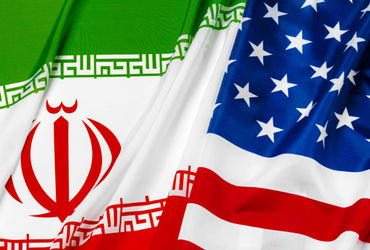
A fresh diplomatic row has erupted after Iran has denied claims that it is sending an envoy to Islamabad for peace talks. Iran has reportedly refused to talk after Israel’s attacks on Lebanon on Wednesday, saying that no talks will take place until a ceasefire is enforced in Lebanon.
Earlier, it was believed that a delegation from Iran was en route to Pakistan for talks with Washington.
With US President Trump announcing ceasefire on Wednesday, Washington has said that it had stepped back from the offensive over the mediation of Pakistan PM Shehbaz Sharif.
Washington headed for Islamabad
US Vice President J D Vance, scheduled to fly to Islamabad, will lead the high-level American delegation for talks with Iran this weekend, as Washington moved to consolidate a fragile ceasefire following weeks of military escalation.
The White House on Wednesday said the negotiating team will include Special Envoy Steve Witkoff and Jared Kushner, signalling the administration’s push for a structured diplomatic track after what it described as a decisive military phase.
Vance, speaking to reporters, underscored that negotiations were already shaped by parallel diplomatic exchanges involving Pakistan and Iran. “We have a negotiation that’s supposed to start this weekend. That’s the truth. I think it’s a good first step,” he said.
‘Fragile’ ceasefire
The talks follow a two-week ceasefire window announced by President Donald Trump after ‘Operation Epic Fury’, which the administration says significantly degraded Iran’s military capabilities.
“This is a victory for the United States of America that the President and our incredible military made happen,” Leavitt said.
According to the White House, the pressure from military operations forced Tehran to seek a ceasefire and agree to reopen the Strait of Hormuz, a key global oil route.
Vance indicated early signs of compliance, noting, “We actually think that we are seeing signs that the straits are starting to reopen.”
He added that the ceasefire framework remains conditional. “The deal is a ceasefire, a negotiation. That’s what we give, and what they give is that the straits are going to be reopened,” he said, warning that failure to comply would trigger consequences.
Despite the diplomatic push, the administration has cautioned that the truce remains unstable.
“This is a fragile truce. Ceasefires are fragile by nature,” Leavitt said.
On the core agenda for Islamabad, Vance made clear that Iran’s nuclear programme will be central. “We want Iran to not be able to make a nuclear weapon… we want Iran to give up the nuclear fuel,” he said.
“The President’s red lines, namely the end of Iranian enrichment in Iran, have not changed,” Leavitt reiterated.
Vance also pushed back against media reports on Iranian proposals, saying, “There are three different 10 Point proposals… the first… immediately went (in) the garbage and was rejected.”
He stressed that Washington believes Tehran is now engaging more seriously. “What’s happening on the ground in Iran is that you have clearly the position of the government, which is to negotiate with the United States of America,” he said.
At the same time, he warned that the US retains leverage. “The President has all the cards here. We’ve got a lot of leverage,” Vance said.
Attack on Lebanon
Vance’s remarks came after the Iranian officials accused the United States of violating three clauses of the 10-Point Proposal on Thursday.
In a formal statement released late on Tuesday, Iran said its “deep historical distrust” of Washington had been reinforced by repeated violations of commitments.
The statement noted that while the President of the United States had described the 10-Point Proposal as a “workable basis on which to negotiate”, three provisions had already been breached.
The first violation, according to Tehran, was non-compliance with the ceasefire clause relating to Lebanon.
Pakistan’s role as mediator
Iranian officials pointed out that Pak PM Sharif had explicitly called for “an immediate ceasefire everywhere, including Lebanon and other regions, effective immediately”.
The second violation involved the entry of a drone into Iranian airspace, which was shot down in Lar, Fars Province.
The third concerned denial of Iran’s right to enrichment, a right enshrined in the sixth clause of the framework.
Iran argued that these breaches undermine the credibility of negotiations even before they begin.
The development comes as Pakistan has been actively engaged in efforts to broker peace in the region, with PM Sharif repeatedly urging restraint and dialogue.
Islamabad has positioned itself as a mediator, stressing the importance of immediate ceasefires to prevent escalation across Lebanon and other conflict zones.
(with inputs from syndicated feed)