
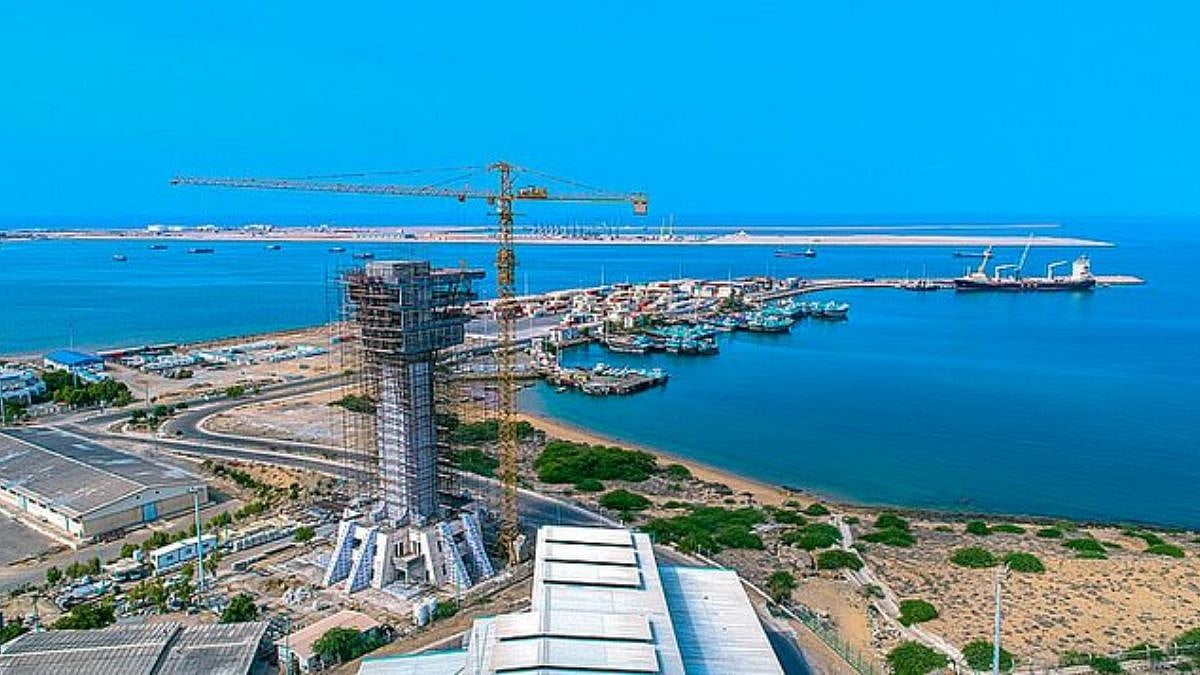
Speculation is mounting over India’s future involvement in Iran’s strategically crucial Chabahar Port after the Ministry of External Affairs (MEA) refrained from giving a clear response to questions about New Delhi’s continued commitment to the project. The absence of a direct confirmation has triggered widespread debate in diplomatic and strategic circles about whether India is quietly recalibrating its position or maintaining a cautious diplomatic posture amid complex geopolitical pressures.
At a recent media briefing, the MEA spokesperson referred to ongoing diplomatic engagements and the conditional nature of international sanctions waivers but avoided explicitly stating whether India remains fully operationally engaged at the port. This careful wording, rather than putting doubts to rest, has instead intensified speculation.
Chabahar Port has long been viewed as one of India’s most significant strategic investments in the region. Located on Iran’s southeastern coast along the Gulf of Oman, the port provides India with a vital trade and transit route to Afghanistan and Central Asia, bypassing Pakistan. It also serves as a counterbalance to the Chinese-backed Gwadar Port in Pakistan, strengthening India’s geopolitical presence in the wider Indian Ocean region.
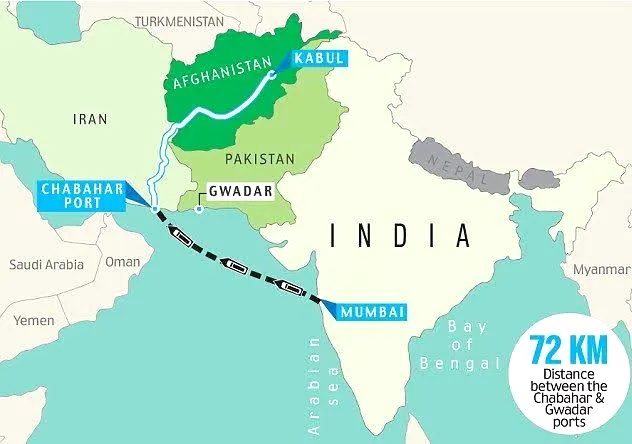
For over two decades, Chabahar has symbolized India’s ambition to emerge as a regional connectivity hub. The project gained renewed momentum when India signed a long-term agreement allowing an Indian government-owned company to develop and operate key terminals at the port. This agreement was widely interpreted as a reaffirmation of India’s strategic intent to maintain a strong foothold in Iran’s infrastructure landscape and deepen economic engagement with landlocked Central Asian nations.
However, evolving global dynamics, particularly the tightening of sanctions on Iran, have complicated the project’s trajectory. India has been working under special exemptions that allow limited engagement without violating international restrictions. These exemptions are subject to periodic review, creating uncertainty for long-term investment and operational planning.
The MEA’s recent comments, which focused on diplomatic consultations and legal frameworks rather than operational continuity, have raised concerns that India may be adopting a wait-and-watch approach. Analysts note that while silence does not necessarily imply withdrawal, it suggests caution in an increasingly volatile geopolitical environment.
Strategic experts warn that any dilution of India’s involvement in Chabahar could have far-reaching consequences. The port is central to India’s connectivity vision, including plans to link with regional transport corridors that can shorten trade routes to Europe and Eurasia. A reduced role could weaken India’s influence in regional infrastructure development and create opportunities for rival powers to expand their footprint.
Politically, the issue has also sparked debate at home. Opposition leaders argue that stepping back from Chabahar would undermine years of diplomatic investment and compromise India’s strategic autonomy. They view the project not merely as a commercial venture but as a cornerstone of India’s regional diplomacy and security architecture.
From Iran’s perspective, any ambiguity over India’s commitment may prompt Tehran to explore alternative partnerships. Given the port’s importance to Iran’s own economic ambitions, prolonged uncertainty could lead to shifts in operational arrangements, potentially diminishing India’s influence in the long term.
Despite the current uncertainty, officials emphasize that diplomatic engagement with both Iran and key international stakeholders remains active. India continues to seek clarity on sanction-related exemptions while balancing its strategic interests with global diplomatic responsibilities.
As the situation develops, the future of Chabahar Port stands as a test of India’s ability to navigate complex international pressures while safeguarding its long-term strategic objectives. Whether this moment represents a tactical pause or a strategic shift will become clearer in the months ahead, but for now, the MEA’s silence continues to fuel speculation and debate.
Leave a Reply