
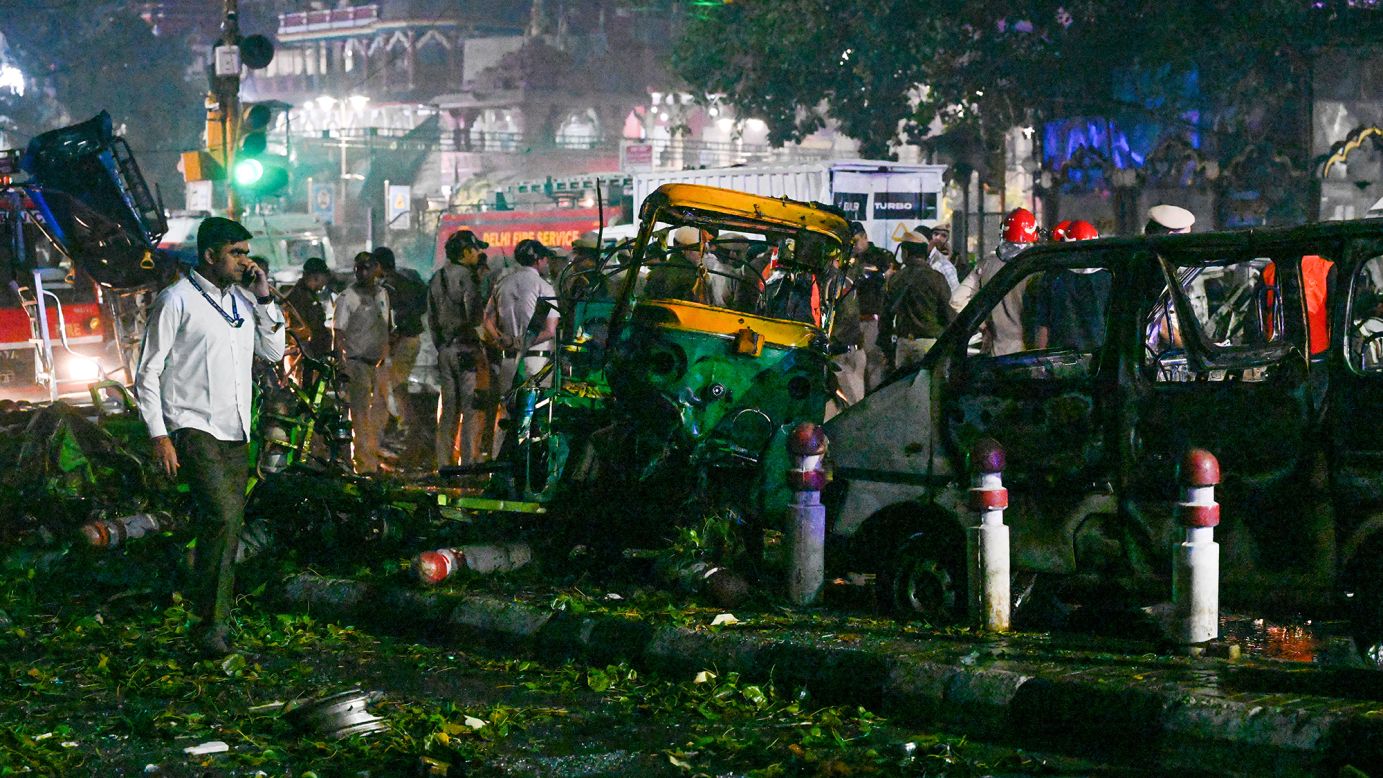
The investigation into the deadly car explosion near Delhi’s Red Fort has uncovered a far-reaching terror conspiracy involving eight individuals who allegedly planned coordinated attacks in four Indian cities. Authorities believe the module was part of a wider network with operational and financial links to foreign handlers.
Serial Attacks Planned Across Four Cities
Sources close to the investigation revealed that the suspects divided themselves into four teams of two, each assigned to a specific city. The Delhi car blast — which shook the capital earlier this week — was intended to be the first in a series of attacks, with similar strikes planned in other major urban centers.
According to initial findings, the group’s strategy involved using vehicle-borne improvised explosive devices (IEDs) and assault weapons to carry out simultaneous strikes. These were reportedly planned around symbolic national dates to cause mass casualties and widespread panic.
The Delhi Blast: The First Clue
The explosion near Delhi’s Red Fort led to the recovery of forensic evidence that helped investigators identify one of the main operatives — a medical professional who allegedly drove the explosive-laden car. DNA samples matched the remains found at the scene, confirming his role in executing the attack.
Investigators also traced a network of safe houses rented under false identities in Faridabad and Noida, which were allegedly used for planning and assembling explosives. Several other vehicles — including a red Ford EcoSport and a Maruti Brezza — are being examined for potential involvement in the larger plot.
Weapons, Explosives, and Logistics
Raids across Delhi, Uttar Pradesh, and Haryana led to the seizure of a substantial cache of weapons and explosives. Among the materials recovered were ammonium nitrate, RDX-type substances, detonators, and live ammunition. Officials also found AK-series rifles and communication devices believed to have been used to coordinate with foreign handlers.
Preliminary evidence suggests that the module members were trained in handling explosives and received instructions from a handler based in Turkey, who has been under surveillance for suspected links to transnational terror networks.

The Role of the Mastermind
Investigators suspect that the operation was directed by a foreign handler using encrypted messaging platforms to communicate with the Indian operatives. The handler reportedly coordinated funding, logistics, and target selection through digital channels to evade detection.
The alleged mastermind, identified as the key contact between the handler and local cells, is believed to have radicalised several educated professionals, including doctors and engineers, to participate in the plan.
Broader Security and Political Implications
The revelation of a structured, multi-city terror plot has sent shockwaves through national security circles. Authorities confirmed that the National Investigation Agency (NIA) has taken over the case, coordinating with state police forces in Delhi, Uttar Pradesh, and Haryana to track down remaining suspects and neutralise linked cells.
Government officials have described the attack as a pre-planned act of terrorism, vowing that all individuals involved — including those directing operations from abroad — will be brought to justice.
The case has also sparked political debate over security preparedness, with opposition leaders demanding accountability for intelligence lapses and calling for stronger coordination between central and state agencies.
What Investigators Are Focusing On
- Tracing Remaining Suspects: Efforts are underway to locate and arrest the remaining members of the module believed to have gone underground.
- Identifying Additional Targets: Authorities are analysing digital evidence to determine the remaining cities that were to be targeted.
- Foreign Funding Trail: Intelligence units are tracking cryptocurrency transactions and money transfers routed through international channels.
- Radicalisation Networks: Security agencies are examining how the group recruited educated individuals through online propaganda and closed communication groups.
- Security Gaps: The case has prompted a reassessment of vehicle security near high-profile landmarks and the screening of professional groups for radical links.

A New Kind of Terror Threat
Officials have described the module as part of an evolving terror ecosystem in which educated professionals and local facilitators are being used to evade conventional surveillance systems. The use of legitimate professions, urban safe houses, and digital coordination points to a sophisticated operational model.
This pattern represents a departure from older forms of organised terror, highlighting how extremist groups are adapting their strategies to exploit domestic and international loopholes.
Awaiting the Next Phase of Investigation
As the investigation deepens, forensic teams are analysing explosives recovered from different locations to establish chemical similarities. Authorities are also mapping call records, online chats, and GPS data from seized mobile phones to reconstruct the suspects’ movement and communications network.
Preliminary evidence suggests the attacks were in the final stages of planning, and the Delhi blast may have been an accidental premature detonation, exposing the entire network.
The uncovering of this eight-member terror module has revealed the scale and sophistication of a potential multi-city attack plot that could have caused catastrophic damage. With connections stretching beyond India’s borders, the investigation underscores the urgency of enhanced intelligence-sharing, cyber surveillance, and preventive policing.
As the probe continues, agencies are confident that dismantling this network will not only bring justice to the victims of the Delhi blast but also avert further attacks planned against major Indian cities.
| Key Detail | Information |
|---|---|
| Total suspects | 8 |
| Cities targeted | 4 |
| Vehicles involved | 3 (i20, EcoSport, Brezza) |
| Suspect professions | Doctors, engineers |
| Handler location | Turkey |
| Main explosives used | Ammonium nitrate, RDX-type material |
| Investigation agency | National Investigation Agency (NIA) |
The Delhi blast investigation has exposed a chilling reminder of how modern terror operations are becoming decentralised, digital, and dangerously embedded in everyday professional circles. It marks a critical test for India’s intelligence community — one that will shape the future of national counter-terror strategies.