
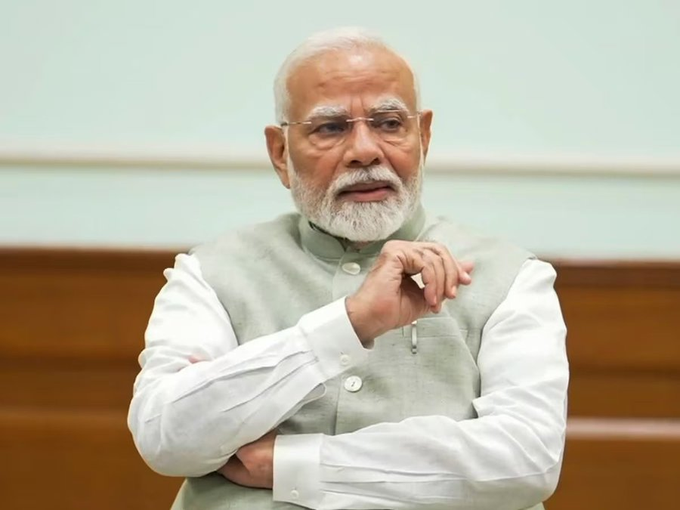
In a gesture that blurred formal protocol and underscored his populist style, Prime Minister Narendra Modi responded warmly to a female booth worker during a rally in Bihar by insisting she refer to him not as “sir,” but as “your brother.” The moment, brief yet impactful, drew attention to Modi’s effort to project closeness with the grassroots electoral machinery.
The exchange took place during a public meeting in a village in Bihar, where Modi paused to address a woman volunteer who greeted him with deference. According to eyewitnesses, she had called him “sir” in her greeting, prompting Modi to smile and interrupt: “Don’t call me ‘sir’… I am your brother.”
https://x.com/i/status/1978455783881752726
The incident was met with cheers from the crowd and applause from nearby workers. Many interpreted the remark as an attempt to reduce hierarchical distance, especially with ground-level workers and local volunteers who form the backbone of election campaigns.
Political analysts noted that the moment carries symbolic weight. In a state like Bihar, where voter sentiment is deeply influenced by perceptions of accessibility and humility, even small gestures can resonate strongly. By positioning himself as “brother” instead of a distant figure, Modi reinforces a narrative of shared belonging and familiarity.
It was not purely rhetorical. Throughout the rally, Modi made repeated references to local concerns — women’s safety, rural development, electricity, roads — weaving them into his addresses in a colloquial tone that matched the “brotherly” appeal. Across Bihar, campaign observers say, this style helps soften partisan divides and reinforce party cadre morale.
While some critics dismiss such moments as staged political theatre, others believe they form part of a larger strategy by Modi’s camp to maintain strong connect with cadre and voters alike, especially in an election season. The “brother” comment will likely be replayed in election discourse, lauded by supporters and scrutinized by opponents.