
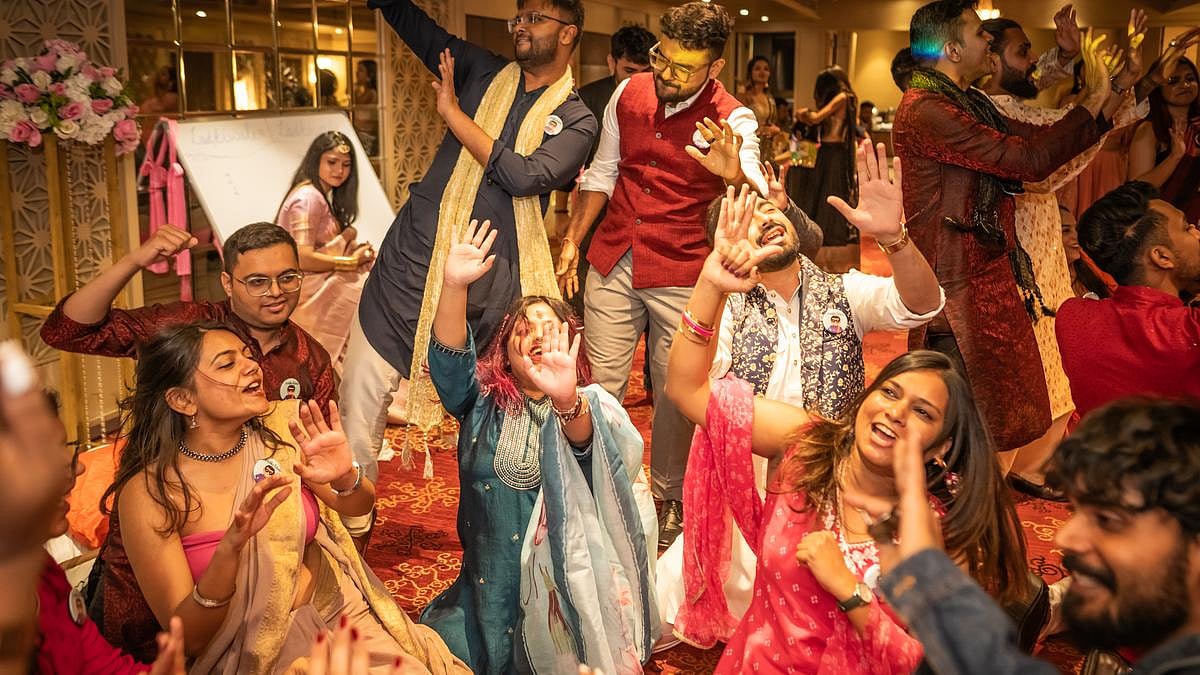
In a striking twist to India’s age-old wedding traditions, mock or “fake” weddings are gaining momentum among Gen Z, millennials, and NRIs. These event planners are creating immersive, celebratory experiences of a shaadi—complete with garba, sangeet, baraats, and photo ops—except there is no bride, no groom, and no real matrimonial tie. In short, all the fun, none of the pressure.
The concept was reportedly sparked by Ayaan Vaid, founder of an event company in Delhi, who first hosted a “fake sangeet” under the banner Jumma Ki Raat. When the event captured public imagination, other cities followed. Today, such mock weddings have been held in metros like Mumbai, Delhi, Bengaluru, Pune, and Nashik, with NRIs also partaking by designing and attending these events as a way to feel connected to Indian wedding culture.
Participants dress in their festive best, mingle with strangers, enjoy scripted rituals like mehendi or DJ nights, and create social memories without the often burdensome expectations—not being obliged to give gifts, being judged for marital decisions, or managing family dynamics. One attendee described it as “cinematic celebration without the life-altering contract.” Another duo highlighted that their participation included full freedom: dancing, selfies, emotional moments, but no performance to impress familial structures.
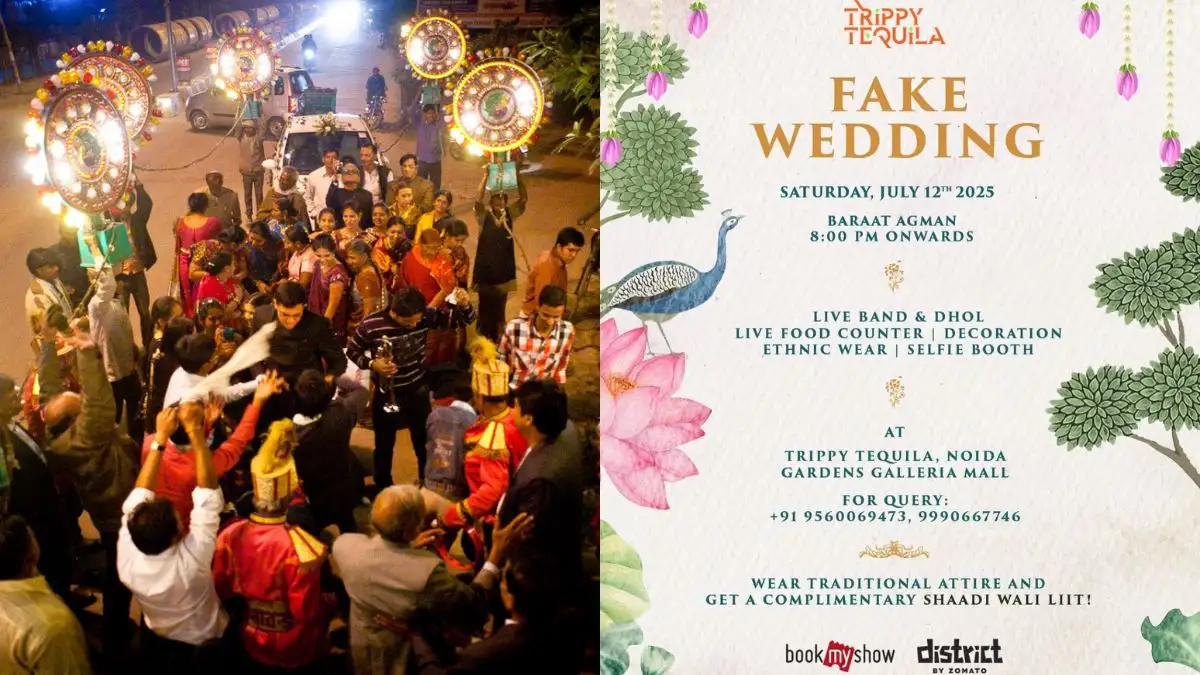
Organisers price these events modestly, often ticketed between ₹799 and ₹4,000 depending on venue and program. Some versions span a single evening; others stretch across two days with staged ceremonies. One such event in Bengaluru attracted 2,000 guests, complete with a baraat, choreographed entry, and mock rituals—designed for the Instagram age, but aimed at genuine connection.
The appeal of fake weddings lies deeper than escapism. They touch on structural shifts:
- Liberation from societal expectations: Without binding expectations, people embrace rituals simply for the joy of celebration.
- Access and inclusion: LGBTQ+ couples, friends, singles, and cross-cultural participants join without needing legal or familial sanction.
- Cost and stress relief: Full weddings bring huge financial, emotional, and logistical burdens. Mock weddings offer a fraction of the expense and no long-term stakes.
- Community and spectacle: They are crafted to be collective, performative, social events rather than private family duty.
At one event in Mumbai, the organizers recounted partnerships where participants six months ago had just watched such gatherings on social media. Now they were part of it—spontaneously, joyfully, without parental obligations. At another in Andheri, a woman and her partner (a lesbian couple) celebrated equal rights in full regalia: no judgment, just dance, acceptance, inclusion.
Even NRIs are drawn to the experience. An NRI participant from Canada at a “Big Fat Fake Indian Wedding” in Bengaluru described how his international friends adored the full dhol, baraat vibe—even though there was no bride or groom. The event was a “beautiful mashup of ritual and spectacle,” he said, creating emotional resonance even among guests from outside India.
Critics may argue fake weddings are a gimmick—or a sanitized appropriation of traditions. Yet organizers insist their vision is more generous: these events invite people to reimagine rituals on their own terms, valuing emotional connection over obligation.
As Indian weddings evolve into staged spectacles under social media scrutiny, mock weddings may signal a cultural recalibration—one where celebration need not equal contract, and joy can be decoupled from duty. In other words: partake in the shaadi spirit, without signing the weight of expectations.