

In a significant move, Afghanistan’s Foreign Minister Amir Khan Muttaqi visited Darul Uloom Deoband in Uttar Pradesh on Saturday, in what many interpret as a gesture to reset ties between the Taliban government and India. The visit, filled with symbolism, included meetings with leading Islamic scholars and public statements suggesting a renewed diplomatic outreach.
During his tour at Deoband, Muttaqi expressed gratitude for the warm welcome he received from scholars and the local community. He noted that the reception affirmed shared religious and cultural bonds, and hinted that future diplomatic exchanges may gain momentum. The minister said that the interactions after his Delhi meetings gave him optimism about growing cooperation, including the possibility of sending Afghan diplomats to India.
However, one remark stood out most sharply in the local reactions. Maulana Arshad Madani, President of Jamiat Ulama-e-Hind, declared that India’s past worries about infiltration from Afghan soil have now been allayed. He said:
“Earlier, India harboured concerns about terrorist infiltration through Afghan soil. However, after this meeting and the assurances given by Minister Muttaqi, it is now clear that Afghanistan will never support any anti-India terror activity, nor allow any such elements to operate from its land.”
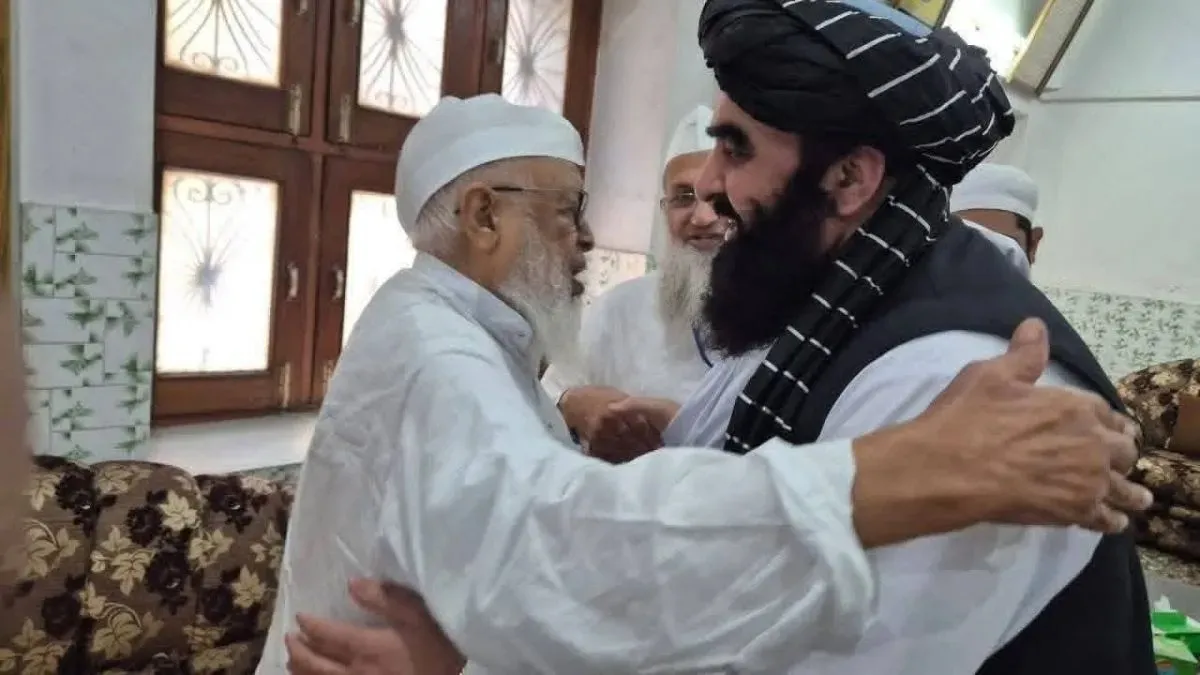
Madani’s words signal a public endorsement of Muttaqi’s assurances and suggest that, at least rhetorically, Afghanistan seeks to reassure India about its security concerns.
The Deoband visit is not merely symbolic. Darul Uloom is among India’s most influential Islamic seminaries and commands moral authority in South Asia’s theological circles. The Taliban’s alignment with Deobandi traditions makes the visit freighted with ideological significance. By choosing this venue, Muttaqi may be aiming to project religious legitimacy and an olive branch to Indian Muslim leadership.
Observers note that while India has not granted formal recognition to the Taliban regime, this visit and Madani’s public declaration might soften perceptions. But India is expected to watch closely: diplomatic gestures and verbal commitment will be matched against actions on the ground over time.
In New Delhi, officials reportedly monitored the visit but have yet to issue a detailed reaction. Some analysts suggest this kind of religious diplomacy may be part of a cautious strategy—engagement without recognition—especially in a region where ideological signals matter.
Whether this marks the start of more sustained outreach or simply a moment of pageantry will depend on follow-through: whether assurances transform into security cooperation, or whether past scepticism proves stronger than present gestures.