
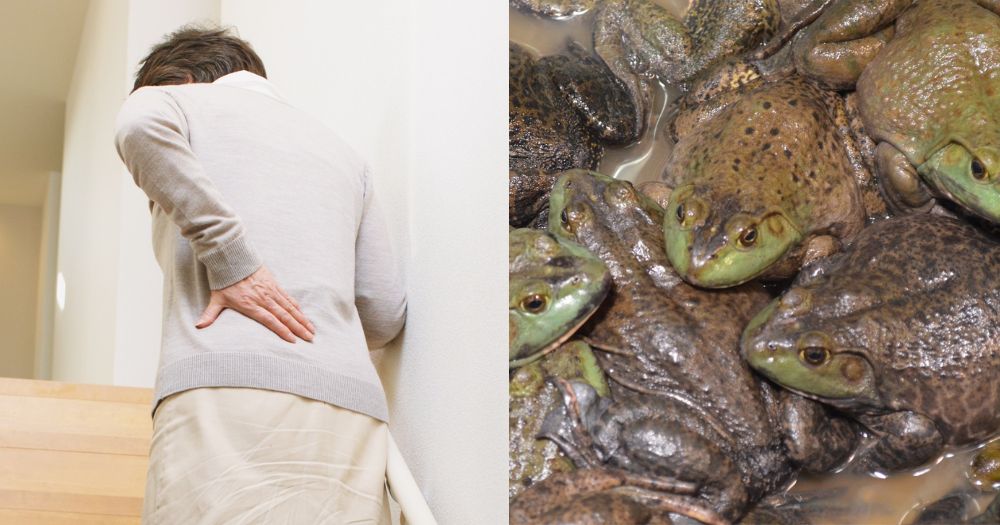
An unusual and alarming medical case from eastern China has come to light: an 82-year-old woman swallowed eight live frogs in a desperate attempt to cure chronic lower back pain. The incident underscores the dangers of unverified traditional therapies and the serious health risks they may pose.
What Happened
- The woman, identified by her surname Zhang, reportedly suffered from a herniated disc and persistent lower back pain. In her search for relief, she turned to a local folk belief that ingesting live frogs could heal the condition.
- Without telling her family her intent, she asked them to capture small frogs—each smaller than the size of an adult’s palm. She swallowed three frogs on the first day, followed by five more the next day, all alive and uncooked.
- Soon after, Zhang began experiencing severe abdominal pain, nausea, and worsening mobility. The pain intensified to a point where she could no longer walk. Alarmed, her family brought her to a hospital in Hangzhou, Zhejiang province, where she was admitted for treatment.

Medical Findings and Complications
- Upon evaluation, physicians ruled out tumors but discovered evidence of parasitic infections, notably sparganum—a tapeworm larva commonly associated with amphibians.
- Her digestive tract showed signs of serious damage, and lab analyses revealed an abnormal increase in oxyphil cells, a marker that may indicate infection or inflammation.
- The ingestion of live frogs had apparently enabled parasites to migrate into her body, compounding her condition.
- She underwent two weeks of inpatient treatment including antiparasitic therapy and supportive care, after which she was discharged in stable condition.
Why This Case Matters
- The episode highlights how certain folk or alternative remedies, even those deeply rooted in tradition, can backfire disastrously.
- Seniors and vulnerable individuals may be particularly at risk of trying desperate cures when conventional medicine offers limited relief.
- From a medical ethics standpoint, this underscores the importance of public awareness and patient education about the risks of unverified treatments.
- Health professionals warn that such practices can introduce infection, internal injury, poisoning, or systemic disease—outcomes far worse than the initial ailment.
Leave a Reply