
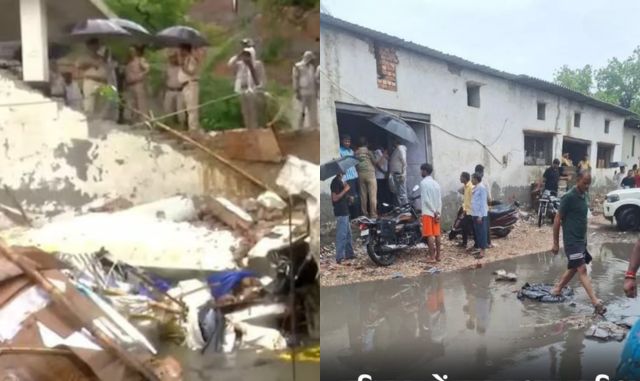
New Delhi: A tragic incident occurred on Saturday in Delhi’s Jaitpur area, where at least seven individuals – three men, two women, and two children – lost their lives due to a wall collapse amid heavy rainfall in the national capital. The victims have been identified as Shabibul (30), Rabibul (30), Ali (45), Rubina (25), Dolly (25), Ruqsana (6), and Hasina (7).
Earlier in the day, the wall fell, trapping several people, prompting a rescue operation by the Delhi Fire Services. Additionally, one person, identified as Hashibul, sustained injuries and has been hospitalized.
This incident follows a similar tragedy that occurred ten days prior when an under-construction building collapsed in Delhi’s Civil Lines, resulting in the deaths of a woman and her son, and injuring two others. The deceased were identified as 40-year-old Meera and 17-year-old Ganpath.
Delhi battered by heavy rains
On Saturday, Delhi experienced heavy rainfall, leading to significant waterlogging in various parts of the national capital. The intense rains prompted the weather department to issue a red alert for the city, which was later downgraded to yellow.
Flight operations in Delhi have also been disrupted due to the heavy rains.
According to the weather department’s data, Delhi’s main weather station at Safdarjung recorded 78.7 mm of rainfall, while Pragati Maidan received 100 mm, Lodhi Road 80 mm, Pusa 69 mm, and Palam 31.8 mm by 8:30 am on Saturday.
Meanwhile, the temperature in the capital was recorded at 23.8 degrees Celsius, which is 3.2 degrees below the average. It is anticipated that the maximum temperature will reach around 32 degrees Celsius by the end of the day.
Yamuna water level nears warning mark
The water level of the Yamuna River is approaching the warning level of 204.50 meters. Officials reported that the water level was at 204.40 meters at 9 am at the Old Railway Bridge and stated that they are closely monitoring the situation.
An official from the central flood room stated, “The primary cause of the rising water level is largely attributed to the significant volume of water discharged from the Wazirabad and Hathnikund barrage each hour.”