
During Prime Minister Narendra Modi’s visit to the UK, a significant event will be the signing of a free trade agreement (FTA) between the two nations.
Whisky, automobiles, electric vehicles, and textiles are among the sectors that will gain advantages following the agreement, the negotiations for which wrapped up in May after three years of intermittent discussions, as reported by news agency Reuters.
While it is said that India’s cabinet has already approved the agreement, the British parliament’s approval is also required and is expected within a year.
Scale of trade between India and UK
Bilateral trade between India and the UK exceeds $50 billion. The UK is also noted to be India’s sixth-largest foreign investor.
Approximately 1,000 Indian firms operate in the UK, providing employment to over 100,000 individuals. They have invested around $20 billion there, as stated by India’s foreign secretary Vikram Misri on Tuesday.
Key facts about the India-UK trade deal
Overall reduction: The Indian commerce ministry has indicated that 99% of Indian exports to Britain will benefit from zero duties under the agreement. Britain will experience reductions on 90% of its goods. From India, textiles, footwear, gems, jewellery, and auto components are among the items expected to have zero duties, reduced from the current 4-16%.
About cars: India will lower duties to just 10% from the current 100% on cars imported from the UK; however, a quota system will be implemented, meaning the reduced levy will apply to a limited number of imported cars. This number will be gradually liberalized as per the agreement. Aston Martin and Tata-owned Jaguar Land Rover could stand to benefit from this.
Access for EVs: In exchange for reducing import duties on UK goods, Indian manufacturers are anticipated to gain access to the British market for electric and hybrid vehicles, also under a quota system. Manufacturers such as Tata Motors and Mahindra Electric could see advantages.
Visa and stay ease: The UK will ensure assured access for temporary stays for business visitors and contractual service providers, as well as for yoga instructors, chefs, and musicians. Indian workers temporarily employed in the UK, along with their employers, will be exempt from social security contributions in the UK for a period of three years.
Clothing and footwear: Indian textile and apparel companies like Welspun India, Arvind, Raymond, and Vardhman are expected to benefit from duty-free export access to the UK, according to a report by Reuters. Footwear brands such as Bata India and Relaxo will also find it easier to enter the UK market.
Reduced taxes on spirits: The tariffs on Scotch whisky will be reduced from 150% to 75% immediately, and will further decrease to 40% over the next ten years. UK companies, including Diageo, known for its Johnnie Walker brand, will gain from this change.
Tender eligibility: India will also allow British suppliers to access non-sensitive government tenders, with a cap of ₹2 billion (200 crore).
“The key highlight of the visit is the signing of the bilateral free trade agreement,” stated former senior diplomat Mahesh Sachdev in an interview with ANI.
Commerce Minister Piyush Goyal is accompanying Prime Minister Modi for the official signing.
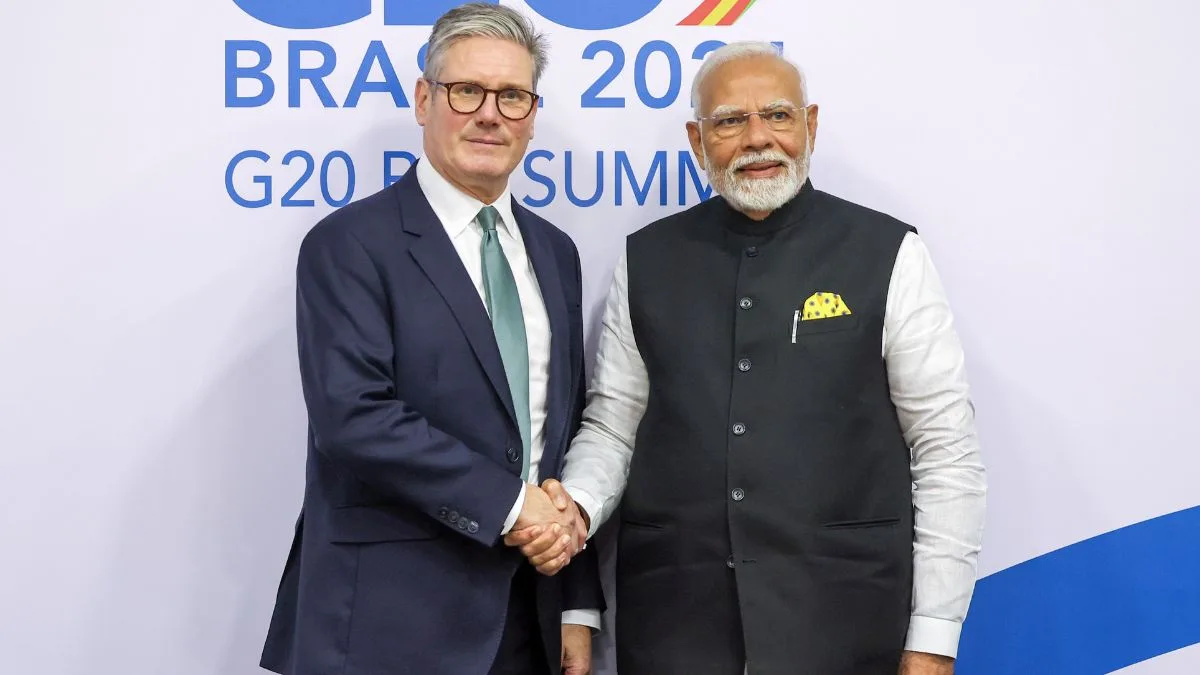
This marks Modi’s fourth visit to the UK since he took office as Prime Minister in 2014. He is set to meet UK Prime Minister Keir Starmer to discuss various issues including trade, energy, security, health, and education, as well as engage with business leaders.
“The UK represents a significant market for Indian exporters,” remarked Ajay Sahai, director general of the Federation of Indian Export Organisations. He noted that the agreement will enhance bilateral trade and open doors for Indian industries such as textiles, footwear, marine, and engineering products, as reported by Reuters.