
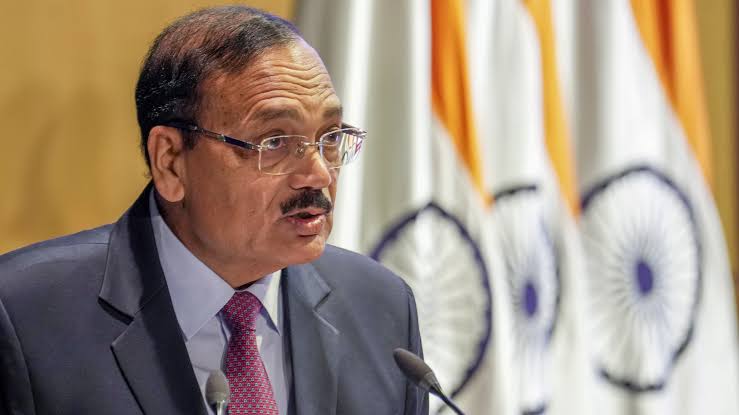
Chief Justice of India Surya Kant has clarified that he never accepted an invitation from the National Academy of Legal Studies and Research (NALSAR) University of Law to attend its upcoming convocation as chief guest, effectively putting to rest speculation over whether he would appear at the ceremony.
The clarification comes against the backdrop of an escalating controversy at the Hyderabad-based law university, where a section of students had publicly objected to the proposed invitation to the Chief Justice. The dispute has since grown beyond the question of a convocation guest and developed into a wider debate involving student dissent, institutional authority, the legal profession and the role of regulatory bodies.
Speaking after an engagement with vice-chancellors of national law universities in Jodhpur, CJI Surya Kant said there was no question of his attending the NALSAR convocation because he had never consented to the invitation. His remarks came as the controversy surrounding the students’ objections continued to attract national attention.
The issue began when students from the university’s 2026 graduating batch raised concerns about the decision to invite the CJI as chief guest for their convocation. Their opposition was linked to remarks made by Justice Surya Kant during a Supreme Court hearing concerning alleged police excesses. The students expressed their disagreement through a representation and maintained that their objection was a form of peaceful dissent rather than an attempt to disrupt the ceremony.
The students’ protest subsequently triggered a much larger institutional controversy after the Bar Council of India (BCI) intervened. The legal regulator initially took a strong position against the protesting students, with a decision that threatened to affect the enrolment of NALSAR’s 2026 graduating batch with state bar councils.
The move generated considerable criticism because enrolment with a state bar council is an important step for law graduates seeking to begin professional legal practice. The controversy therefore moved beyond the original disagreement over a convocation invitation and began raising concerns about whether students could face professional consequences for expressing disagreement with a constitutional authority.
The BCI later modified its position, providing relief to the graduating students while indicating that an inquiry into the circumstances surrounding the protest would continue. The reversal, however, did not immediately end the dispute. Instead, it intensified questions about the appropriate limits of regulatory intervention in matters involving university students and peaceful expression.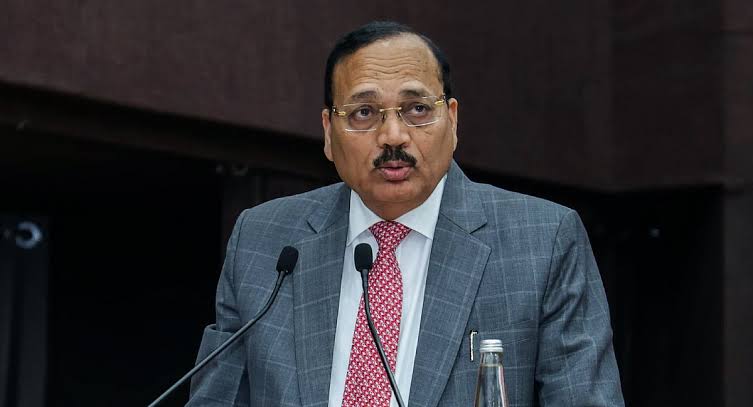
The Supreme Court also became involved in the matter, with the bench led by CJI Surya Kant questioning the BCI’s approach toward the students. The Court’s intervention underscored the sensitivity of the issue, particularly because it involved the right of law students to express disagreement with senior judicial figures while also navigating their future professional careers.
CJI Surya Kant’s latest clarification adds another significant dimension to the controversy. By stating that he had never accepted the invitation, the Chief Justice made clear that the question of his participation in the convocation was not actually pending from his side.
The distinction is important because much of the controversy had developed around the assumption that the CJI was scheduled or expected to attend the event. His statement indicates that the invitation and its acceptance were two separate matters, and that he had not given his consent to serve as chief guest.
The episode has also brought renewed attention to the relationship between law universities and their students. National law universities occupy an important position in India’s legal education system, producing graduates who go on to become lawyers, judges, academics, policymakers and legal professionals. Disagreements within such institutions can therefore have implications beyond campus politics.
For the students involved, the controversy has become a test of their ability to express dissent while maintaining professional and institutional decorum. Their opposition was directed at the proposed participation of the CJI, but the subsequent intervention by the BCI transformed the issue into a broader discussion about academic freedom and the consequences of student activism.
The developments have also highlighted the delicate balance between respect for judicial institutions and the constitutional values of free expression. Law students, in particular, are expected to understand and engage with constitutional principles, including the importance of institutional independence and the right to disagree through lawful and peaceful means.
At the same time, the controversy has raised questions about how regulatory authorities should respond when students express criticism of senior members of the judiciary. The initial BCI action drew attention precisely because of the potential professional impact on an entire graduating batch.
The Supreme Court’s response subsequently brought the principle of proportionality into focus. Any regulatory action affecting the professional future of young law graduates carries significant consequences, particularly when the underlying dispute concerns peaceful expression rather than allegations of criminal conduct.
The NALSAR controversy therefore now extends well beyond the question of who will preside over a convocation ceremony. It has developed into a significant conversation about student rights, institutional autonomy, professional regulation and the culture of dissent within legal education.
CJI Surya Kant’s statement that he never accepted the invitation provides clarity on one immediate aspect of the dispute. However, the broader questions raised by the confrontation between students, the university administration and the BCI remain relevant to India’s legal and academic institutions.
The episode is likely to remain a point of discussion within the legal community as questions continue to be examined over how universities should handle disagreement, how regulatory bodies should respond to student protests and how law students can exercise their right to dissent without facing disproportionate professional consequences.
For now, the Chief Justice’s position is clear: he did not consent to the NALSAR invitation, and therefore his attendance at the convocation does not arise. The controversy surrounding the students’ protest and the subsequent institutional response, however, continues to raise broader questions about democratic expression and the functioning of India’s legal education system.