

The political debate surrounding environmental activist and education reformer Sonam Wangchuk’s indefinite hunger strike intensified on Monday after the Cockroach Janta Party (CJP) launched a sharp attack on the Union government, holding it responsible for the activist’s deteriorating health and demanding the resignation of Union Education Minister Dharmendra Pradhan.
The party accused the Centre of ignoring Wangchuk’s repeated appeals for meaningful dialogue on the constitutional and environmental concerns affecting Ladakh. As Wangchuk’s fast entered a critical phase, concerns over his health have continued to mount, drawing support from political leaders, activists, students, and environmental groups across the country.
Health Concerns Grow During Prolonged Fast
According to those associated with the protest, Wangchuk’s physical condition has weakened considerably after remaining on an indefinite hunger strike for several days. Medical professionals monitoring his health have reportedly expressed concern over the impact of prolonged fasting, although the activist has remained committed to continuing his protest until the government addresses the core issues raised by the movement.
Supporters have described the hunger strike as a peaceful democratic effort aimed at securing constitutional safeguards for Ladakh and protecting the fragile Himalayan ecosystem from unchecked development.
CJP Demands Minister’s Resignation
The Cockroach Janta Party issued a strongly worded statement criticizing the Union government’s response to the ongoing protest. The party alleged that the Centre has failed to engage seriously with Wangchuk despite the growing public concern over his health.
Calling the situation a reflection of governmental indifference, CJP demanded that Union Education Minister Dharmendra Pradhan resign, arguing that the government has failed to uphold democratic accountability and has ignored the concerns raised by one of India’s most respected education innovators and environmental advocates.
Party representatives also questioned why meaningful negotiations had not been initiated despite repeated appeals and increasing public attention. 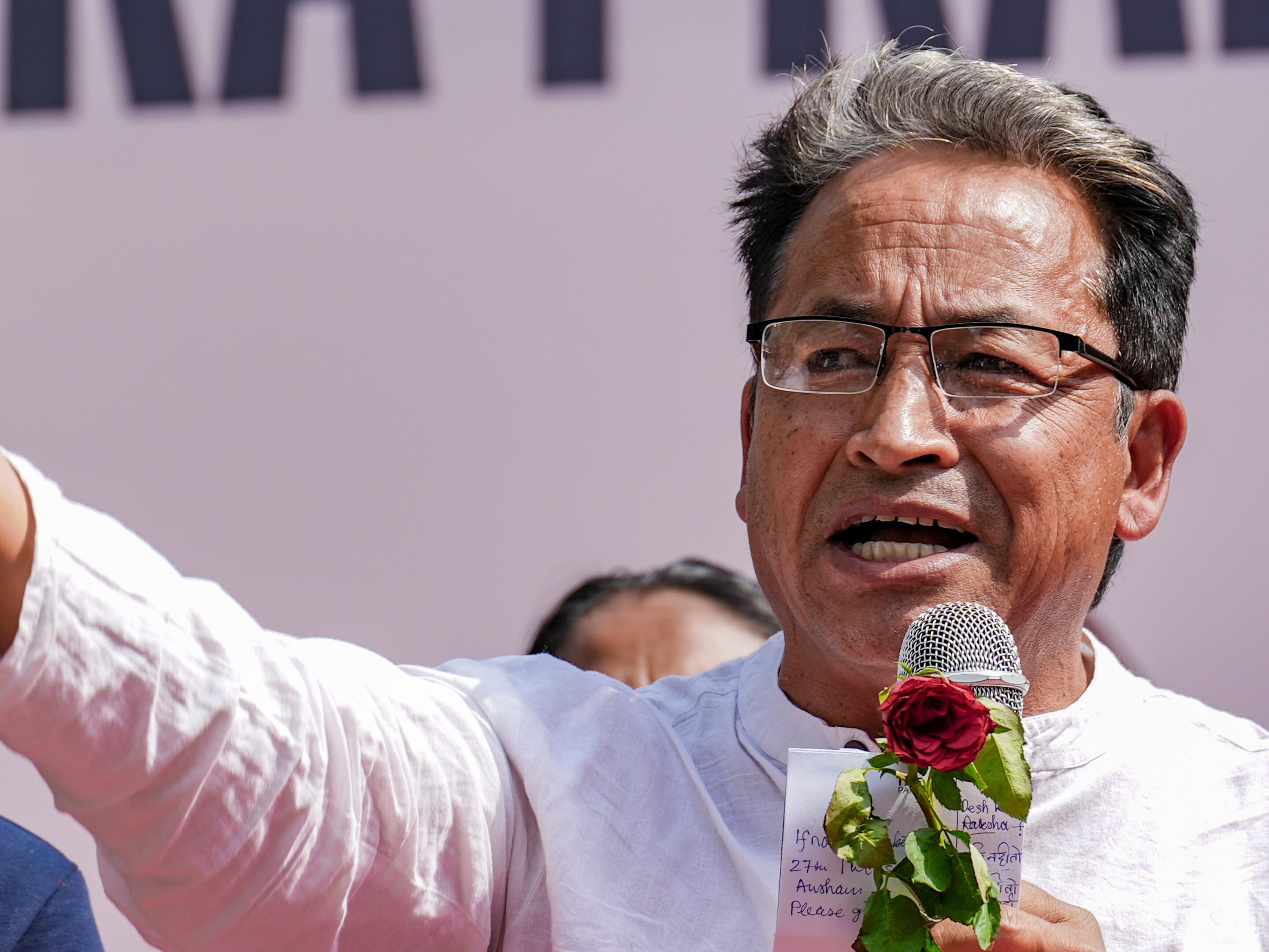
Mahua Moitra Extends Support
Trinamool Congress leader Mahua Moitra also voiced support for Wangchuk, criticizing the government’s handling of the issue and urging authorities to respond before the activist’s health deteriorates further.
She emphasized that peaceful protests form an essential part of democratic expression and said governments should engage constructively with citizens raising concerns related to environmental protection and constitutional rights rather than allowing the situation to escalate.
Her remarks added further political attention to the issue, with several opposition leaders continuing to express solidarity with Wangchuk.
Why Sonam Wangchuk Is Protesting
Sonam Wangchuk has consistently advocated for stronger constitutional protections for Ladakh following the region’s reorganization into a Union Territory.
Among the primary demands associated with the movement are:
- Granting Ladakh protection under the Sixth Schedule of the Constitution.
- Safeguarding the fragile Himalayan environment.
- Protecting local communities from unsustainable development.
- Ensuring greater participation of local residents in governance and decision-making.
- Preserving the ecological and cultural identity of the region.
Supporters argue that these measures are necessary to balance development with environmental conservation in one of India’s most ecologically sensitive regions.
Environmental Concerns at the Centre of the Protest
Beyond constitutional issues, Wangchuk’s campaign has highlighted the long-term environmental challenges facing Ladakh, including the impact of climate change, melting glaciers, water scarcity, and rapid infrastructure expansion.
Environmental experts have repeatedly warned that the Himalayan ecosystem requires careful planning and sustainable development policies. Wangchuk has maintained that protecting Ladakh’s natural resources is not only important for local communities but also for the country’s broader environmental security.
His protest has therefore evolved into a wider movement focused on climate action, ecological preservation, and responsible governance.
Government Yet to Respond to Fresh Political Demands
While the Centre has previously held discussions on issues concerning Ladakh, there has been no official response to the latest demand seeking the resignation of the Union Education Minister.
The government has also not publicly commented on the political statements issued by the Cockroach Janta Party regarding Wangchuk’s deteriorating health.
Meanwhile, supporters continue to urge authorities to initiate dialogue before the activist’s medical condition worsens further.
Political and Public Attention Continues to Grow
As Wangchuk’s hunger strike continues, the issue has increasingly become a national political debate involving questions of environmental protection, constitutional safeguards, democratic rights, and public accountability.
With opposition leaders stepping up criticism and civil society organizations closely monitoring developments, pressure is mounting on the government to engage in constructive discussions and find a peaceful resolution to the ongoing protest.
The coming days are expected to be crucial, both for Wangchuk’s health and for the government’s response to the demands emerging from Ladakh’s growing constitutional and environmental movement.