
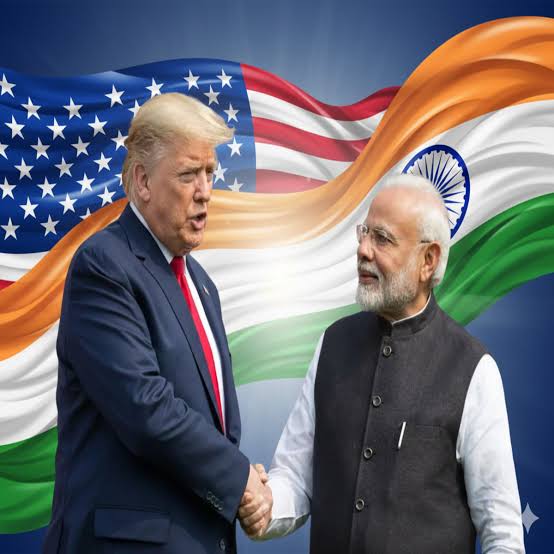
India and the United States are taking significant steps to strengthen their economic relationship as both countries work towards an ambitious target of expanding bilateral trade to $500 billion over the coming years. The initiative reflects a broader commitment to deepen cooperation across multiple sectors, including trade, technology, defence, energy, manufacturing, and investment, while negotiations continue on a comprehensive trade agreement.
The vision, popularly referred to as Mission 500, represents one of the most ambitious economic goals ever pursued by the two strategic partners. It underscores the growing importance of India-US relations in shaping global trade, strengthening resilient supply chains, and promoting sustainable economic growth amid changing geopolitical and economic conditions.
A Roadmap for Higher Bilateral Trade
India and the United States have steadily expanded commercial ties over the past decade, with bilateral trade witnessing consistent growth across goods and services. Both governments now aim to nearly double the value of existing trade by removing barriers, improving market access, encouraging investments, and creating a more predictable business environment.
The proposed roadmap seeks to enhance cooperation through policy reforms, increased business engagement, and sector-specific partnerships. Officials from both countries continue discussions aimed at resolving outstanding trade issues while identifying new opportunities for collaboration.
The initiative also reflects a shared objective of making bilateral trade more balanced and diversified by encouraging exports and imports across a broader range of industries.
Ongoing Trade Agreement Discussions
Negotiations between India and the United States are focused on reaching a mutually beneficial trade framework that addresses long-standing concerns from both sides.
The discussions cover several important areas, including:
- Tariff rationalisation on selected products.
- Improved market access for businesses.
- Reduction of non-tariff trade barriers.
- Easier regulatory procedures.
- Enhanced cooperation on digital trade and emerging technologies.
- Greater transparency in customs and trade facilitation.
While differences remain on certain policy issues, both governments have indicated their willingness to continue constructive dialogue to achieve a balanced outcome that benefits industries, exporters, and consumers in both countries. 
Expanding Investment Opportunities
Investment remains a key pillar of the India-US economic partnership. American companies continue to expand their presence across India’s manufacturing, technology, healthcare, financial services, renewable energy, and digital sectors.
Similarly, Indian businesses have significantly increased investments in the United States, contributing to job creation, innovation, and business expansion.
The Mission 500 vision encourages stronger two-way investment flows by creating favourable business conditions, improving ease of doing business, and strengthening regulatory cooperation.
Industry leaders believe enhanced investment will generate employment opportunities, support technology transfer, and accelerate industrial development in both countries.
Technology Partnership Gains Momentum
Technology cooperation has emerged as one of the defining aspects of India-US relations.
Both nations are expanding collaboration in critical and emerging technologies such as:
- Artificial intelligence
- Semiconductors
- Quantum computing
- Telecommunications
- Cybersecurity
- Advanced manufacturing
- Space technology
These partnerships are expected to strengthen innovation ecosystems, reduce dependence on vulnerable global supply chains, and improve technological competitiveness.
The growing collaboration also supports efforts to build secure and trusted technology networks while encouraging research and development initiatives involving academic institutions and private industry. 
Strengthening Defence Cooperation
Defence remains another important pillar of the strategic partnership.
India and the United States have significantly expanded defence cooperation through joint military exercises, technology collaboration, defence manufacturing partnerships, and increased procurement of advanced defence equipment.
The broader economic partnership complements these defence ties by encouraging co-production, research collaborations, and industrial partnerships between defence manufacturers from both countries.
Such cooperation is expected to contribute to regional stability while enhancing India’s domestic defence manufacturing capabilities.
Energy and Clean Technology Collaboration
Energy security and clean energy transition are becoming central themes in bilateral cooperation.
The two countries are exploring greater collaboration in:
- Renewable energy
- Clean hydrogen
- Civil nuclear energy
- Natural gas
- Battery technology
- Critical minerals
- Climate-friendly infrastructure
These initiatives support India’s energy transition goals while creating new opportunities for investment and technological collaboration.
Both countries also recognise the importance of securing resilient supply chains for critical minerals and clean technology components that are essential for future industries.
Building More Resilient Supply Chains
Global disruptions over recent years have highlighted the importance of diversified and reliable supply chains.
India and the United States are increasingly working together to strengthen supply chain resilience across strategic sectors including electronics, pharmaceuticals, medical equipment, semiconductors, and advanced manufacturing.
This cooperation aims to reduce vulnerabilities, improve production capacity, and ensure greater economic security for both nations.
Strategic Importance Beyond Trade
Experts believe the Mission 500 initiative extends beyond commercial interests. It represents a broader strategic partnership between two major democracies seeking closer cooperation on regional and global challenges.
A stronger economic relationship is expected to reinforce collaboration in areas such as innovation, digital governance, infrastructure development, education, climate action, healthcare, and global economic stability.
As geopolitical dynamics continue to evolve, stronger India-US economic ties may also contribute to a more diversified and resilient global trading system.
Looking Ahead
Although several issues remain under negotiation, both governments have expressed optimism about expanding economic cooperation through sustained dialogue and pragmatic policy measures.
If successfully implemented, the $500 billion trade vision could transform the scale of India-US commercial relations, encourage greater investment, generate employment, strengthen industrial partnerships, and position both countries as key drivers of global economic growth.
With negotiations progressing and cooperation expanding across multiple sectors, the India-US strategic economic partnership appears poised to enter a new phase marked by deeper integration, stronger business confidence, and long-term mutual growth.