
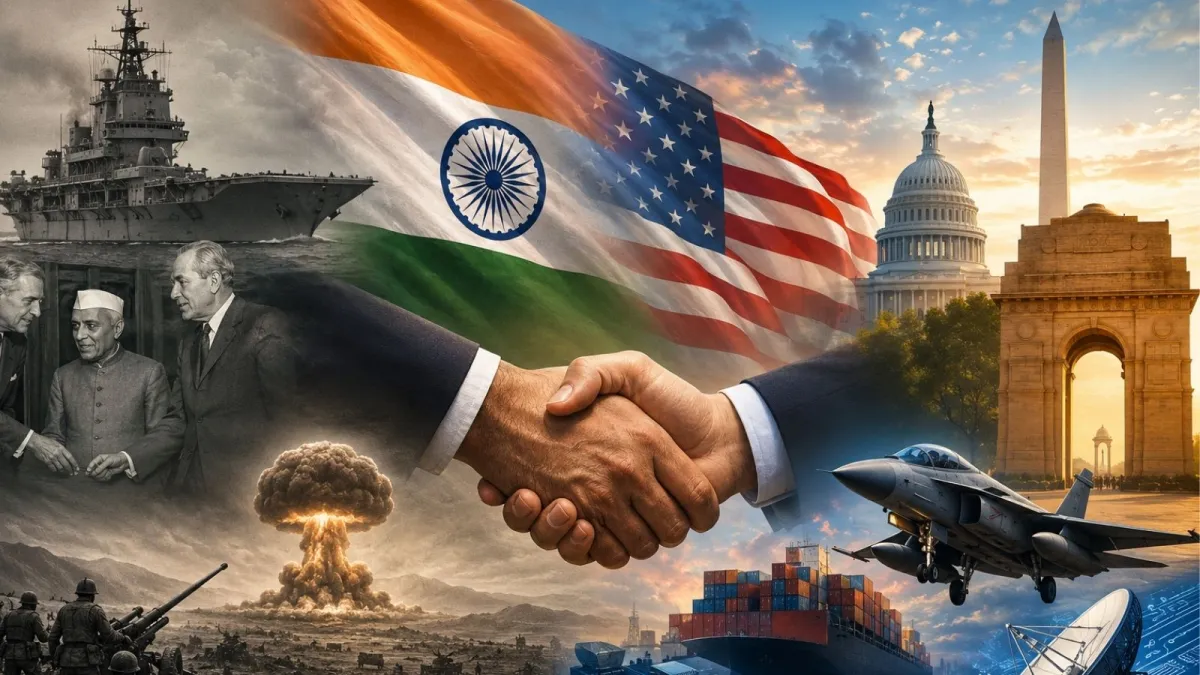
The relationship between India and the United States has undergone one of the most significant transformations in modern international diplomacy. Once characterized by strategic mistrust, ideological differences, and geopolitical competition during the Cold War, the partnership has steadily evolved into one of the world’s most important bilateral relationships. Today, India and the United States cooperate across defense, trade, technology, energy, education, healthcare, and regional security, making their partnership a cornerstone of the Indo-Pacific strategic framework.
The evolution of ties between the two democracies reflects changing global realities, shifting economic priorities, and shared concerns over regional and international security. Although disagreements remain on issues such as trade, immigration policies, and global governance reforms, both countries have consistently expanded their engagement over the past three decades.
Early Years: Friendly Beginnings but Diverging Priorities
Following India’s independence in 1947, both nations expressed optimism about establishing strong diplomatic relations. As the world’s oldest and largest democracies, they shared common political values. However, differences in foreign policy quickly emerged.
India adopted a policy of non-alignment under Prime Minister Jawaharlal Nehru, refusing to formally join either the Western bloc led by the United States or the Soviet bloc during the Cold War. Washington, meanwhile, prioritized containing communism and built strategic alliances with countries including Pakistan, which became an important American security partner.
This divergence created mutual suspicion. India viewed many American policies in South Asia as favoring Pakistan, while the United States often regarded India’s close economic and defense cooperation with the Soviet Union with caution.
Cold War Tensions and Strategic Distance
Throughout the 1950s, 1960s, and 1970s, bilateral relations remained inconsistent. The United States provided economic assistance to India but simultaneously strengthened military cooperation with Pakistan.
The relationship deteriorated further during the 1971 Bangladesh Liberation War, when the United States backed Pakistan diplomatically while India supported the Bengali independence movement. This period significantly strained trust between New Delhi and Washington.
India’s peaceful nuclear test in 1974 also triggered concerns in Washington over nuclear proliferation, resulting in stricter technology and nuclear export controls that affected bilateral cooperation for decades. 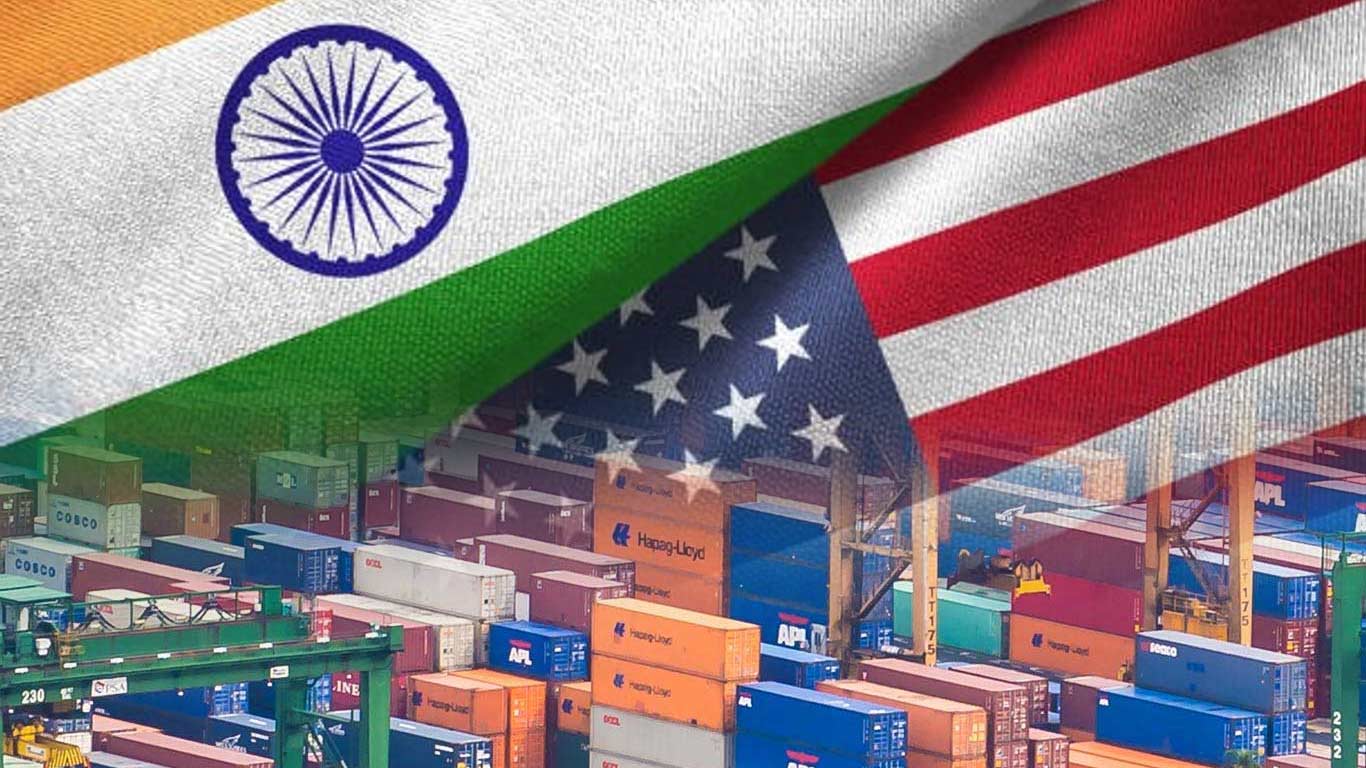
Economic Liberalisation Opens New Opportunities
A major turning point came in 1991 when India launched sweeping economic reforms that liberalized its economy, opened markets to foreign investment, and integrated more deeply into the global economy.
These reforms created fresh opportunities for American businesses and investors while significantly expanding commercial engagement between the two countries.
Although India’s 1998 nuclear tests initially resulted in U.S. sanctions, sustained diplomatic engagement eventually helped both governments rebuild confidence. Dialogue between senior officials laid the foundation for a new strategic understanding that recognized India’s growing global role.
The Civil Nuclear Agreement Changes the Relationship
One of the defining milestones in bilateral ties came during the administration of U.S. President George W. Bush with the landmark India-US Civil Nuclear Agreement.
The agreement effectively ended India’s long-standing nuclear isolation despite it remaining outside the Nuclear Non-Proliferation Treaty. It enabled civilian nuclear cooperation and symbolized growing American recognition of India as a responsible nuclear power and an emerging strategic partner.
The deal represented a fundamental shift in U.S. foreign policy toward India and elevated bilateral relations to an unprecedented level.
Strategic Partnership Expands Across Multiple Sectors
Over the past decade, cooperation has broadened considerably beyond defense and diplomacy.
Defense ties have deepened through military exercises, intelligence sharing, defense technology collaboration, logistics agreements, and growing arms purchases. Both countries regularly conduct joint military drills and increasingly coordinate their approach to regional security challenges.
Technology has become another pillar of the partnership. Collaboration now includes semiconductor manufacturing, artificial intelligence, quantum computing, critical minerals, telecommunications, cybersecurity, and advanced research.
Trade has also expanded dramatically, with the United States emerging as one of India’s largest trading partners. Bilateral commerce now spans goods, services, digital technology, pharmaceuticals, manufacturing, agriculture, and clean energy.
The Indian diaspora in the United States has further strengthened people-to-people ties. Indian-origin professionals have made significant contributions across technology, medicine, academia, entrepreneurship, and public service, helping build enduring connections between the two societies. 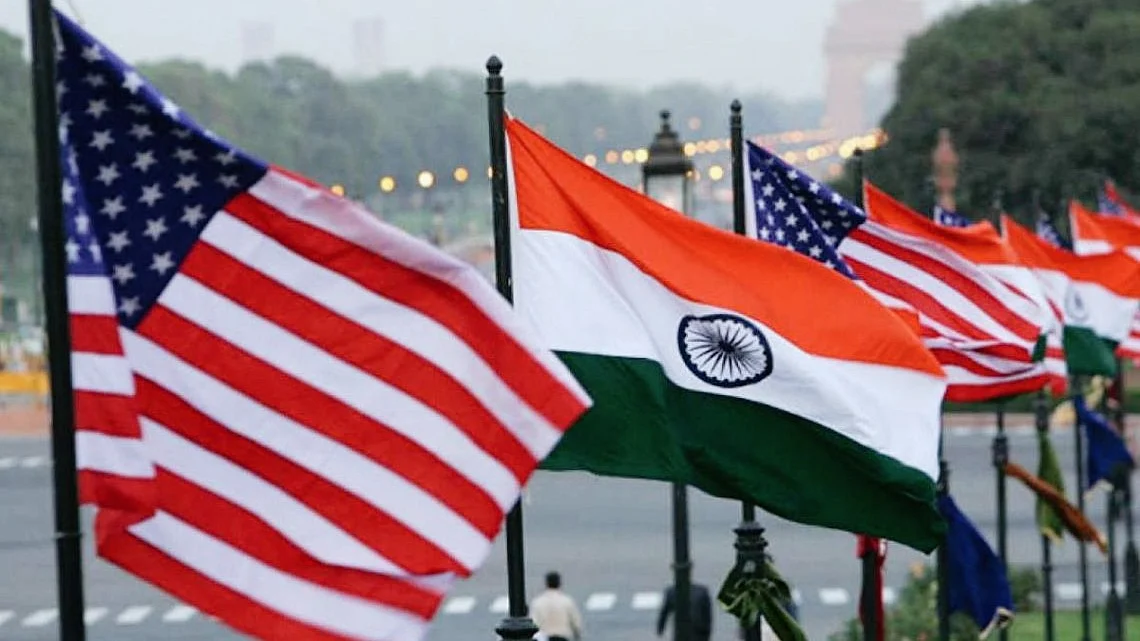
The Indo-Pacific and China’s Rise
China’s growing military and economic influence has added a new strategic dimension to India-US relations.
Both countries increasingly emphasize maintaining a free, open, and rules-based Indo-Pacific region. Their cooperation extends through multilateral initiatives involving Australia and Japan under the Quad framework, focusing on maritime security, infrastructure development, resilient supply chains, disaster response, and emerging technologies.
While India maintains its strategic autonomy and continues to pursue an independent foreign policy, its security cooperation with Washington has expanded considerably amid evolving regional challenges.
Trade Differences Continue Despite Growing Cooperation
Despite remarkable progress, bilateral ties continue to experience periodic disagreements.
Trade negotiations have often encountered obstacles over tariffs, market access, agricultural products, digital commerce, intellectual property rights, and visa policies affecting skilled professionals.
However, both governments have generally managed these disputes through sustained diplomatic dialogue rather than allowing them to derail the broader strategic partnership.
Negotiations on trade facilitation and economic cooperation continue as both sides seek to strengthen supply chains and reduce barriers to investment.
A Partnership Shaped by Shared Interests
The India-US relationship today extends far beyond traditional diplomacy. Cooperation now encompasses climate change, renewable energy, healthcare, education, innovation, space exploration, defense manufacturing, critical technologies, counterterrorism, and global governance.
Leaders from both countries increasingly describe the partnership as one of the defining relationships of the 21st century, driven by shared democratic values, complementary economic interests, and common strategic objectives.
While differences remain inevitable between two large and influential democracies, the overall trajectory points toward deeper engagement. As geopolitical competition intensifies and global economic dynamics continue to evolve, India and the United States are expected to further strengthen cooperation across multiple sectors, reinforcing a partnership that has transformed from Cold War estrangement into a comprehensive strategic alliance.