
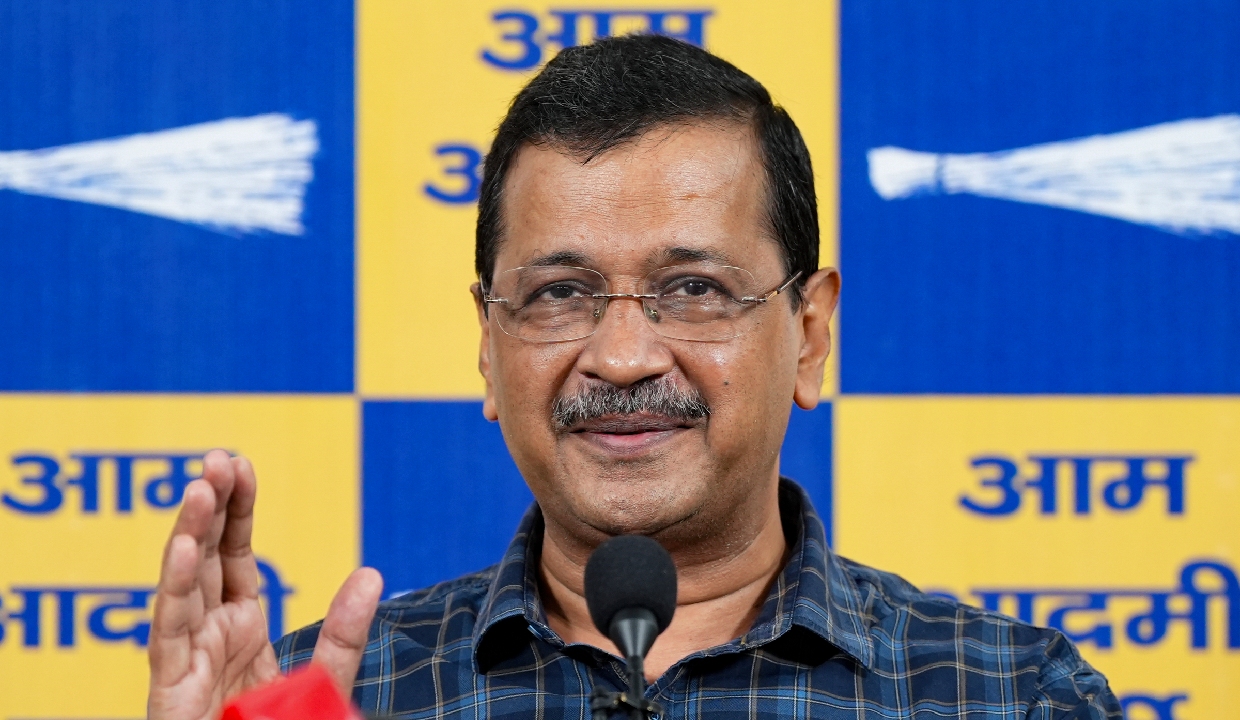
Arvind Kejriwal has intensified his criticism of the ruling establishment, asserting that his party represents the “true Sanatani” ideology while accusing the opposition of exploiting religious symbols for political advantage. His remarks triggered a fresh round of political debate over the intersection of faith and electoral campaigning in India.
Speaking at a public engagement, Kejriwal positioned the Aam Aadmi Party (AAP) as a movement rooted in ethical governance and cultural values, distancing it from what he described as opportunistic politics. He claimed that his party upholds genuine spiritual traditions and public service values, which he framed under the term “Sanatani,” traditionally associated with long-standing Hindu cultural and philosophical practices.
In a direct attack on the opposition, Kejriwal accused the Bharatiya Janata Party of repeatedly invoking religious figures and themes, particularly Lord Ram, to mobilize voters during elections. He alleged that such references are being used strategically to consolidate political support rather than to reflect genuine devotion or cultural commitment.
Bharatiya Janata Party has not officially responded to the latest remarks at the time of reporting, but the issue is expected to add further intensity to the ongoing political confrontation between the two parties, especially as electoral narratives increasingly focus on identity, religion, and governance. 
Kejriwal’s statement comes amid a broader pattern of political messaging where parties across the spectrum have been engaging in cultural and religious symbolism to connect with voters. However, his remarks specifically highlight a growing contention over whether religious references in political campaigns represent genuine cultural expression or calculated electoral strategy.
AAP leaders supporting Kejriwal’s position argued that the party’s focus remains on issues such as education, healthcare, electricity, and public welfare, which they say reflect practical governance priorities rather than identity-driven politics. They further maintained that branding the party as “Sanatani” aligns with values of truth, service, and inclusivity rather than religious exclusivity.
Political observers note that such statements are likely aimed at reshaping public perception ahead of key political contests, where narrative-building plays a crucial role. The exchange also underscores the continued centrality of religious symbolism in Indian electoral discourse, which remains a sensitive and influential factor in voter sentiment.
Opposition leaders, however, are expected to counter these claims by defending their cultural outreach programs and asserting that references to religious figures are part of India’s civilizational identity rather than political manipulation.
As the political atmosphere heats up, the debate around religion and electoral strategy is likely to remain a focal point, with both sides attempting to frame their positions as aligned with India’s cultural and democratic ethos.