
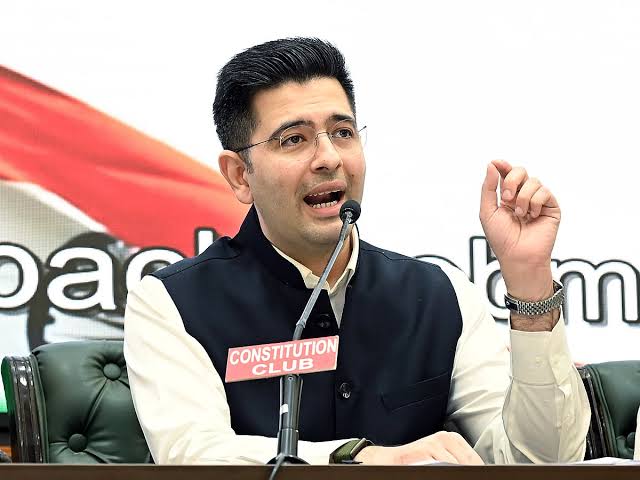
In a significant legal development concerning online content, the Delhi High Court has granted partial relief to Rajya Sabha MP Raghav Chadha by directing the removal of certain social media posts that it found to be objectionable and potentially defamatory. At the same time, the court declined to extend protection against all the content challenged by the politician, observing that much of it did not appear defamatory at first glance.
The ruling comes amid an ongoing legal battle initiated by Chadha over social media content that he alleged damaged his reputation through false narratives, manipulated material, and AI-generated content circulating across digital platforms.
Court Distinguishes Between Defamation and Personality Rights
While pronouncing its interim order, the bench made a crucial distinction between defamation claims and personality rights. The court clarified that the dispute did not involve the unauthorized commercial exploitation of Chadha’s identity or image, which typically forms the basis of personality rights litigation.
Instead, the matter primarily revolved around allegations of reputational harm arising from social media posts and online commentary. The court held that only a limited number of posts warranted immediate removal, while the remaining content could not be categorized as defamatory on a prima facie basis at this stage of proceedings.
Allegations of False and Manipulated Content
Chadha had approached the High Court seeking urgent intervention against several online posts that he claimed portrayed him in a misleading and damaging manner. According to his petition, the content included manipulated visuals, alleged deepfakes, AI-generated material, and posts that falsely suggested improper motives behind his political decisions.
The MP argued that the circulation of such content had the potential to mislead the public and inflict serious damage on his public image and political standing. He sought broad relief against both identified individuals and unknown online entities responsible for creating or disseminating the content. 
Partial Relief Granted
After examining the disputed material, the court concluded that only certain specific posts crossed the threshold warranting judicial intervention. As a result, it directed the removal of those posts while refusing to order a blanket takedown of all content challenged by Chadha.
The court emphasized that criticism, commentary, and political discourse on social media must be carefully distinguished from content that is genuinely defamatory. In doing so, it highlighted the importance of balancing an individual’s reputation with the constitutional principles of free speech and democratic debate.
Debate Over Political Criticism and Online Speech
The case has drawn attention because it touches upon a growing legal challenge in the digital era: determining where legitimate political criticism ends and defamation begins.
During earlier hearings, the court had observed that public figures are often subject to intense scrutiny and criticism, particularly regarding political decisions. It also noted that the line separating criticism from defamation can sometimes be extremely narrow, requiring careful judicial examination of each piece of content on its own merits.
These observations became central to the court’s eventual decision to limit the scope of interim relief rather than order the wholesale removal of all disputed material.
Growing Concerns Over AI-Generated Content
The litigation also reflects the increasing challenges posed by artificial intelligence and digital manipulation technologies. Deepfakes, synthetic media, and AI-generated content have emerged as major concerns for public figures, policymakers, and courts worldwide.
As political discourse increasingly shifts to online platforms, questions surrounding accountability for digitally altered content continue to gain prominence. The case highlights how courts are being called upon to address complex issues involving emerging technologies, online reputation, freedom of expression, and platform responsibility.
Detailed Order Awaited
While the court has pronounced its interim decision, a detailed written order is expected to provide further clarity regarding the specific content identified for removal and the legal reasoning behind distinguishing between defamatory material and permissible political commentary.
The case is likely to remain closely watched, as its outcome could influence future disputes involving AI-generated content, online political criticism, and the evolving boundaries of defamation law in the digital age.