
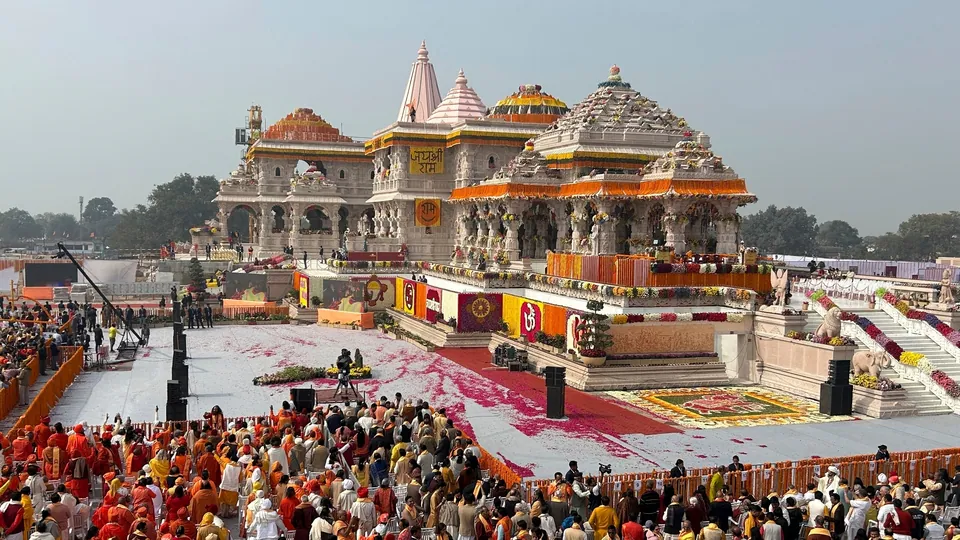
The controversy surrounding the alleged misappropriation of donations collected at the Ram Temple in Ayodhya has taken a dramatic turn after the Faizabad Bar Association resolved not to provide legal representation to the individuals arrested in connection with the case. The decision reflects growing public outrage over allegations involving funds and offerings made by devotees at one of India’s most prominent religious sites.
According to the resolution adopted during a general body meeting, advocates affiliated with the association will not appear on behalf of the accused in court proceedings related to the alleged donation embezzlement case. The association also approved a monetary penalty against any member found violating the resolution, signaling a strong collective stance from the local legal fraternity.
Strong Reaction from Legal Community
Members of the bar association stated that the allegations had deeply affected public sentiment and the legal community in Ayodhya. Lawyers argued that the case involves offerings made by millions of devotees who contributed to the temple with faith and devotion, making the allegations particularly sensitive.
The association’s decision comes amid increasing scrutiny of the accused, who are alleged to have been involved in irregularities linked to temple donations. Legal representatives participating in the meeting emphasized the need for accountability and transparency in handling religious contributions.
Background of the Donation Controversy
The alleged donation scam emerged following an investigation into the management of offerings received at the Ram Temple. Authorities launched a probe after concerns were raised regarding discrepancies in donation records and financial management.
Subsequent investigations led to the registration of a criminal case and the arrest of several individuals connected to the handling of temple donations. Law enforcement agencies have reportedly carried out searches and recovered substantial amounts of cash and other assets during the course of the investigation.
The matter gained further significance due to the temple’s national importance and the enormous volume of donations received from devotees across India and abroad. 
Ongoing Investigation
Investigative agencies continue to examine financial records, donation management procedures, and the role of individuals responsible for collecting, storing, and depositing temple offerings. Officials are also scrutinizing the movement of funds and evaluating whether established protocols were followed.
Authorities have indicated that the investigation remains active and that additional findings may emerge as evidence is analyzed. The case has triggered widespread discussion regarding governance, financial oversight, and accountability within religious institutions that handle large public donations.
Legal and Ethical Debate
The decision of the Faizabad Bar Association has also sparked debate within legal circles. While many local lawyers have supported the move as a reflection of public sentiment, legal experts note that access to legal representation remains a fundamental principle of the justice system.
The development highlights the emotional and social dimensions of the case, which extends beyond allegations of financial misconduct and touches upon issues of public trust, religious faith, and institutional responsibility.
Public Attention Intensifies
As court proceedings continue, the alleged donation embezzlement case is expected to remain under close public and political scrutiny. The outcome of the investigation could have significant implications for the management of religious donations and the accountability mechanisms governing major religious institutions in India.
For now, the refusal of local lawyers to represent the accused marks another significant chapter in a controversy that has attracted nationwide attention and raised important questions about transparency in the administration of religious trusts.