
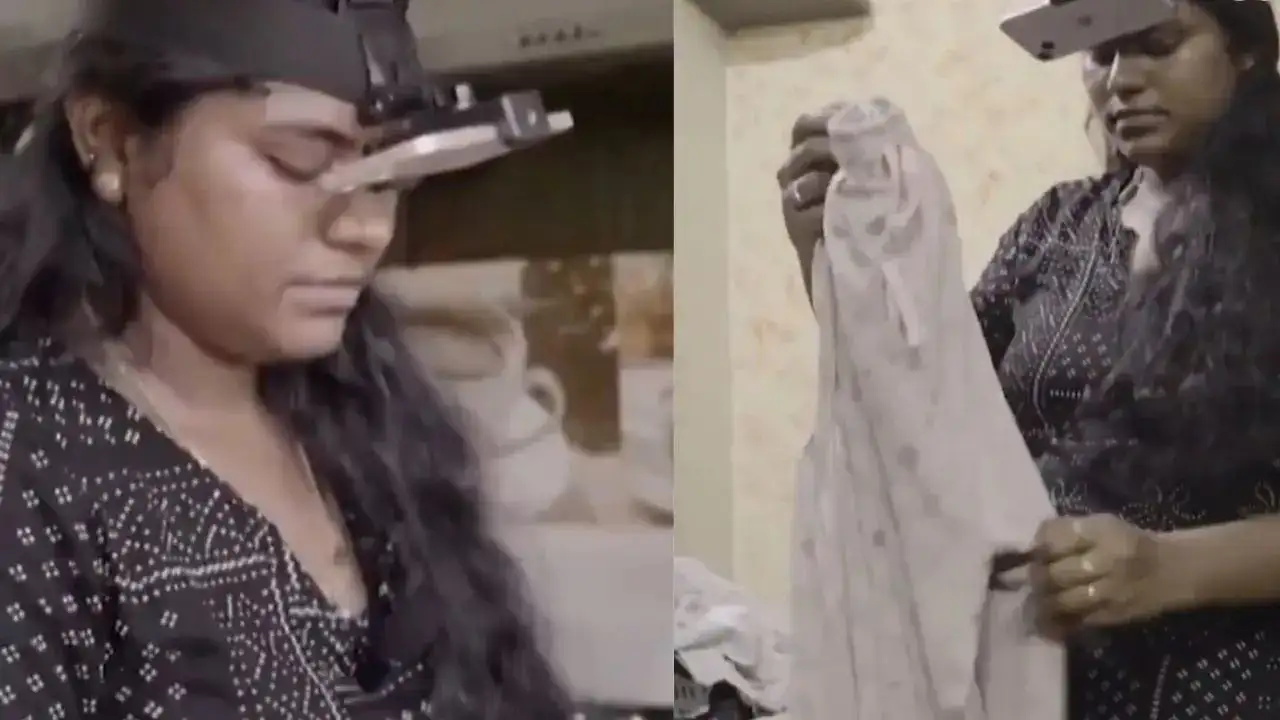
A homemaker from Chennai has become part of an emerging technology-driven workforce by earning money through recording her everyday household activities for artificial intelligence companies developing humanoid robots.
The unusual side-income opportunity has attracted widespread attention and sparked discussions about the evolving relationship between humans and machines. By simply documenting routine domestic tasks, the woman is contributing valuable data that could help future robots perform real-world household functions more effectively.
Everyday Household Tasks Become Valuable AI Data
The 25-year-old woman reportedly earns around Rs 250 per hour by wearing a smartphone-mounted device while carrying out routine chores. Activities such as preparing coffee, cutting fruits, organizing household items, and folding clothes are recorded from a first-person perspective.
These recordings are then provided to AI companies that use the footage to train robots and machine-learning systems to understand how humans interact with objects and navigate daily environments. The process enables developers to create more sophisticated robots capable of replicating ordinary household activities.
Growing Demand for First-Person Data
Unlike text-based artificial intelligence models that rely primarily on digital information, humanoid robots require visual and physical data demonstrating how tasks are performed in real-world settings.
Experts describe these recordings as first-person or “egocentric” data. Such information enables machines to study hand movements, object handling, and environmental interactions, helping them imitate human behavior more accurately.
The increasing demand for this type of data has created new earning opportunities for individuals willing to document their daily routines.
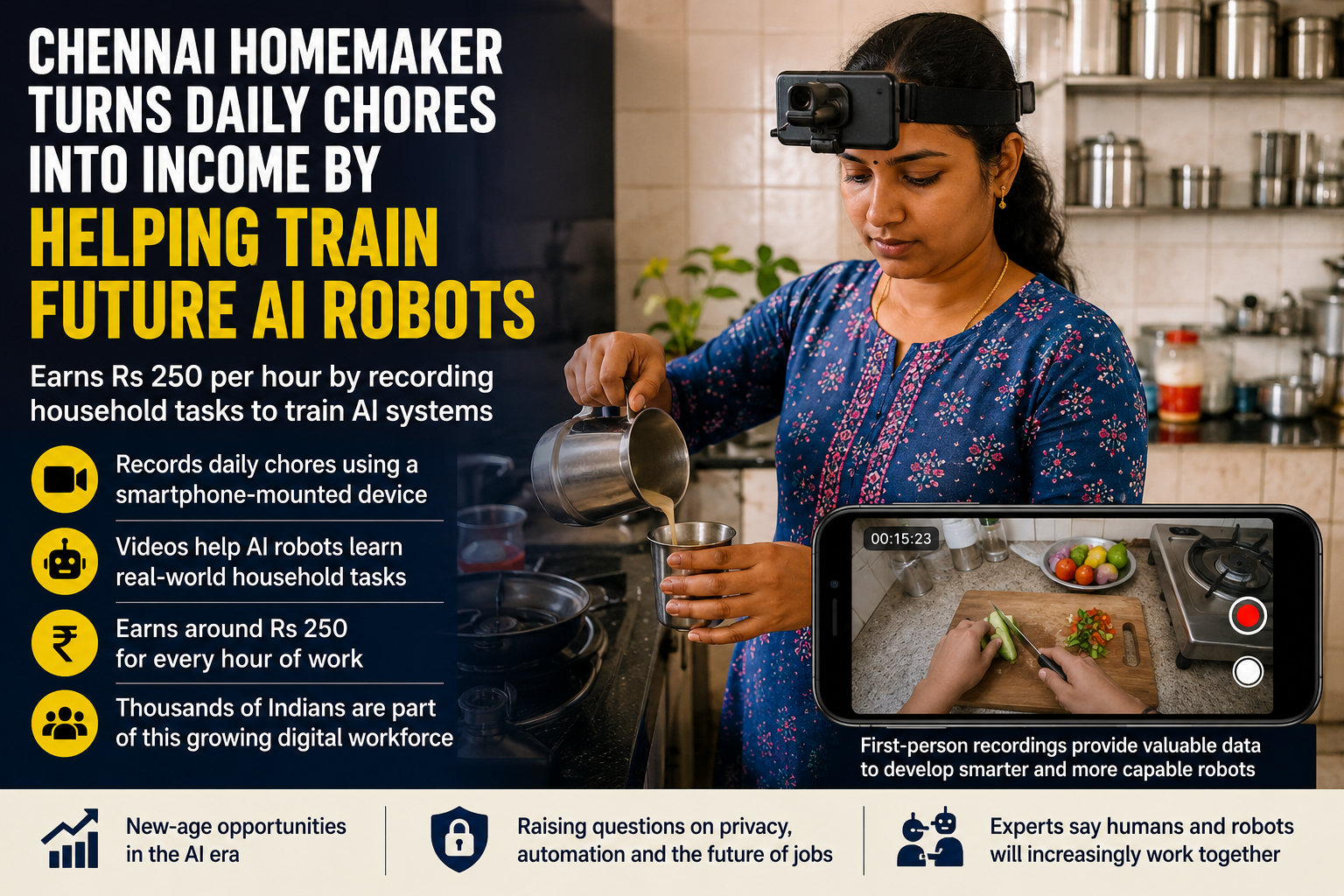
Thousands of Indians Contributing to AI Development
Industry observers believe India is emerging as an important center for AI data generation and annotation. Thousands of workers across various sectors are participating in projects involving wearable cameras, motion sensors, and voice recordings.
Some contributors work from their homes by recording everyday activities, while others operate in factories or specialized facilities. Together, they help create the large datasets required for developing next-generation robotics and automation technologies.
Technology Sparks Debate Over the Future of Jobs
While the trend provides additional income opportunities, it has also triggered discussions about automation and its long-term impact on employment.
Critics argue that workers contributing data to AI systems could eventually help create technologies capable of replacing certain human roles. Concerns regarding privacy, fair compensation, and the broader social impact of automation have also surfaced.
Supporters, however, believe that humans and robots will increasingly collaborate rather than compete. Many technology experts envision automation enhancing human productivity rather than eliminating jobs entirely.
India’s Growing Role in the AI Economy
As artificial intelligence continues to reshape industries worldwide, India’s workforce is becoming an important contributor to the development of machine-learning systems.
The emergence of AI-related micro-jobs and data collection assignments demonstrates how technological innovation is creating entirely new categories of employment. For many participants, these opportunities provide supplementary income while connecting them to a rapidly expanding global industry.
The Chennai homemaker’s experience highlights how ordinary daily routines are acquiring unexpected economic value in the age of artificial intelligence. As demand for training data continues to rise, more individuals may find themselves contributing to technologies that could shape the future of homes, workplaces, and human-machine interaction.
Although the long-term implications remain open to debate, the trend underscores the profound ways in which artificial intelligence is transforming work and creating new opportunities within the digital economy.