
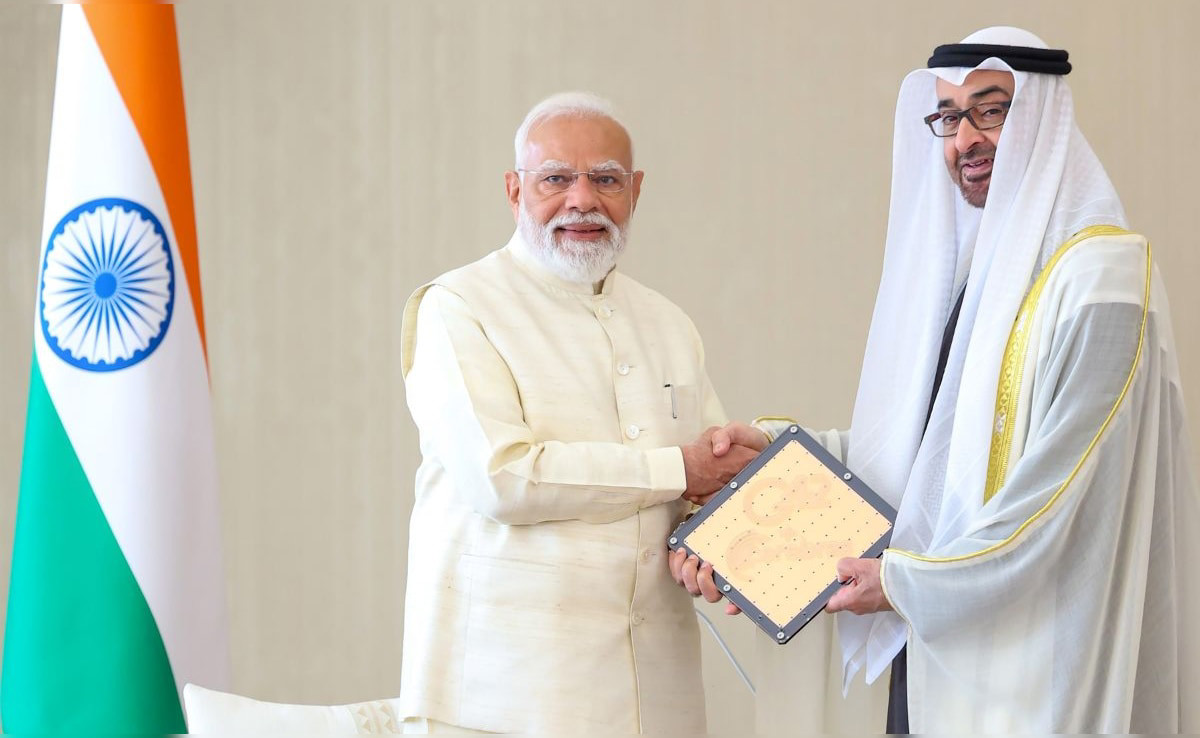
India and the United Arab Emirates have significantly expanded their strategic partnership by finalising a series of agreements spanning defence cooperation, energy security, and maritime and shipping collaboration, alongside investment commitments worth approximately $5 billion. The deals were concluded during Prime Minister Narendra Modi’s brief but high-impact visit to Abu Dhabi, where both sides reaffirmed their commitment to deepening a comprehensive strategic relationship.
The latest set of agreements reflects a broadening of ties between the two nations, moving beyond traditional trade relations into critical sectors such as defence production, energy infrastructure, logistics, and advanced technology. Officials from both countries described the outcomes as a major step forward in strengthening long-term cooperation amid shifting geopolitical and economic conditions.
Strengthening Defence Collaboration
A key highlight of the agreements is the formalisation of a framework for enhanced defence cooperation. The partnership aims to deepen collaboration in areas such as defence industrial development, joint training exercises, maritime security, cyber defence, and secure communication systems. Both sides have also expressed interest in increasing technology sharing and co-development of defence platforms, signalling a shift toward more integrated security cooperation.
The renewed defence engagement comes at a time when regional security dynamics in West Asia remain volatile, prompting both India and the UAE to seek stronger bilateral mechanisms for stability and coordination.
Expanding Energy Security Ties
Energy security emerged as another central pillar of the agreements. The two countries agreed to strengthen cooperation in crude oil storage, liquefied petroleum gas (LPG) supply, and strategic petroleum reserves.
One of the key elements of the agreement includes enhanced participation of UAE-based energy companies in India’s strategic petroleum reserve infrastructure, allowing for expanded storage capacity and long-term supply arrangements. Additionally, both sides have committed to ensuring stable LPG supplies to support India’s growing domestic energy demand.
These measures are designed to improve resilience against global supply disruptions and fluctuations in energy markets, while also securing long-term commercial stability for both countries. 
Maritime and Shipping Cooperation
India and the UAE also agreed to deepen cooperation in maritime infrastructure and shipping logistics. The partnership includes initiatives aimed at improving port connectivity, enhancing ship repair and maintenance capabilities, and streamlining cargo movement between the two countries.
A digital integration framework for customs and logistics operations has also been advanced to reduce transit time and improve trade efficiency. These developments are expected to strengthen India’s position as a regional maritime hub while expanding the UAE’s role in India’s shipping and logistics ecosystem.
$5 Billion Investment Commitment
Alongside sectoral agreements, the UAE has announced investment commitments worth $5 billion in India. These investments are expected to flow into key areas such as infrastructure development, banking, and financial services.
The investment package includes participation by major UAE-based financial and investment institutions in Indian infrastructure projects and financial entities, reflecting growing investor confidence in India’s economic growth trajectory.
Strategic Significance of the Visit
The agreements were finalised during a high-level meeting between Prime Minister Narendra Modi and the leadership of the United Arab Emirates in Abu Dhabi. Both sides emphasised the importance of maintaining strong strategic alignment, particularly in the face of global economic uncertainty and regional security challenges.
The visit also reinforced the importance of the India–UAE comprehensive strategic partnership, which has steadily evolved over the past decade into one of India’s most important bilateral relationships in the Gulf region.
Officials noted that the new agreements are expected to further accelerate trade, investment, and technology cooperation between the two countries, while also contributing to broader regional stability and economic integration.