
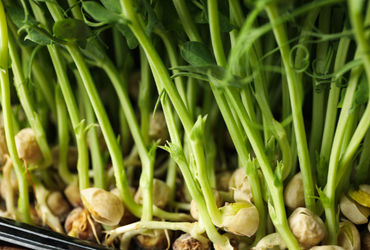
Representative image
A new study has demonstrated that chickpea plants can grow and even produce seeds in simulated lunar soil when combined with biological treatments, offering a potential pathway for sustainable food production during long-term missions to the Moon.
The research, titled “Bioremediation of lunar regolith simulant through mycorrhizal fungi and plant symbioses enables chickpea to seed,” was conducted by Jessica Atkin, Elizabeth Pierson, Terry Gentry and Sara Oliveira Santos of Texas A&M University and published in the journal Scientific Reports.
Scientists used lunar regolith simulant (LRS)—a material designed to mimic the Moon’s soil—to test whether crops could be cultivated using biological methods. The team combined chickpea plants with arbuscular mycorrhizal fungi (AMF) and vermicompost, a nutrient-rich organic fertilizer produced through earthworm composting.
The results showed that chickpea seeds successfully germinated in mixtures containing up to 75% lunar regolith simulant when treated with AMF. Plants in these mixtures were able to grow, flower and produce seeds, although the number of seeds decreased as the proportion of lunar soil increased.
Researchers also found that while higher concentrations of simulated lunar soil caused plant stress—such as stunted growth and yellowing leaves—the presence of AMF improved plant resilience. In experiments using 100% lunar regolith simulant, plants treated with the fungi survived about two weeks longer than those without it.
Importantly, the fungi were able to colonise plant roots in all tested conditions, including pure lunar simulant. According to the researchers, this symbiotic relationship helped plants absorb nutrients more efficiently while also improving the structural properties of the soil.
The study also showed that the biological treatments helped stabilize the simulated lunar soil by forming aggregates, which could improve water retention and reduce problems caused by the fine, dusty particles found in lunar regolith.
Although plants grown in the simulant showed signs of nutrient stress and produced fewer seeds than those grown in regular soil, the researchers said the findings demonstrate a promising first step toward using biological systems to support agriculture on the Moon.
The authors noted that further research will be needed to optimise soil conditioning, address plant stress and evaluate the long-term safety and nutritional quality of crops grown in lunar environments.
Leave a Reply