
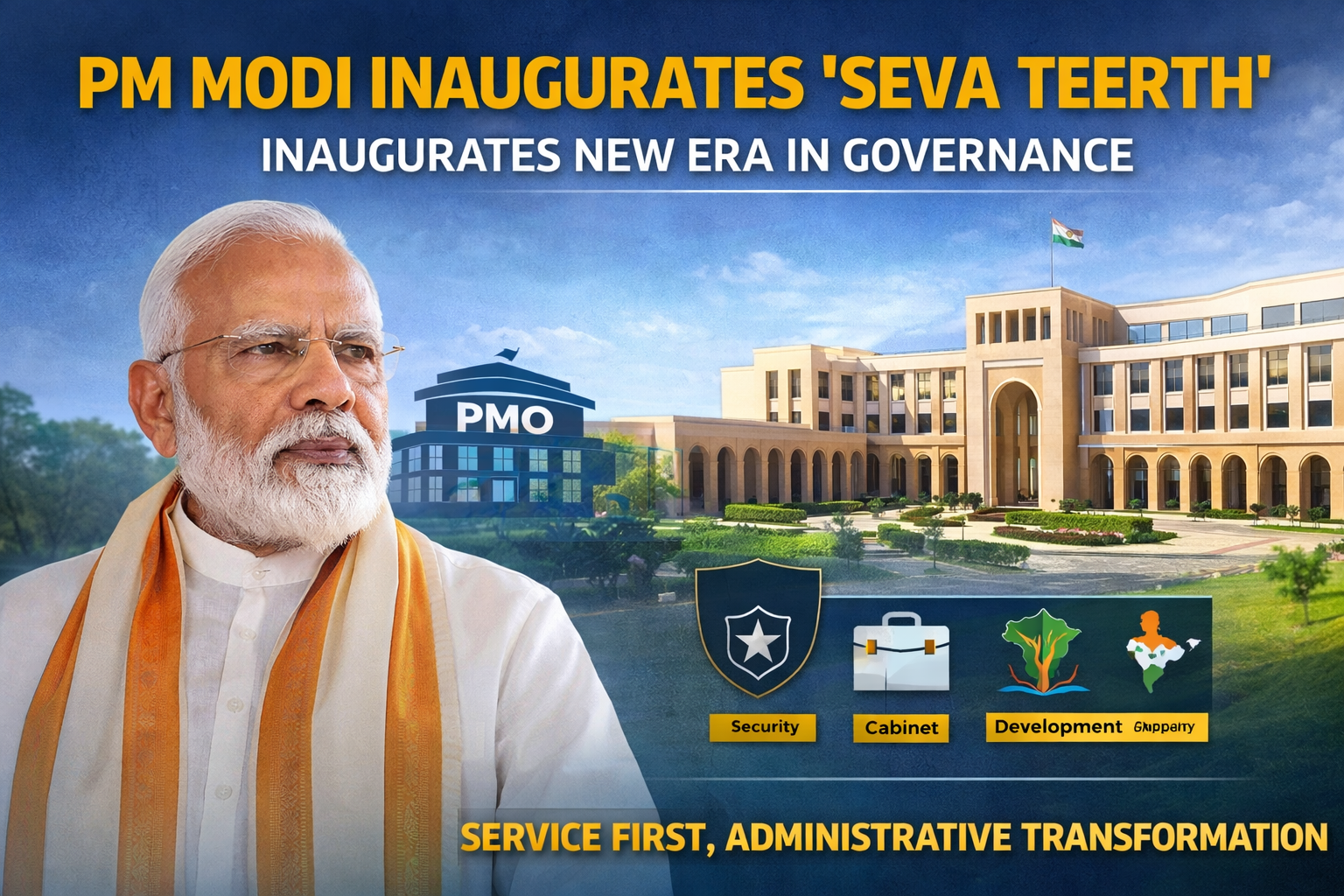
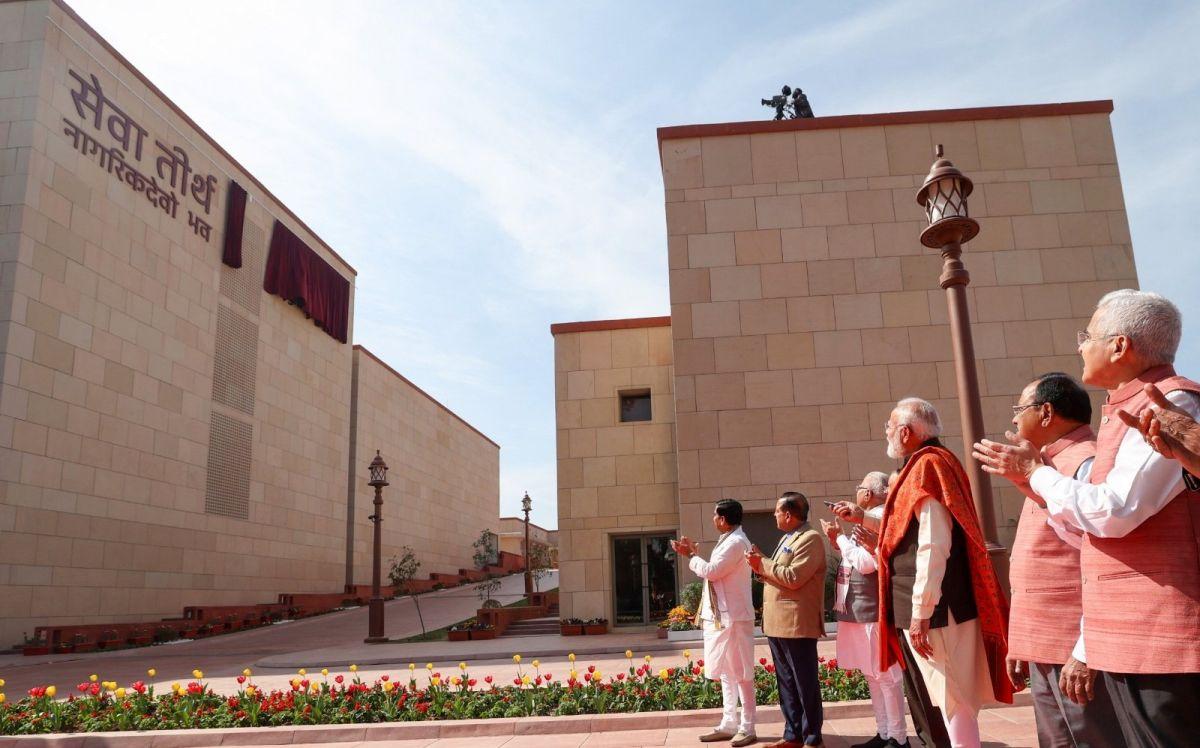
In a momentous development in the country’s administrative history, Prime Minister Narendra Modi today inaugurated the Seva Teerth complex, signalling a new era in the way the Indian government functions. The event marked the first formal address from the newly commissioned headquarters that will now house the Prime Minister’s Office (PMO) alongside other vital administrative bodies.
Addressing dignitaries, bureaucrats and invited guests at the inauguration in New Delhi, Mr. Modi said the nation is “witnessing history being written” as the Seva Teerth becomes fully operational. He described the event as a watershed moment, reflecting India’s progress and its commitment to service-centric governance.
A Departure from the Past
The Seva Teerth complex replaces the decades-old administrative setup that operated from the heritage North Block and South Block buildings in the Raisina Hills area of the national capital. For over seven decades, these colonial-era structures served as the nerve centre of Indian government operations, but modern demands and the imperative for consolidated administrative functioning made a new facility imperative.
Officials said the Seva Teerth has been designed with a focus on sustainability, modern technology, and facilities to support efficient governance. The name itself — “Seva Teerth” — embodies the spirit of service that the government says will guide future policymaking and administrative priorities.
Unified Administration and Enhanced Coordination
Seva Teerth will house the Prime Minister’s Office, the National Security Council Secretariat and the Cabinet Secretariat under one roof. This consolidation is expected to improve communication and coordination between key organs of the executive branch.
Adjacent to the main complex, two additional buildings — known as Kartavya Bhavan 1 and Kartavya Bhavan 2 — will accommodate central ministries including Finance, Defence, Education, Health, Agriculture, and others. Officials said this arrangement will centralise core functions and ease inter-ministerial workflow.
Service First: PM’s Vision from Seva Teerth
In his address, the Prime Minister emphasised that while the legacy of the old administrative buildings will always be remembered, the nation must embrace infrastructure that reflects its current aspirations and future trajectory.
He said the establishment of Seva Teerth represents a shift from inherited administrative traditions toward a governance model rooted in service, efficiency and inclusivity. Mr. Modi reiterated that development is not merely about physical infrastructure but about creating systems that are citizen-centric and capable of responding to emerging challenges.
First Administrative Decisions from New Headquarters
Officials present at the ceremony also highlighted that the first set of decisions taken from the Seva Teerth headquarters underscored the government’s continuing focus on inclusive growth. These initial decisions reportedly covered areas such as women’s empowerment, youth employment, agricultural support, and expanded access to essential services for economically vulnerable populations. Sources said this reflected the broader directive to prioritise citizen welfare in governance.

A Green and Smart Workspace
The new Seva Teerth complex has been constructed following modern green building norms and digital standards. It incorporates energy-efficient design elements, waste and water management systems, renewable energy integration and cutting-edge digital infrastructure to support electronic governance and streamlined workflows.
Security arrangements in the complex have also been described as state-of-the-art, with advanced surveillance and multiple layers of access control to ensure safety of personnel and sensitive information.
Heritage Preserved, Future Embraced
While Seva Teerth ushers in a new administrative chapter, the North and South Blocks — iconic structures that have housed India’s central administration since Independence — will not be discarded. The government has indicated that these buildings will be preserved as heritage sites, allowing future generations to remember their historical significance.
Officials said the transition to Seva Teerth reflects a balance between honouring the past and building for the future, aligned with the government’s overarching vision of rapid transformation and enhanced governance.
An Administrative Turning Point
As India prepares to confront the complexities of the 21st century, the inauguration of Seva Teerth stands out as a defining moment in its institutional landscape. It represents not just a physical relocation of offices but a symbolic reaffirmation of the country’s determination to strengthen governance frameworks, improve service delivery, and deepen the connection between the state and its citizens.
The Prime Minister concluded his address by calling on all public servants to embrace the ethos of service and reaffirm their commitment to the nation’s progress from this new seat of governance.
Leave a Reply