
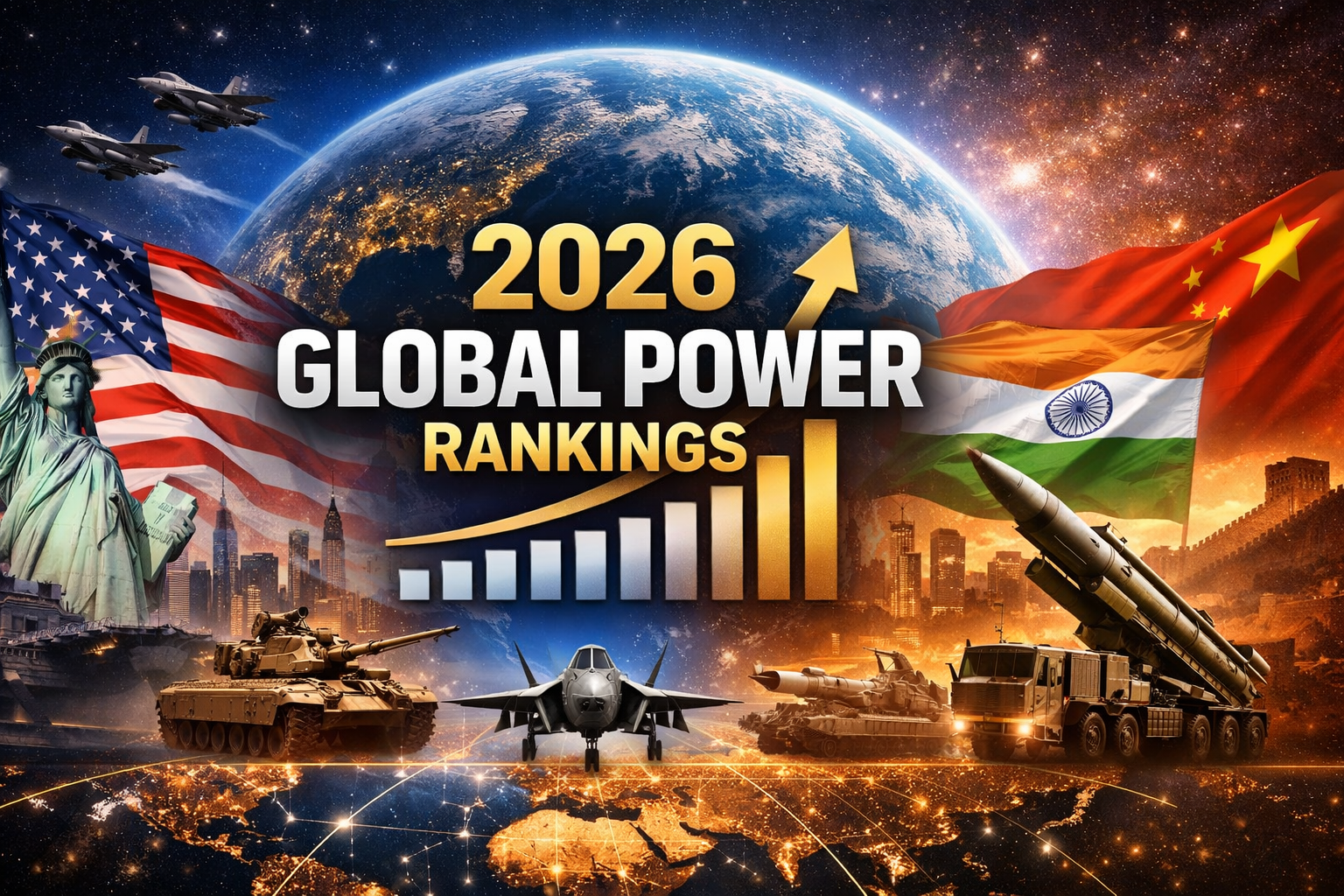
In the latest 2026 global power rankings, the United States has once again secured the top position, reaffirming its dominance as the world’s most influential nation. The rankings, prepared by an international research body that assesses national power using a wide range of indicators, measure how effectively countries can shape global political, economic, and security outcomes.
While the United States continues to lead, the list has drawn significant attention in India because India does not feature among the top 10 most powerful countries, instead being placed at 12th position. This outcome has sparked debate, given India’s status as one of the fastest-growing major economies and a rising geopolitical force.
How the Rankings Are Calculated
The global power rankings are based on a comprehensive methodology that evaluates nations across multiple dimensions, including:
- Economic strength and stability
- Military capabilities and defense preparedness
- Political influence in international institutions
- Diplomatic reach and strategic partnerships
- Technological advancement and innovation
- Demographic strength and human capital
Rather than focusing on a single metric such as GDP or military spending, the ranking uses a combined score to assess how effectively a country can project power and influence internationally.
Top 10 Most Powerful Countries in 2026
According to the 2026 list, the world’s 10 most powerful nations are:
- United States – Retains the top position due to unmatched military reach, strong global alliances, economic dominance, and leadership in technology and innovation.
- China – Continues to be a major challenger with its vast economy, expanding military capabilities, and increasing global diplomatic footprint.
- Russia – Maintains strong influence through military power, energy resources, and strategic geopolitical positioning.
- United Kingdom – Holds a key role in global finance, diplomacy, and international security frameworks.
- Germany – Recognized for its economic strength and leadership within Europe.
- South Korea – Emerges as a major technological and regional security power.
- France – Maintains influence through diplomacy, military capability, and global cultural presence.
- Japan – Continues to play a vital role in the global economy and regional stability in Asia.
- Saudi Arabia – Ranks high due to its economic resources, energy influence, and strategic position in the Middle East.
- Israel – Completes the top 10 with its strong defense sector, advanced technology, and regional influence.
India’s Position: Strength Without Top 10 Recognition
India’s placement at 12th position has surprised many observers. As the world’s most populous country and one of its largest economies, India is widely regarded as a major global player. It has made rapid progress in defense modernization, space technology, digital infrastructure, and international diplomacy.
However, experts suggest that India’s absence from the top 10 reflects certain limitations within the ranking framework. While India excels in population strength and economic growth, some indicators such as long-established global alliances, historical diplomatic influence, and technological dominance still favor older world powers.
India’s growing strategic partnerships, especially in the Indo-Pacific region, and its expanding role in global forums suggest that its influence is rising steadily. Many analysts believe it is only a matter of time before India breaks into the top 10 in such rankings.
Pakistan’s Position in the Global Context
Pakistan does not appear in the 2026 top 10 list. In some previous rankings based on different methodologies, Pakistan has featured due to its military strength and strategic location. However, in this broader and more comprehensive assessment, its overall score does not place it among the world’s leading powers.
What “Power” Really Means in Global Rankings
Experts emphasize that global power rankings should not be seen as absolute judgments of a country’s success or importance. Instead, they reflect a specific definition of power based on international influence and capacity to shape global outcomes. Different organizations use different models, which can result in varying positions for the same country.
Power in the modern world is no longer limited to military strength alone. It also includes economic resilience, technological innovation, diplomatic leadership, and cultural influence. Countries that perform well across all these areas tend to rank higher.
A Changing Global Landscape
The 2026 rankings highlight a world in transition. Traditional powers continue to dominate, but emerging economies like India are rapidly closing the gap. With sustained economic growth, increasing diplomatic engagement, and stronger defense capabilities, India’s global standing is expected to rise further in the coming years.
As international power dynamics evolve, future rankings may reflect a more multipolar world where influence is shared among a broader group of nations rather than concentrated among a few.
Leave a Reply