
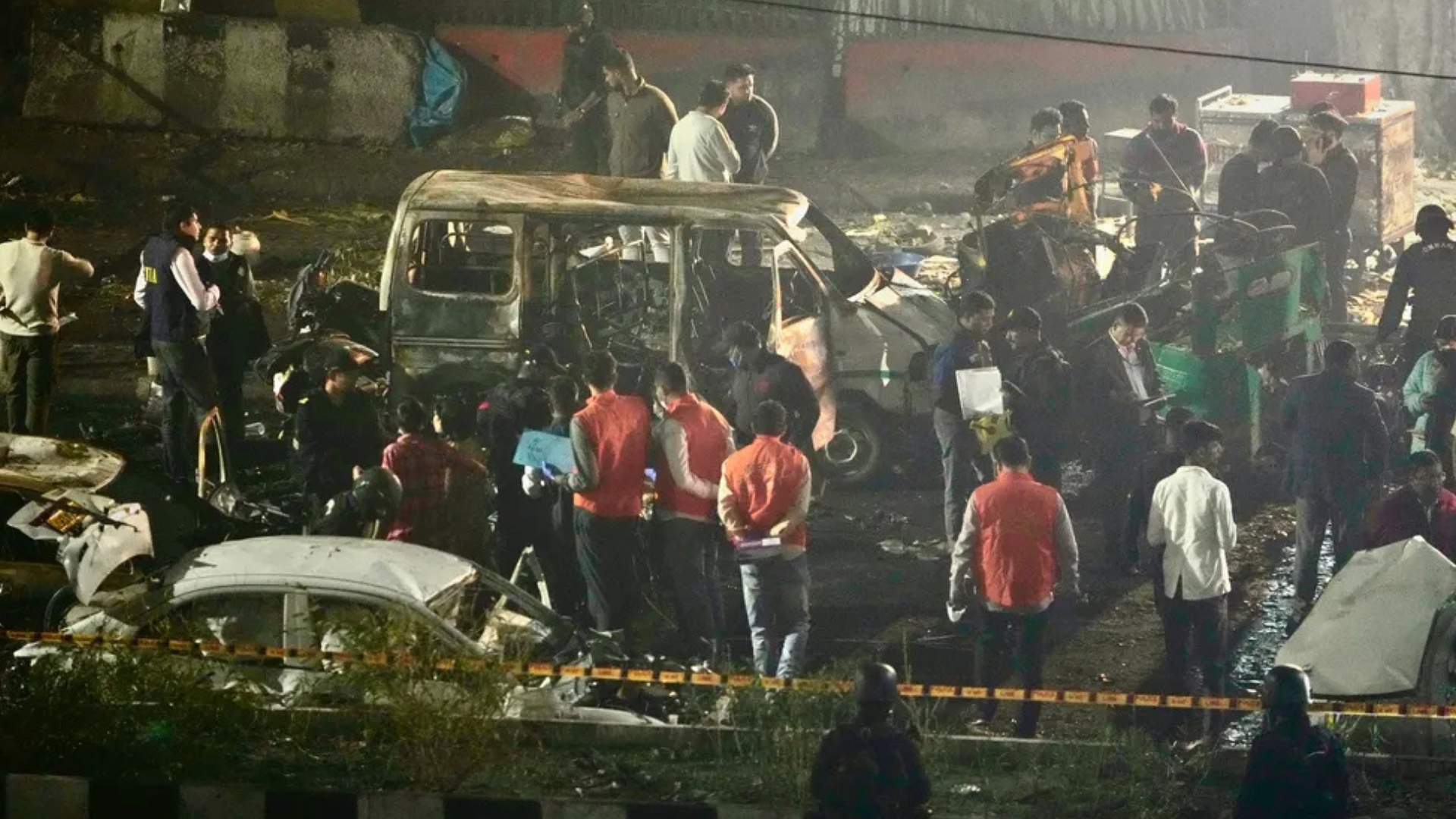
The recent car blast in Delhi and a subsequent explosion in Islamabad have triggered divergent diplomatic responses from Pakistan and Turkey, underscoring sensitivities in regional relations and the politicisation of terror-related incidents.
Pakistan’s Response to Delhi Incident
While Indian authorities treat the explosion near the historic landmark in Delhi as a major security breach and have initiated investigations under anti-terror laws, Pakistan’s senior leadership has taken a markedly different tone. Pakistan’s Defence Minister dismissed the Delhi blast as a “mere gas cylinder explosion,” alleging that Indian political actors were “using the incident” for electoral or propaganda advantage. He criticised India’s narrative as overheated and suggested Pakistan expected further accusations in turn.
Turkey’s Contrasting Reactions
Turkey’s official communications reveal a clear distinction between its response to the Islamabad explosion and the Delhi incident. When addressing the attack in Pakistan’s capital, Ankara’s foreign ministry referred to the event explicitly as a “terrorist attack,” expressing full solidarity with Pakistan in its fight against terrorism. By contrast, its statement regarding the Delhi car blast avoided labeling it as terrorism, instead offering condolences for the victims and urging a speedy recovery for the injured. Observers point out that this difference in language, timing and emphasis reflects perceived diplomatic bias — especially given that the Delhi incident occurred just hours ahead of the Islamabad one.
Implications of the Divergent Statements
The contrasting responses carry wider diplomatic implications. For India, Pakistan’s dismissal of the Delhi incident is seen as under-playing a serious security episode and raising questions about the sincerity of Islamabad’s condemnation of terror. For Turkey, the disparity in its language has triggered criticism in Indian media circles, where it is portrayed as evidence of inconsistent foreign policy or favouritism in South Asian diplomacy.
The episodes also illustrate how major incidents of violence get entangled in wider geopolitical narratives: accusations of state-sponsored terror, diplomatic blame games, and international messaging all come into play. In this case, India is probing the Delhi blast under its primary anti-terror statute and has vowed to treat the incident with utmost seriousness, viewing it as potentially part of a larger network of threat. Meanwhile, Pakistan’s narrative appears to down-scale the Delhi explosion while accentuating violence on its own soil.
The Broader Security and Messaging Context
These diplomatic responses arrive in the backdrop of heightened security alerts, prior cross-border tensions and last-minute shifts in investigation narratives. India’s capital has invoked stringent legal measures, and forensic teams are examining links to organised terror networks. At the same time, states such as Turkey and Pakistan are carefully calibrating their public statements — each with its domestic politics, regional alliances and international posturing in view.
For governments, how such incidents are publicly characterised is not merely symbolic. It influences investigation cooperation, intelligence sharing, media commentary and public perception. The difference in wording — “terror attack” versus “explosion” — becomes a signal of seriousness, attribution and moral urgency. Critics argue that downplaying one incident while elevating another sends mixed signals about the universality of condemnation for attacks.
What to Watch Going Forward
Key areas to monitor include:
- Whether Turkey amends or clarifies its position on the Delhi blast in coming days, especially if investigation findings escalate the incident’s severity.
- Whether Pakistan offers more detailed commentary or engages in bilateral discussions with India regarding the Delhi incident or other security episodes.
- How India’s investigative authorities link evidence (if any) to international modules, and whether attribution or naming of actors leads to diplomatic ripples.
- Whether the messaging from other countries or multilateral bodies picks up on these divergent tones, thereby affecting regional alliances and perceptions of credibility.
Summary:
The divergent responses by Pakistan and Turkey to a deadly car blast in Delhi and a subsequent explosion in Islamabad highlight contrasting diplomatic postures. Pakistan labelled the Delhi incident a gas-cylinder mishap and accused India of politics, while Turkey strongly condemned the Islamabad attack as terrorism but used much more muted language for the Delhi blast. The difference in tone and timing reflects underlying regional tensions, security concerns and the role of narrative management in international incidents.
Leave a Reply