
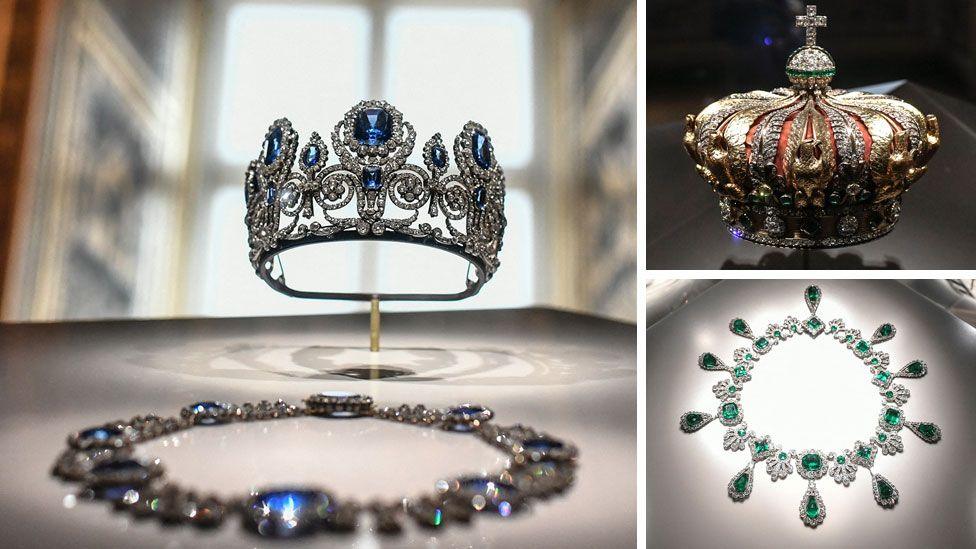
In what is being called one of the most daring museum robberies in recent history, thieves stole royal jewellery worth an estimated $102 million (around ₹850 crore) from the Louvre Museum in Paris. Experts and investigators now fear the treasures may never be recovered in their original form.
The Heist: Precision and Planning
According to investigators, the robbery took place on the morning of October 19, when a group of four armed thieves infiltrated the Apollo Gallery, which houses some of France’s most iconic crown jewels.
The gang reportedly used a truck-mounted lift to access a second-floor window of the museum before smashing open reinforced glass display cases. Within eight minutes, they escaped with eight pieces of priceless jewellery, including royal crowns, necklaces, and emerald-studded ornaments once worn by 19th-century French royalty.
Among the stolen items were:
- A sapphire-studded diadem,
- A diamond and emerald necklace gifted by Napoleon I,
- A set of royal earrings,
- A diamond brooch,
- And an ornate diadem-bow ensemble belonging to Empress Eugénie, wife of Napoleon III.

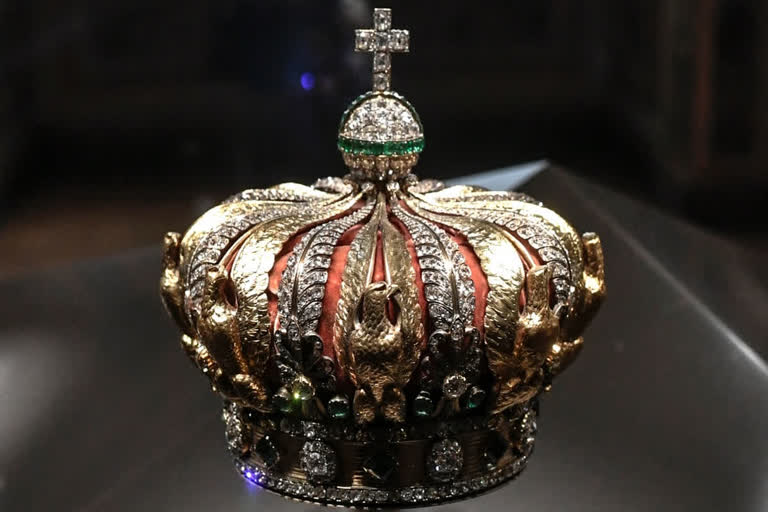
One damaged crown was later found abandoned outside the museum, suggesting that the gang may have dropped it while fleeing.
Why the Jewels May Never Be Found
While French authorities have launched a massive manhunt involving over 100 investigators, experts believe the recovery of the jewels in their intact state is highly unlikely.
Art crime analysts explain that the stolen artefacts are of such historic and cultural significance that they cannot be openly sold or auctioned. The only way for the thieves to profit is to dismantle the jewellery — extracting the gems, melting down the gold and platinum settings, and selling them as individual stones or metal.
Once the pieces are broken down, tracking their origin becomes nearly impossible. Investigators say that if the items are dismantled, France could lose an irreplaceable part of its royal heritage forever.
A senior French prosecutor described the theft as “a loss not just of material value but of history and identity,” noting that such treasures are “beyond price.”
Security Concerns at the Louvre
The heist has triggered widespread criticism of security measures at the world’s largest and most visited museum.
While officials maintain that the museum’s alarm systems were operational, insiders have pointed to staff shortages, outdated CCTV systems, and delayed security upgrades. The museum reopened to the public three days after the incident, but the Apollo Gallery remains sealed for investigation.
Sources suggest the gang had detailed prior knowledge of the Louvre’s security structure, including staff movement and response timing — leading investigators to suspect an inside link or prior reconnaissance.
A Blow to France’s Cultural Heritage
Beyond the financial loss, cultural historians have called the theft a devastating blow to France’s artistic legacy. Many of the stolen pieces were part of the national collection, representing centuries of European craftsmanship, royal lineage, and French imperial history.
Art crime experts note that such heists are often commissioned by private collectors on the black market, making recovery nearly impossible once the artefacts leave the country. The possibility of the jewels being smuggled abroad, dismantled, or sold through illicit trade routes is being investigated by Interpol.
Broader Implications
The Louvre heist has reignited debate over how prepared major cultural institutions are to protect their collections from sophisticated, organised crime. It also underscores the vulnerability of national treasures despite advanced technology and surveillance.
Authorities in France have now ordered a comprehensive audit of museum security systems nationwide, including at Versailles, the Musée d’Orsay, and other heritage sites.
For France, however, the emotional loss outweighs the monetary one. The stolen jewels symbolised not just royal opulence, but also the country’s artistic brilliance — a brilliance that may now be lost forever.
Leave a Reply