
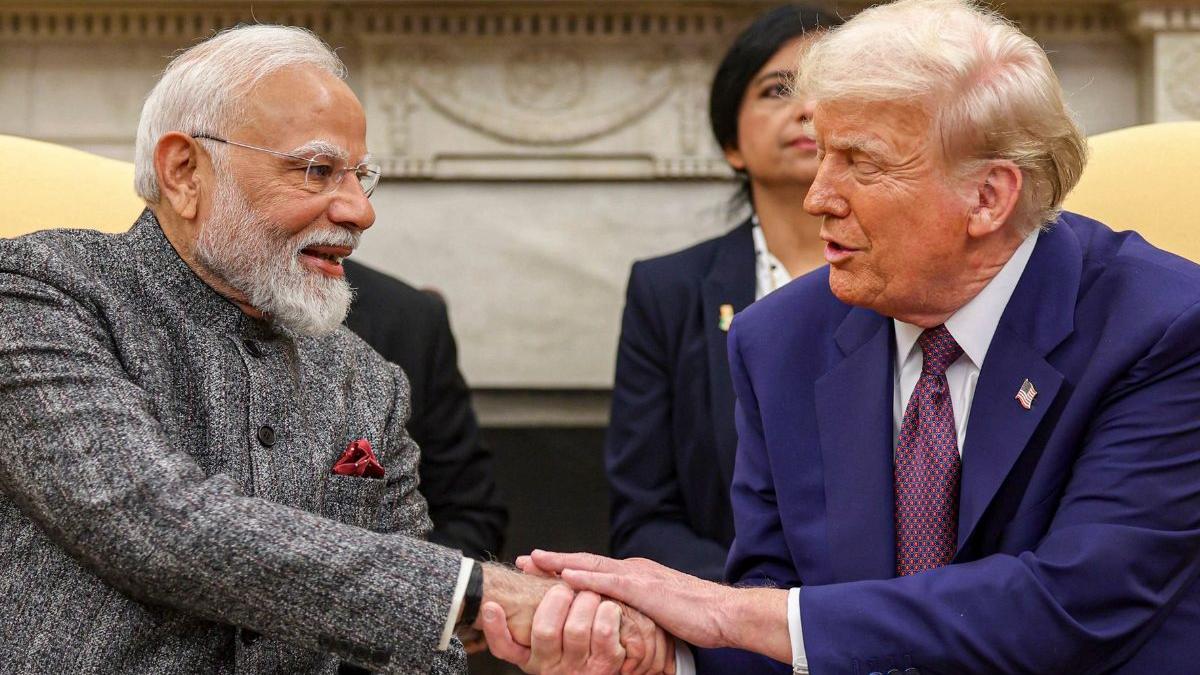
In a bold public statement from the White House, U.S. President Donald Trump declared that Prime Minister Narendra Modi had assured him India would cease purchasing oil from Russia. Trump described the promise as “a big step” in Washington’s efforts to cut off financial support to Moscow amid the Ukraine war.
During a media interaction, Trump said, “I was not happy that India was buying oil, and he assured me today that they will not be buying oil from Russia.” He added that the transition would be gradual: “It’s a little bit of a process, but that process will be over soon.” He also expressed his intention to press China next to follow suit.
The announcement immediately grabbed attention across global energy, diplomatic, and trade circles. Indian officials have not confirmed Modi ever made such a commitment, and the Indian embassy in Washington has remained silent for the moment.
Key Context & Strategic Implications
1. India’s Energy Dependence on Russia
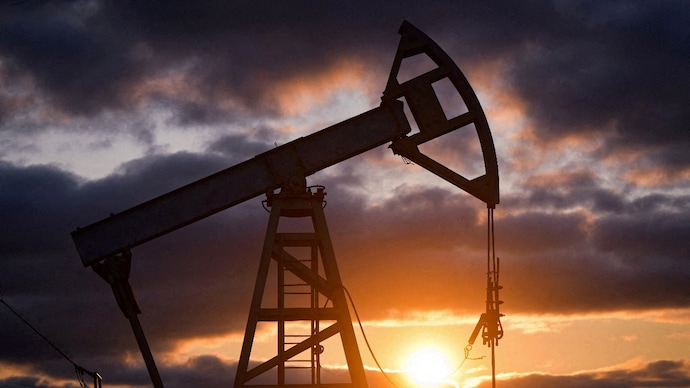
For years, India has relied heavily on Russian crude, leveraging discounted prices and stable supply chains. Russia has become one of India’s top sources of seaborne oil imports. Abruptly cutting off that relationship could strain India’s energy security and inflate costs.
2. U.S. Tariffs & Trade Pressure
This claim comes amid escalating economic tension between the U.S. and India. Earlier this year, Trump imposed tariffs up to 50% on Indian goods, citing India’s continued Russian oil imports as justification. Many analysts see the announcement as part of a broader campaign to pressure India economically and diplomatically.
3. Credibility & Verification
Trump’s claim rests solely on his account of the purported assurance. No formal statement or documentation from the Indian government corroborates the pledge. India’s silence triggered speculation as to whether it viewed this as a deliberate misinterpretation or a misstatement.
4. Market Response
The oil markets reacted swiftly. Brent crude prices rose by around 1% after the claim, reflecting investor belief that cutting off a major buyer like India would tighten supply. However, markets remain cautious as the feasibility and authenticity of India’s shift are uncertain.

Challenges & Repercussions
- Energy Costs & Imports: A sudden halt in Russian oil imports would force India to source from costlier alternatives, potentially driving up domestic fuel prices and trade deficits.
- Diplomatic Pushback: India may face international criticism from Russia, which has deep defense and political ties with New Delhi. Reversing course may be portrayed as succumbing to foreign pressure.
- Domestic Politics: The move could trigger backlash in India, where energy security and economic stability are key voter concerns. Opposition parties might frame it as an erosion of strategic autonomy.
- U.S.–India Relations: If true, the pledge could open a reset in bilateral ties—possibly easing tariff tensions—but only if executed credibly and sustainably.
What to Watch
- Whether the Indian government issues a formal response or denial in the coming days
- Any diplomatic exchange between Washington and New Delhi clarifying or challenging the pledge
- Short-term movements in global oil prices and Indian fuel cost indicators
- Reactions from key stakeholders—Russia, China, energy firms, and trade partners
At face value, Trump’s claim is dramatic and laden with implications. But its actual bearings will depend on whether India confirms or repudiates the statement—and whether Modi ever made such a concession.
Leave a Reply