
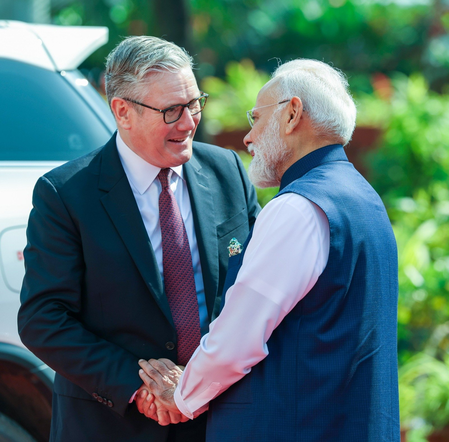
In a high-profile diplomatic meeting, Prime Minister Narendra Modi and UK Prime Minister Keir Starmer laid out plans to deepen India-UK collaboration across multiple fronts — most notably in defence industry, trade and education. Seen by analysts as part of both nations’ efforts to build a long-term strategic partnership, the discussions yielded several landmark announcements aimed at fostering economic growth, technological cooperation, and educational exchange.
During his visit to Mumbai, PM Starmer led a large delegation of business, academic, and technology leaders and held bilateral talks with PM Modi. At the centre of the agenda were key agreements and ongoing agreements under the India-UK Comprehensive Economic and Trade Agreement (CETA), Vision 2035 roadmap, and a newly devised Defence Industrial Roadmap.
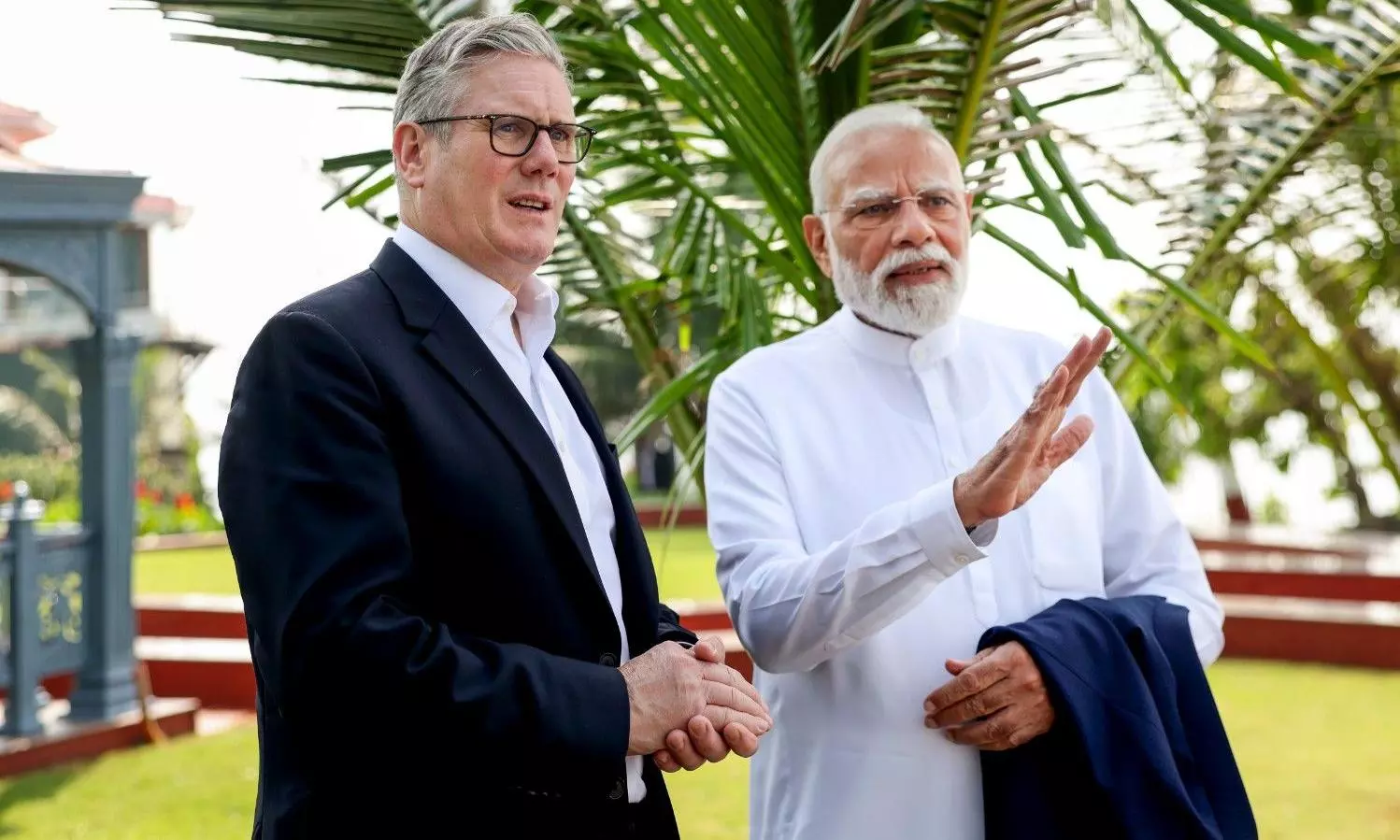
On the trade front, both leaders emphasised opportunities to enhance bilateral investment and market access. Tariff reductions on certain British products entering India, and greater facilitation for Indian exports in sectors like textiles, leather goods, seafood, and processed agriculture, were discussed. The UK side also looked to strengthen its own exports of medical devices, aerospace components, and specialized industrial goods to India. Modi underlined that the trade boost would especially benefit MSMEs (Micro, Small & Medium Enterprises), youth employment, and key manufacturing sectors.
Defence cooperation received renewed focus. India and the UK committed to collaborate on defence technology sharing, joint production, and supply chains. The Defence Industrial Roadmap seeks to formalise areas of co-development and co-production of critical military hardware, including engines, missiles, and electronics. Strategic cooperation in maritime security and shared patrols in the Indian Ocean were also flagged as part of mutual interest in preserving regional stability.
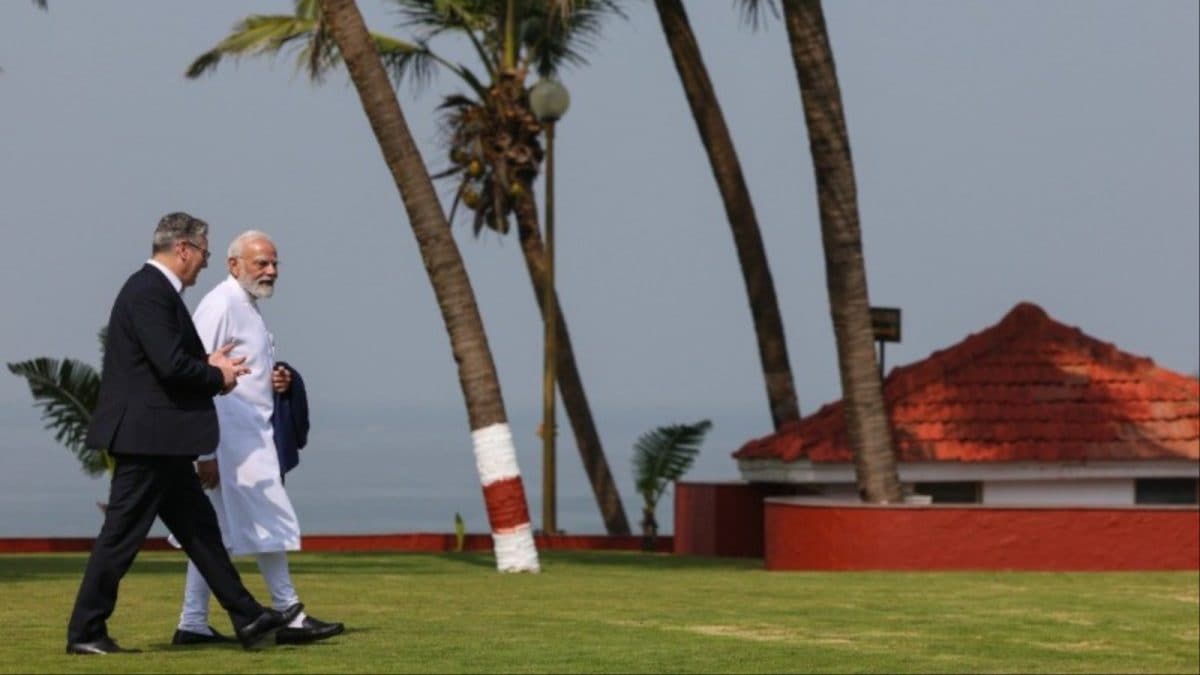
In education, the two governments announced that nine UK universities will open campuses in India, underlining growing demand for quality global education domestically. This move is expected to enhance skills development, cross-cultural research collaboration, and student exchange programs. Leaders spoke of strengthening partnerships in higher education, research & development, critical minerals, semiconductors, artificial intelligence, and climate-related technology.
Modi described the meetings as “extremely productive,” saying that the renewed engagement represents a “blueprint for shared prosperity.” Starmer, for his part, lauded India’s growth trajectory and asserted that the strengthened partnership would generate new jobs, innovation, and stability in both countries.
Experts say the Modi-Starmer summit reinforces India’s global standing and underscores Britain’s interest in diversifying its global partnerships post-Brexit. As India edges closer to being one of the world’s leading economies, cooperation in defence, trade, and education becomes not just a bilateral necessity but also a strategic imperative in geopolitical realignments.
Leave a Reply