
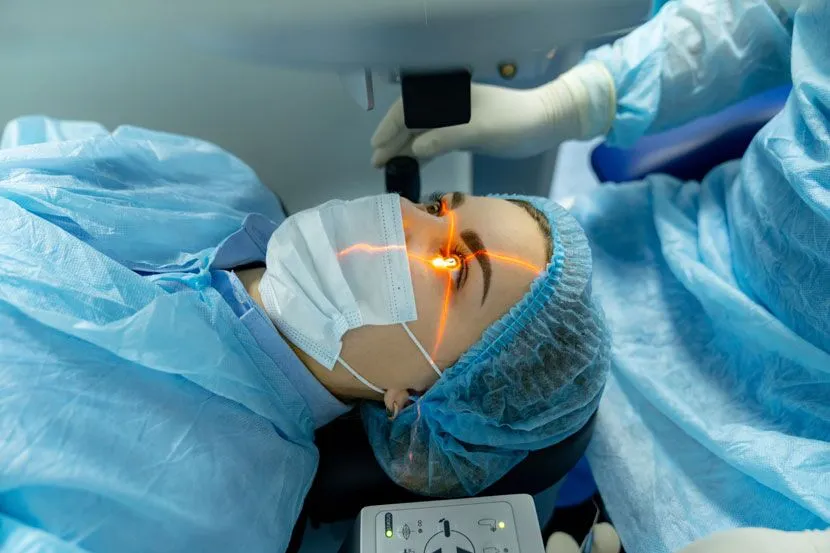
In the evolving field of laser vision correction, SILK (Smooth Incision Lenticule Keratomileusis) is emerging as a cutting-edge option for people wanting freedom from glasses or contact lenses. This advanced, flapless procedure reshapes the cornea by extracting a thin lenticule, offering a safer, less invasive alternative to traditional LASIK for selected patients.
What Is SILK Surgery?
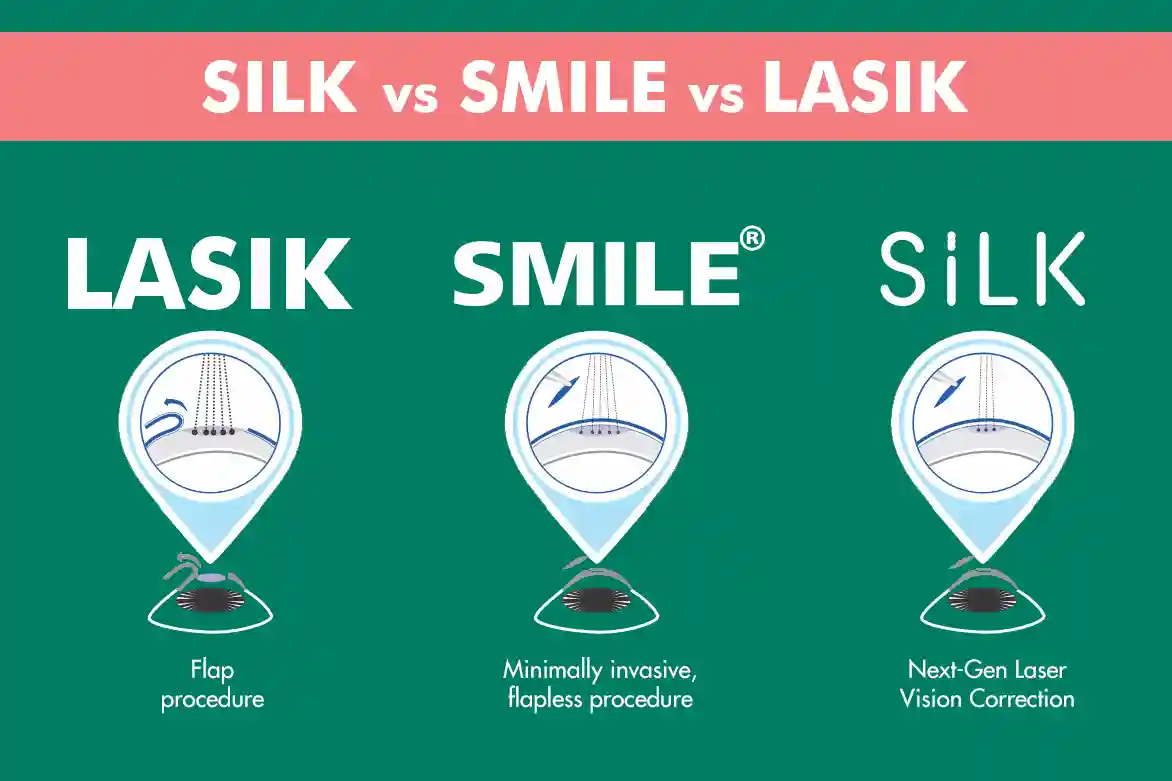
SILK is a lenticule-based, flapless laser procedure. Instead of creating a corneal flap (as in LASIK), a femtosecond laser carves out a tiny disc of corneal tissue—the lenticule—inside the cornea. Surgeons then remove the lenticule through a small incision, altering the cornea’s curvature so light focuses properly on the retina. This reshaping corrects refractive errors like myopia (nearsightedness) and astigmatism.
Because it avoids cutting a full flap, SILK carries lower risk of flap-related complications and may reduce post-operative discomfort and dry eye symptoms. Early visual recovery is good in many patients, although LASIK often yields faster visual improvement in routine cases.
SILK vs LASIK: Key Differences
- Flap vs flapless: LASIK creates a corneal flap to access underlying tissue, whereas SILK works entirely under the surface via a small cut.
- Risk profile: Without a flap, SILK may reduce complications like flap displacement, flap edge issues, or flap-related trauma.
- Recovery and comfort: Because the incision is minimal, many patients report smoother healing and less post-operative dryness.
- Suitability: SILK may be preferred in patients with thinner corneas or who are at higher risk from flap creation, though not everyone qualifies.
- Cost and availability: Being newer and more technologically demanding, SILK often costs more and is available only in select centers.
Indications, Eligibility & Assessment
Not every eye is a candidate. Ophthalmologists examine several factors before recommending SILK:
- Stable refractive error for at least six months
- Adequate corneal thickness and topography
- Absence of significant eye disease (e.g. keratoconus, glaucoma)
- Age criterion (typically adults 18+)
- General health and ocular surface condition
During evaluation, the doctor maps corneal shape, assesses thickness, tests visual acuity, and screens retinal health.
The Procedure & Post-Op Care
SILK surgery is typically quick—often under 15 minutes per eye. After applying numbing drops, the surgeon activates a femtosecond laser to carve the lenticule. A microincision is then used to remove it. Patients may experience mild discomfort, dryness, or glare initially.
Postoperatively:
- Eye drops (antibiotic, anti-inflammatory) are used
- Protective shields may be worn during sleep
- Avoid rubbing eyes, dusty environments, and strenuous activity for a few days
- Routine follow-ups help monitor healing and vision stability
Most users notice improved vision within 24–48 hours, with refinement over weeks to months.
Benefits, Risks & Limitations
Benefits:
- No corneal flap, thus fewer flap complications
- Lower likelihood of dry eye symptoms
- Good precision and visual outcomes
- Potential suitability for borderline corneas
Risks & challenges:
- Mild post-operative discomfort or dryness
- Under- or over-correction requiring enhancement
- Light sensitivity or visual aberrations initially
- Eye infection or inflammation (rare)
- Not reversible in most cases
Because refractive errors and ocular health vary greatly, results are not uniform—and outcomes depend heavily on surgeon experience, equipment, and patient adherence to care.
Cost & Accessibility
In India, SILK is priced higher than typical LASIK procedures, often reflecting its advanced technology and limited availability. Only a few eye care centers currently offer this procedure using precise femtosecond laser platforms.
Outlook & Innovations
SILK represents a next step in refractive surgery evolution. With ongoing research, improvements are expected in candidacy criteria, laser precision, and long-term stability. Some centers hope to extend its use for presbyopia (age-related near vision loss) or refine it further to minimize side effects.
For patients considering vision correction, SILK is a promising option—but only comprehensive evaluation and expert consultation can determine if it’s the right fit.
Leave a Reply