
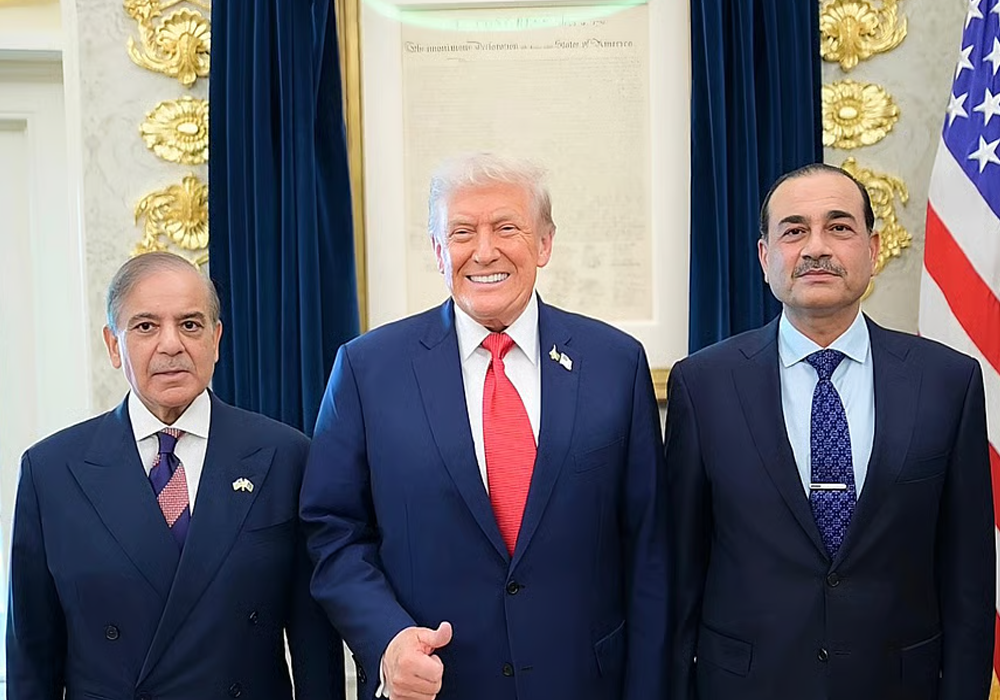
In a striking public declaration, Pakistan’s Prime Minister Shehbaz Sharif has lauded U.S. President Donald Trump as a “man of peace,” asserting that Trump played an instrumental role in facilitating the ceasefire with India earlier this year. Sharif’s remarks mark a dramatic diplomatic posture, especially given India’s consistent rejection of any third-party intervention in the negotiation process.
The Meeting and the Message
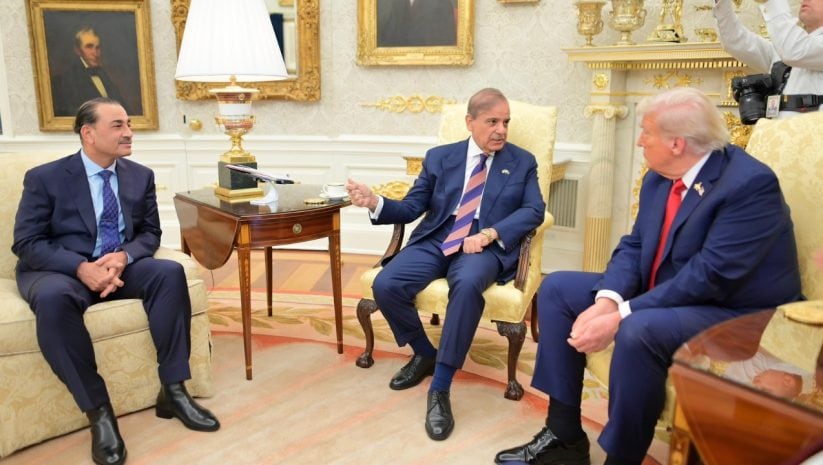
During his visit to Washington, Sharif held private talks with President Trump, accompanied by Pakistan’s top military leadership. After those discussions, Sharif issued statements celebrating Trump’s “bold, courageous and decisive leadership” for helping defuse what Islamabad characterized as a looming regional catastrophe.
Sharif expressed gratitude not only for the ceasefire but also for renewed economic cooperation between the two nations. He extended invitations to American investors to engage with Pakistan’s growth sectors including agriculture, energy, mining, and information technology. He also suggested that the U.S.-Pakistan partnership would move into a new era of collaboration across security and development.
The Conflict and Ceasefire Backdrop
In May of 2025, India and Pakistan clashed along the disputed frontier in intense exchanges involving missile strikes, drone attacks, and artillery fire. The violence followed a militant attack in Kashmir that India attributed to groups operating within Pakistan—charges which Islamabad denied.
With the situation escalating rapidly, diplomatic efforts were initiated. According to Islamabad’s account, those efforts, under Trump’s leadership and through U.S. intermediaries, led to the ceasefire agreement on May 10. Pakistan credited Trump’s intervention with averting broader escalation.
By contrast, India maintains that the ceasefire was reached entirely through direct communication between the two countries’ military leadership, with no foreign mediation involved.
Contradicting Narratives
The conflicting versions of events underscore how heavily symbolic control is in regional diplomacy. From Pakistan’s perspective, painting Trump as a peace-broker strengthens Islamabad’s international standing and reinforces a narrative of external validation. From India’s side, acknowledging foreign negotiation would undermine its sovereign control of its security decisions.
In India’s account, no communications between Indian leadership and Trump took place during the relevant months, a claim supported by Indian officials who insist the truce was brokered at the military-to-military level.

The Nobel Prize Suggestion
Following the ceasefire, Sharif announced Pakistan’s intention to nominate Trump for the Nobel Peace Prize, citing what he described as Trump’s “pragmatic diplomacy” and his role in de-escalating conflict between two nuclear-armed neighbors. The idea has stirred debate in diplomatic circles and media commentary alike.
Strategic Implications
Sharif’s framing of Trump as a peacemaker comes amid shifting geopolitical alignments. Pakistan appears eager to deepen ties with Washington, while India maintains its autonomy and insists on a narrative of self-determination in crisis management.
However, the challenge now is in sustaining peace on the ground. Ceasefires in this volatile region are fragile. Sharif’s assertion places pressure on all parties to honor the spirit of de-escalation, but future flare-ups along the border could test whether the “man of peace” narrative holds or collapses under renewed tensions.
Leave a Reply