
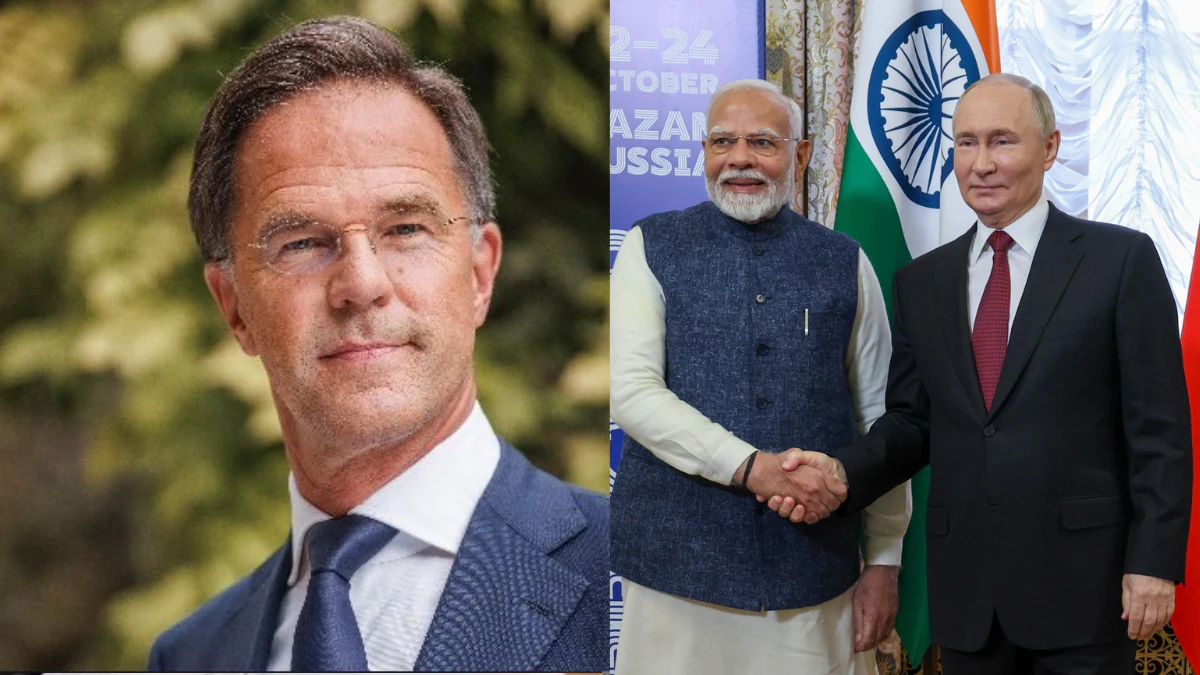
A recent public statement from the NATO Secretary General sparked controversy after he claimed that Prime Minister Narendra Modi contacted President Vladimir Putin to seek clarification on Russia’s strategy in its conflict with Ukraine. In response, the Indian government swiftly and vehemently rejected the assertion, labeling it “entirely baseless” and distancing itself from any such discussion.
The NATO Claim
While speaking at a diplomatic event, the NATO Secretary General suggested that, under pressure from new U.S. tariffs, India had reached out to Russia’s leader seeking explanations for Moscow’s tactical approach in the ongoing war. According to this claim, the move was framed as a reaction by India to escalating economic measures targeting its trade relations.
This narrative posited that New Delhi had initiated direct diplomatic engagement with Moscow, effectively implying India’s involvement in or reaction to the broader geopolitical contest around Ukraine.
India’s Rebuttal
The Indian government responded officially and firmly. It denied the claim in unequivocal terms, stating that no such call or request was made to President Putin by Prime Minister Modi. According to the government, the suggestion of a direct conversation seeking insight into Russia’s military or strategic plans is factually incorrect.
Officials emphasized that speculation of this nature misrepresents India’s stance and role in global diplomacy. They asserted that the claim should not be taken seriously and that it lacks any basis in fact or governmental record.
Why This Matters
The exchange is significant on multiple fronts:
- Sovereignty in Diplomacy: Implying that India actively sought explanations from Russia potentially challenges India’s autonomous diplomatic posture. The Indian leadership has long maintained a nonaligned or independent approach in global conflicts, especially concerning Russia and Ukraine.
- Tariff Pressures as Leverage: The NATO chief’s framing linked India’s alleged action directly to U.S. tariff pressures. This suggests a narrative in which economic sanctions are driving political behavior—a narrative New Delhi appears keen to reject.
- Regional and Global Messaging: The statement and its denial send signals beyond India–Russia relations. Others watching closely are regional neighbors, global powers, and diplomatic observers assessing how India positions itself between East and West.
- Maintain Neutrality or Clarity of Intent: By publicly rejecting the claim, India reinforces that any diplomacy it carries out is transparent and deliberate. It draws a line against speculative attribution of motive that might distort public understanding of its foreign policy.
Broader Context
India’s trade relations, particularly its dependence on energy imports, factor heavily into its global diplomacy. The country has imported discounted Russian crude even after Russia’s invasion of Ukraine—a policy that has drawn criticism and led to economic penalties from some quarters. Amid such pressures, external statements that India is courting Russia or seeking justification from Moscow take on enhanced significance.
Furthermore, India has previously cautioned against double standards in global sanction regimes, arguing that its energy security and broader development needs must not be compromised by unilateral measures. In prior exchanges, Indian officials have insisted that policy judgments should account for national priorities as much as external expectations.
Leave a Reply