
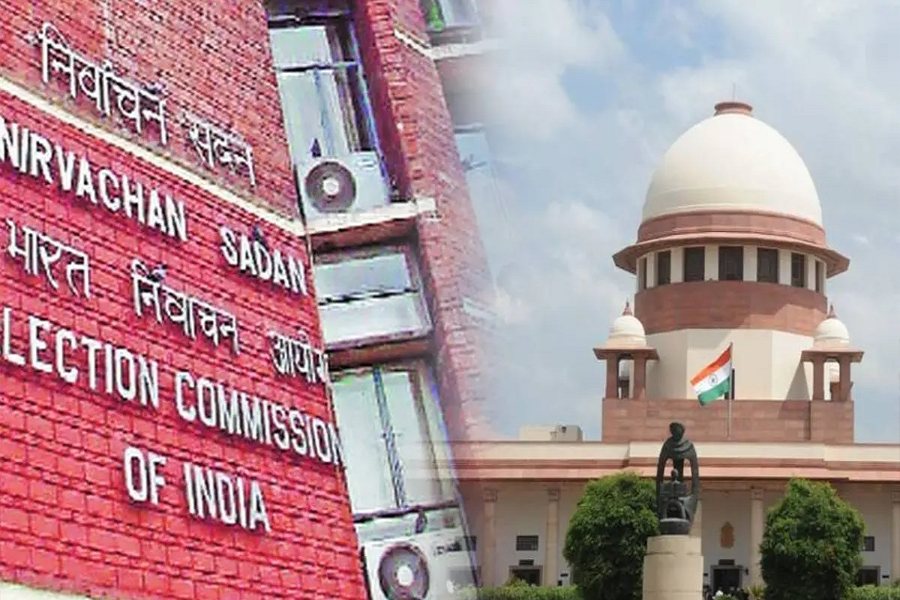
In a recent submission to the Supreme Court, the Election Commission of India (ECI) has strongly asserted that it holds exclusive power to decide when and how to conduct the Special Intensive Revision (SIR) of electoral rolls, rejecting any attempt to mandate fixed intervals for such exercises. The matter arises from a Public Interest Litigation (PIL) filed by advocate Ashwini Kumar Upadhyaya, who sought judicial direction ordering regular SIRs across all States and Union Territories, especially before elections, in order to ensure cleanliness and accuracy of electoral rolls.
Background
Electoral rolls in India are periodically revised under legal and constitutional mandates. Ordinary revision or “summary revision” is routinely carried out ahead of general or assembly elections. Special Intensive Revision (SIR), on the other hand, is a more exhaustive exercise intended to catch up on discrepancies like outdated entries, duplicate names, migrations, deaths, and to include those eligible but omitted voters. The Representation of the People Act, 1950, along with Registration of Electors Rules, 1960, grants ECI powers under Section 21(3) and Rule 25 to undertake both types of revisions.
What the ECI Told the Supreme Court
In its counter-affidavit, the ECI emphasized several legal points:
- The ECI has constitutional backing, notably Article 324, which vests it with “superintendence, direction and control” over preparations of electoral rolls and conduct of all elections.
- The statutes and rules governing elections (Representation of the People Act, Rules under the Registration of Electors) do not fix timelines on when to conduct SIRs; these put discretion in the hands of the EC.
- It has already initiated “pre-revision activities” for SIR in all States and UTs (except Bihar), using a qualifying date of January 1, 2026 for those revisions.
- The Commission argued that any judicial direction which imposes a requirement to carry out SIRs at regular fixed intervals — especially country-wide — would constitute an encroachment upon its exclusive constitutional domain.
What the Petition Seeks
The PIL initiated by Upadhyaya seeks directions for periodic or regular SIRs across India so that electoral rolls remain up-to-date. The petitioners argue that only through frequent SIRs can irregular entries and disenfranchisement due to omissions or improper deletions be minimized. They believe that prior to each major election, a nationwide SIR should be mandated by the Court.
The Central Legal Tension
The core issue before the Supreme Court is balancing:
- The constitutional and statutory authority of the Election Commission vs
- The judiciary’s oversight role and whether it may, in the interest of ensuring free and fair elections, direct specific periodicity for these revisions.
The ECI’s position is that its discretion over timing and nature of revisions is deliberate, accommodating practical ground realities — such as logistics, availability of documents, resource constraints, and the varying conditions across States and UTs. Mandating a rigid schedule, according to them, could impose undue burdens or prove infeasible in certain jurisdictions.
Implications
If the Supreme Court sides with ECI’s stance:
- The Commission will retain flexibility to decide when to initiate SIRs, depending on circumstances.
- States with wide geographical spread, migration, or higher challenges in documentation may have delays in certain revisions.
- Oversight or expectations of regular periodic SIRs might be tempered.
If the Court instead orders fixed periodic SIRs:
- ECI will have to work under a judicially imposed schedule, perhaps tightening timeframes and improving resource planning.
- Could improve consistency and possibly reduce allegations of exclusion or irregularities in the electoral roll.
- Might lead to more litigation or compliance challenges for the Commission, especially in difficult areas.
Leave a Reply