
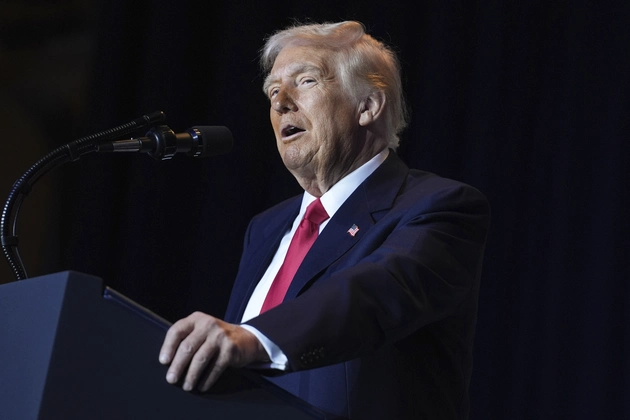
A federal appeals court has delivered a major setback to former President Donald Trump by ruling that his broad use of national emergency powers to impose sweeping tariffs on foreign goods exceeded his legal authority. The US Court of Appeals for the Federal Circuit largely upheld a May ruling by the U.S. Court of International Trade in New York, which found that Trump’s so-called Liberation Day tariffs on nearly all trading partners violated the 1977 International Emergency Economic Powers Act (IEEPA).
The 7-4 decision allows parts of the ruling to be stayed until October 14, giving the administration time to appeal to the Supreme Court. Trump had imposed tariffs of up to 50% on countries with which the US had a trade deficit and a baseline 10% tariff on most other nations, claiming that long-standing trade deficits constituted a national emergency. Some countries, including the UK, Japan, and the EU, negotiated deals to avoid the tariffs, while others, such as Laos and Algeria, faced heavier levies.
Legal experts note that the ruling does not affect other Trump-era tariffs, including those on steel, aluminum, and autos imposed under Section 232 of the Trade Expansion Act of 1962, or earlier China tariffs retained by President Joe Biden. Critics argue the decision could undermine Trump’s future trade negotiation strategy, while the Justice Department warned that striking down the tariffs could result in substantial refunds, potentially causing major financial losses to the U.S. Treasury.
Trump has rejected the ruling, calling it “partisan” and pledging to take the matter to the Supreme Court. Although he retains more limited authority under the Trade Act of 1974, which restricts tariffs to 15% for 150 days, the ruling sharply curtails his ability to unilaterally impose broad import taxes without congressional approval.
Leave a Reply