

President Donald Trump announced the termination of the long-standing de minimis shipping exemption, a policy that previously allowed duty-free import of low-value goods into the United States. The decision, aimed at curbing illicit narcotics shipments and reducing foreign e-commerce advantages, has significant implications for online shoppers, small businesses, and global postal services. The move is expected to generate additional tariff revenues of up to $10 billion annually but will also drive up consumer costs and disrupt cross-border supply chains.
Background of the Policy
The de minimis exemption, first introduced in 1938 at $5 for small gift imports, was raised to $200 in 1993 and further increased to $800 in 2015. This policy facilitated the rapid expansion of cross-border e-commerce, allowing platforms such as Shein, Temu, Etsy, and Amazon third-party sellers to thrive by shipping low-value products directly to US consumers.
According to the National Coalition of Textile Organizations, imports under this exemption skyrocketed from 139 million parcels in 2015 to 1.36 billion in 2024, averaging nearly 4 million packages daily.

Rationale Behind the Termination
The Trump administration has justified the policy change on three grounds:
- National Security & Public Health – Officials argue that the loophole facilitated the trafficking of fentanyl and other prohibited substances into the US.
- Fair Competition for Domestic Retailers – US retailers and trade groups claim the exemption gave foreign sellers an unfair cost advantage by bypassing import duties.
- Revenue Generation – The removal of the exemption is projected to generate $10–13 billion annually in tariff revenues, strengthening federal fiscal resources.
White House trade adviser Peter Navarro described the policy as closing a “deadly loophole,” asserting that it would save lives and protect US industries.
Impact on Consumers and Businesses
The policy shift has broad economic and logistical consequences:
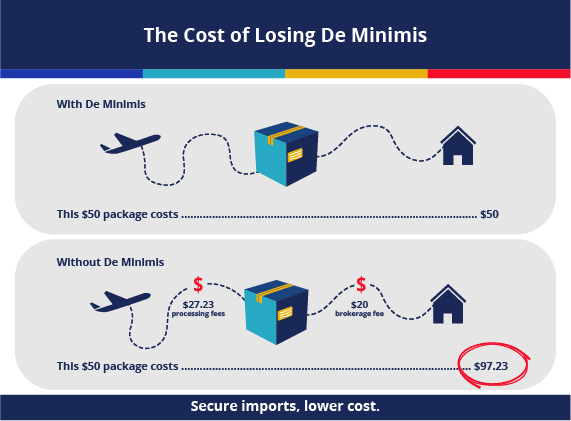
- Increased Consumer Costs: Tariffs on imported parcels are expected to raise household spending by an average of $136 annually, disproportionately impacting lower-income consumers reliant on budget imports.
- E-Commerce Disruption: Platforms such as Shein, Temu, Etsy, and Shopify sellers will face customs tariffs ranging from 10% to 50% per package, reducing competitiveness and increasing operational costs.
- Logistics and Shipping Delays: Customs inspections and additional paperwork are likely to slow delivery times. Postal services in multiple countries have already suspended shipments to the US due to regulatory and financial uncertainties.
International Trade and Postal Services Response
Several foreign postal agencies have halted parcel services to the United States while seeking clarity on compliance requirements. Both national carriers and private logistics firms are adjusting to the new framework, which now requires duty payments on every incoming shipment regardless of value or origin.
The US Customs and Border Protection agency has offered a temporary flat-rate duty of $80–$200 per package for parcels shipped via foreign postal agencies over the next six months. However, administration officials confirmed that the change is permanent, with no scope for exemptions for allied trading partners.
Strategic Outlook
The removal of the de minimis exemption is expected to reshape the global e-commerce landscape:
- Shift in Consumer Behavior: US shoppers may pivot toward domestic e-commerce platforms due to higher costs of imports.
- Pressure on Foreign Sellers: Overseas retailers will need to reassess pricing strategies, warehousing, and distribution models.
- Customs Infrastructure Strain: A surge in package inspections will require expanded resources at US customs facilities.
Industry analysts warn that while the move may provide near-term revenue gains for the government, it risks reducing consumer choice, slowing e-commerce growth, and straining US trade relations.
Leave a Reply