
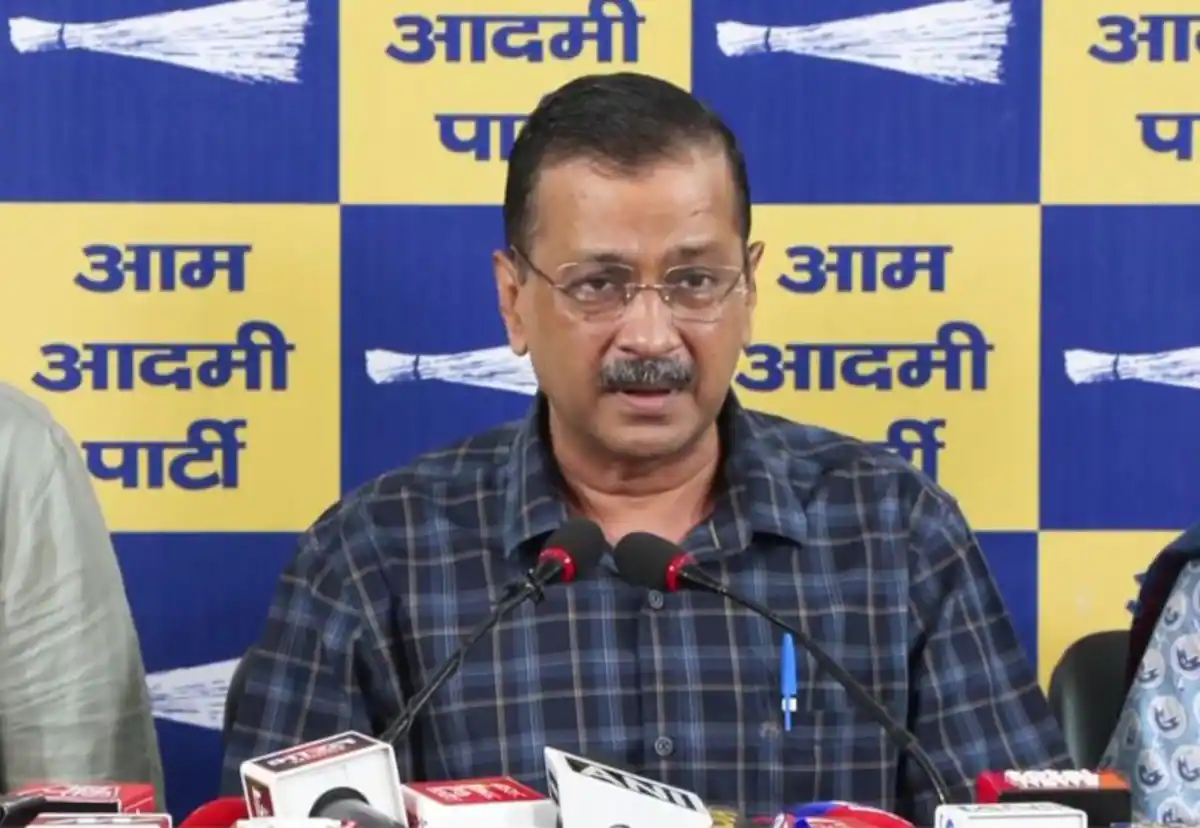
Aam Aadmi Party (AAP) national convener and former Delhi Chief Minister Arvind Kejriwal on Thursday launched a scathing attack on Prime Minister Narendra Modi, accusing him of bowing down to pressure from US President Donald Trump by removing the 11% import duty on American cotton.
Addressing a press conference in New Delhi, Kejriwal alleged that the Modi government’s decision to exempt US cotton from import duty for 40 days, starting from August 19 to September 30, is a “huge betrayal” of Indian farmers. According to him, this move makes imported US cotton cheaper by ₹15-20 per kg compared to Indian cotton, putting domestic farmers at a disadvantage.
“Now, no duty will be imposed on cotton coming from America from 19 August to 30 September. This is a betrayal of the farmers of our country,” Kejriwal said.
The AAP chief demanded that the government immediately revoke the exemption and reinstate the 11% import duty to protect the interests of Indian farmers. “We demand that PM Modi withdraw this order and impose the 11% import duty again on US cotton. Our farmers must be protected,” he asserted.
Kejriwal also urged the government to take a strong stance against the US by imposing a 100% tariff instead of yielding to pressure. “If US President Donald Trump has imposed a 50% tariff on India, we should respond with a 100% tariff on America,” he said.
His remarks came shortly after the Finance Ministry announced an extension of the duty-free period for US cotton imports. Initially exempted from August 19 to September 30, the exemption will now continue until December 31, 2025, to ensure an adequate supply of cotton for the domestic textile sector and to support exporters.
The Finance Ministry stated, “To augment the availability of cotton for the Indian textile sector, the Central Government had temporarily exempted the import duty on cotton from 19th August 2025 till 30th September 2025. In order to support exporters further, the exemption on cotton (HS 5201) has been extended till 31st December 2025.”
The government claims that the decision aims to stabilize supply chains for the textile industry, while opposition voices call it detrimental to farmers’ interests.
Leave a Reply