
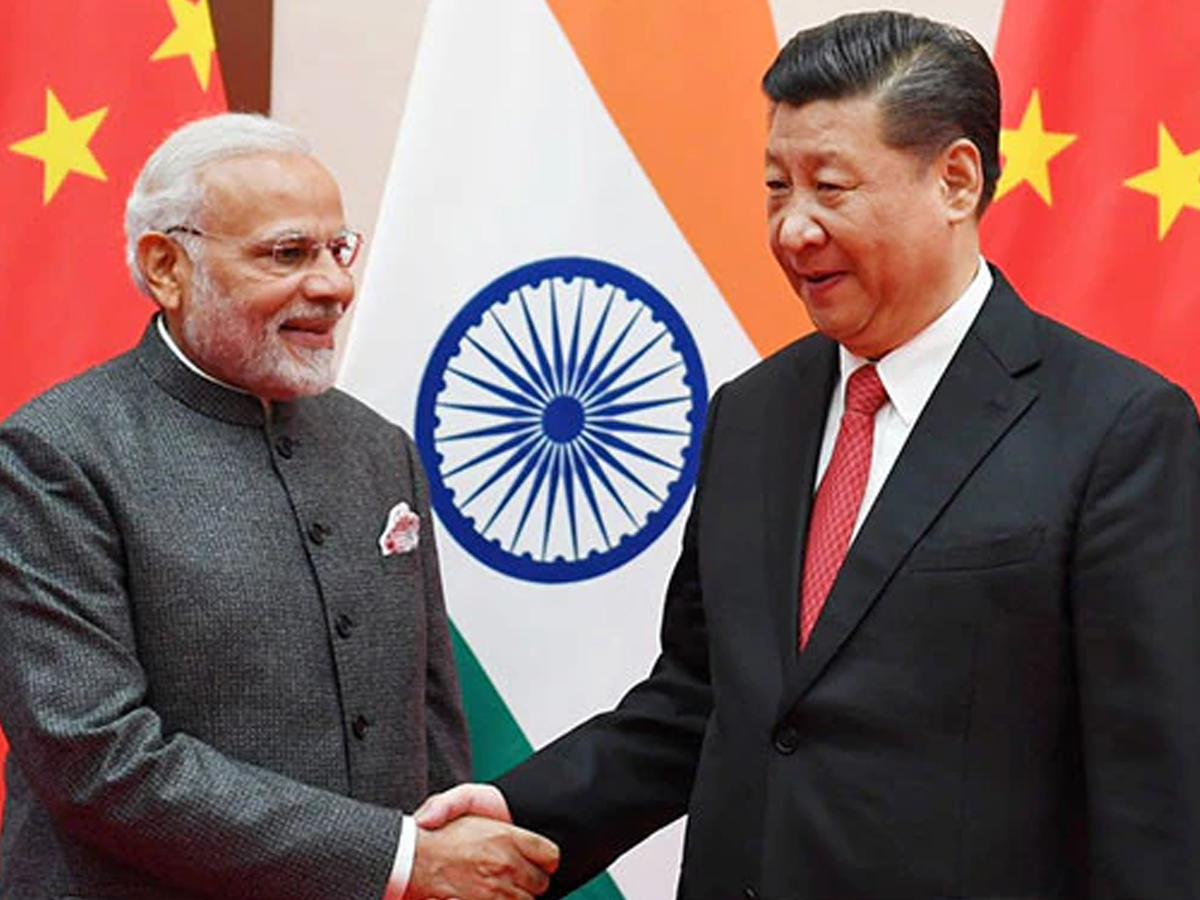
Prime Minister Narendra Modi will travel to Tianjin, China, to participate in the 25th Shanghai Cooperation Organisation (SCO) Summit on August 31 and September 1, at the invitation of Chinese President Xi Jinping, the Ministry of External Affairs (MEA) confirmed on Tuesday. This marks PM Modi’s first visit to China in seven years.
Addressing a special press briefing, Secretary (West) in MEA, Tanmay Lal, said that the Prime Minister is also likely to hold bilateral meetings with key leaders, including those from China and Russia, on the sidelines of the summit. Lal emphasized that the SCO platform not only addresses the “three evils” — terrorism, separatism, and extremism — but also enables cooperation across sectors such as economy, trade, connectivity, and environment.
PM Modi has been actively engaged with the SCO since India became a full member in 2017. He previously participated in SCO summits in Chengdao (2018), Bishkek (2019), Moscow (virtual) 2020, Dushanbe (virtual) 2021, Tashkent (2022), and New Delhi (virtual) 2023. Under India’s chairmanship of the 23rd SCO Summit, Modi introduced the theme “SECURE SCO”, which stands for Security, Economy and Trade, Connectivity, Unity, Respect for Sovereignty, and Environment.
In preparation for the upcoming summit, India has been part of several high-level meetings under the SCO framework, represented by National Security Advisor Ajit Doval, Defence Minister Rajnath Singh, and External Affairs Minister S. Jaishankar. The SCO currently consists of 10 member nations — India, China, Russia, Belarus, Iran, Kazakhstan, Kyrgyzstan, Pakistan, Tajikistan, and Uzbekistan — along with multiple dialogue partners and observers.
Meanwhile, ahead of the summit, Chinese President Xi Jinping reaffirmed China’s strong strategic partnership with Russia, calling it one of the “most stable and strategically important relationships” among global powers. In a meeting with Russia’s State Duma Chairman Vyacheslav Volodin, Xi emphasized the need for Beijing and Moscow to jointly safeguard security, promote multilateralism, and strengthen cooperation within the Global South.
Leave a Reply