
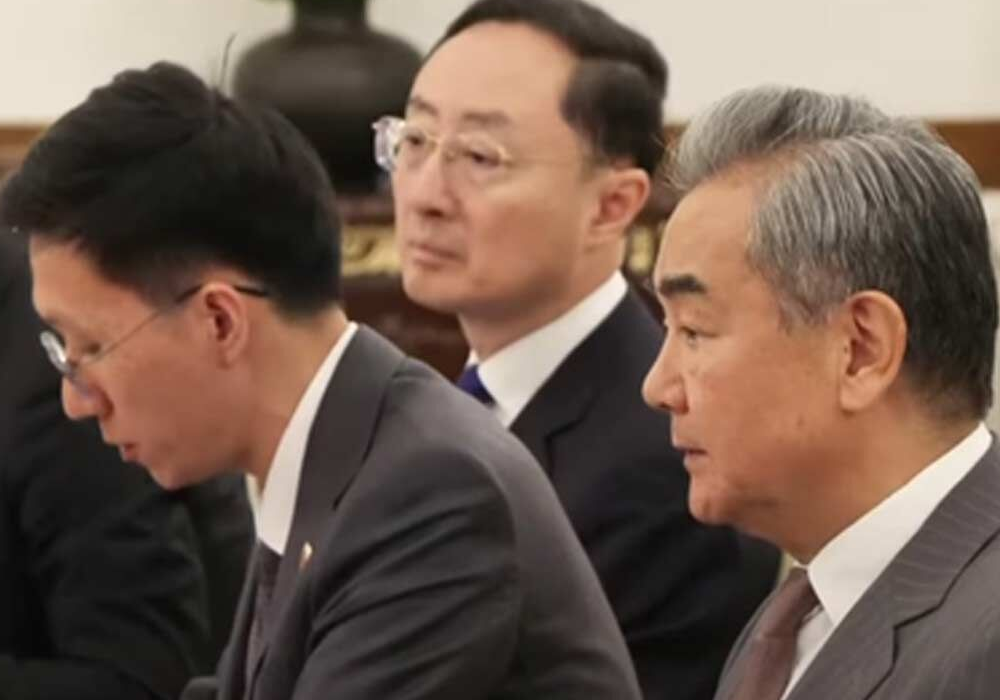
India and China have reached fresh consensus on managing their long-standing border disputes through normalized protocols during Chinese Foreign Minister Wang Yi’s visit to New Delhi on August 18–19, according to a briefing by the Chinese Foreign Ministry on Wednesday.
During the high-level visit, Wang Yi met Prime Minister Narendra Modi, participated in the 24th round of Special Representatives (SRs) talks with National Security Adviser Ajit Doval, and held bilateral discussions with External Affairs Minister S. Jaishankar. The engagements aimed at stabilizing diplomatic ties and charting a forward path in areas of cooperation.
Chinese Foreign Ministry spokesperson Mao Ning stated that both sides had agreed to “conduct normalized management and control of the boundary, maintain peace and tranquility in border areas, appropriately address sensitive zones, and begin boundary negotiations where conditions are conducive.”
She emphasized that the two nations also decided to resume dialogue mechanisms across various fields, reinforce mutually beneficial cooperation, support multilateralism, and stand united against unilateralism and coercive practices—a veiled reference to growing global tensions linked to U.S. policies.
Wang Yi, in his discussions with Indian leaders, conveyed warm greetings from Chinese President Xi Jinping and Premier Li Qiang. He reiterated China’s welcome for PM Modi to attend the Shanghai Cooperation Organisation (SCO) Summit scheduled in Tianjin from August 31 to September 1.
Referencing the 2024 Modi-Xi meeting in Russia, Wang said it helped lay the foundation for resetting bilateral ties and emphasized that both countries must value and build upon these hard-earned developments. He added that the visit also aimed to pave the way for further high-level exchanges between the two nations.
“The evolution of China-India relations, with its highs and lows, provides valuable lessons,” Wang stated. “Despite differences, the two countries must view each other as partners, not rivals, and manage disputes prudently to prevent them from derailing broader cooperation.”
He highlighted the growing strategic relevance of China-India relations amid the current geopolitical climate and expressed optimism that stronger cooperation between the two ancient civilizations would benefit not only their own populations but global progress as well.
Leave a Reply