
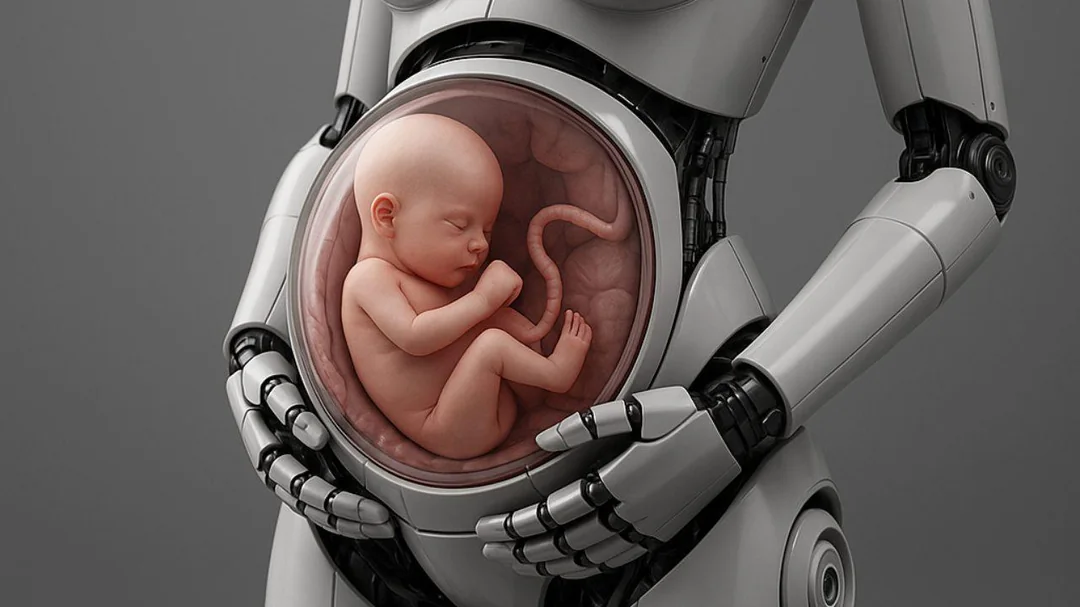
In a groundbreaking advancement in reproductive technology, Chinese scientists are developing what they claim to be the world’s first “gestation robot.” This humanoid machine is designed to replicate a full 10-month human pregnancy and could eventually “give birth” to a baby like a real person.
According to a report by The Telegraph, the project is being spearheaded by Kaiwa Technology, a Guangzhou-based company, under the leadership of Dr. Zhang Qifeng, a PhD graduate from Singapore’s Nanyang Technological University. The system integrates an artificial womb within a humanoid torso, where a fetus can grow in a simulated uterine environment and receive nutrients through a tube similar to natural processes.
Dr. Zhang stated that the technology is at a “mature stage,” with the next milestone being the integration of this system into a humanoid body capable of interacting safely with people during the gestation period. A prototype is expected to launch in 2026, with an estimated price of under 100,000 yuan (approximately US$14,000).
While some view this innovation as a potential lifeline for infertile individuals or those unable to carry a pregnancy, the concept has sparked widespread ethical and legal debate. Experts argue that gestation involves intricate biological functions—such as maternal hormone exchange, immune system interaction, and emotional bonding—that cannot be easily replicated by a machine.
The development has generated significant buzz on Chinese social media, with supporters praising it as a revolutionary step toward reproductive freedom, while critics warn it could disrupt social norms around motherhood and child identity.
Kaiwa Technology is reportedly in discussions with Guangdong authorities to establish regulatory and ethical guidelines for this pioneering technology. If successful, experts believe the gestation robot could transform medical science and parenthood, while raising profound ethical questions about the future of human birth and caregiving.
Leave a Reply