
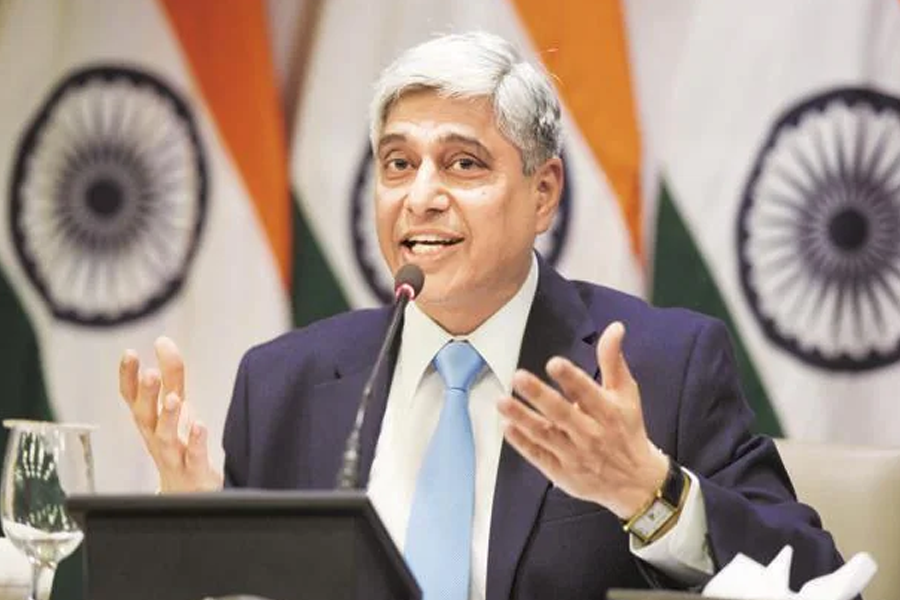
Former diplomat Vikas Swarup has shed light on the deeper geopolitical motivations behind US President Donald Trump’s recent punitive tariffs on India. According to Swarup, Trump is displeased with New Delhi for not acknowledging his alleged role in brokering peace between India and Pakistan following May’s Operation Sindoor. This perceived snub, alongside India’s participation in BRICS and refusal to open up its agricultural and dairy sectors in trade talks, are reportedly key reasons behind the tariff hike.
In an interview with ANI, Swarup emphasized that Trump is personally offended by India’s denial of his involvement in the India-Pakistan ceasefire negotiations. While Pakistan praised Trump and even nominated him for a Nobel Peace Prize, India maintained that the ceasefire was mediated directly by the armed forces without foreign intervention. Swarup added that Trump, who has repeatedly touted himself as a global peacemaker in various international conflicts, is eager for recognition—possibly hoping a breakthrough in the Russia-Ukraine war could be his ticket to the Nobel.
The former Indian High Commissioner to Canada stated that US-India ties remain strategic and long-term in nature, unlike the United States’ short-term and financial interest-driven relationship with Pakistan. He also noted Pakistan’s use of lobbying, strategic communications firms, and its emerging role in cryptocurrency as reasons why Washington is currently warming up to Islamabad. He cited ties between Trump’s associates and Pakistani crypto ventures as part of this temporary shift.
Despite mounting pressure, Swarup praised India’s resilience in not yielding to the US administration’s demands for greater market access to genetically modified crops and American dairy products. He argued that this pressure campaign is not only about trade but also serves as a geopolitical signal to Russia. With a meeting between Trump and Putin set in Alaska, there is concern that the two may attempt to bypass Ukraine in dictating a ceasefire.
Swarup dismissed any long-term damage to US-India ties, calling the situation a “storm, not a rupture.” He asserted that India’s strategic autonomy is non-negotiable and has been a cornerstone of its foreign policy since the 1950s. He pointed out that the US, which once called India the “Tariff King,” now imposes higher tariffs itself—18.4% compared to India’s 15.98%—and warned that these tariffs will ultimately hurt American consumers by fueling inflation.
On the Pakistan front, Swarup touched upon the suspension of the Indus Waters Treaty by India as another point of tension. He accused Pakistan of engaging in nuclear blackmail, referencing inflammatory remarks made by Pakistan Army Chief Asim Munir during his recent US visit. Swarup claimed that Pakistan, desperate for international mediation, often uses the threat of nuclear escalation to capture global attention.
Ultimately, Swarup’s comments highlight the complex interplay of trade, ego, and geopolitics in the evolving triangle of US-India-Pakistan relations, urging New Delhi to maintain its sovereignty and resist coercive diplomacy.
Leave a Reply