
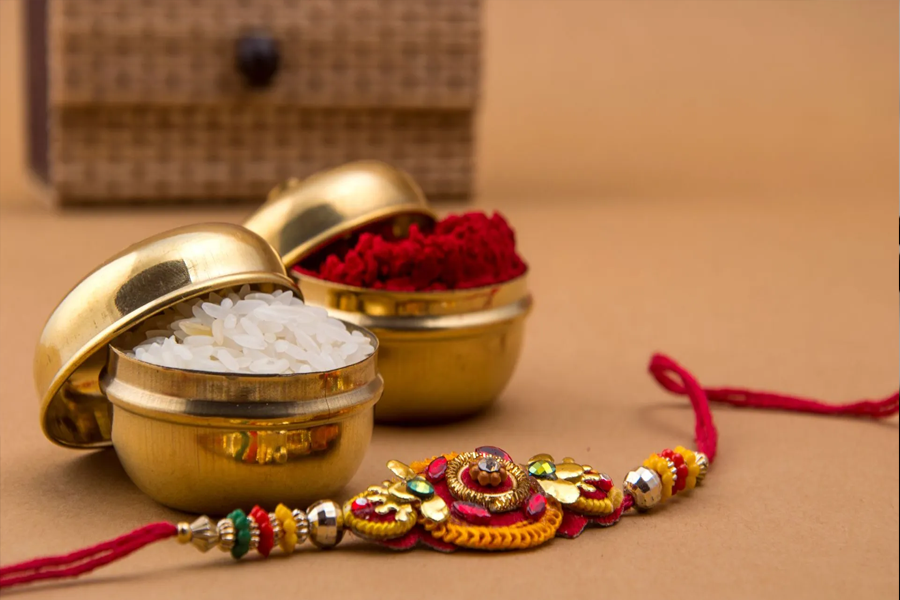
Raksha Bandhan is more than just a ceremonial thread. It is a tapestry of legends, faith, and deep-rooted cultural emotions. Each element of this beloved festival – from the rakhi and roli to the chawal and the sacred promises – embodies centuries of stories that have given this celebration its enduring significance.
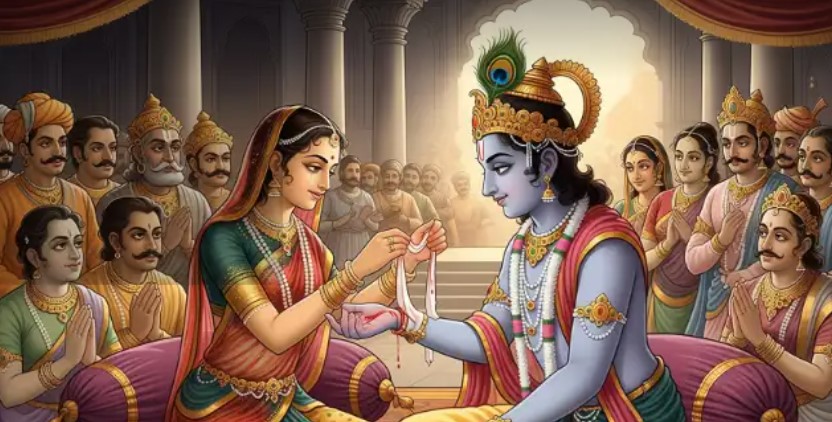
One of the most heartfelt stories comes from the epic Mahabharata, where Draupadi ties a piece of her sari to Krishna’s bleeding finger after he injures himself with the Sudarshan Chakra. Touched by her spontaneous act of affection, Krishna vows to always protect her. He fulfills this promise years later during Draupadi’s public humiliation in the Kaurava court, by endlessly extending her saree, thus shielding her honor. This moment symbolizes a bond that transcends blood relations, representing true protection and devotion.
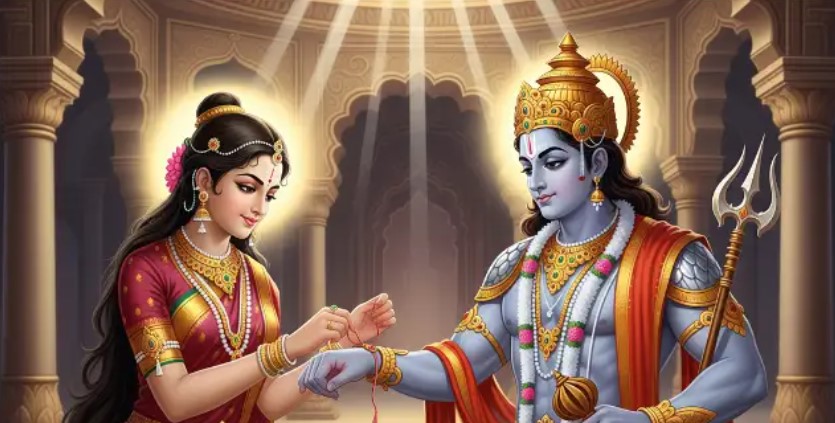
Another tale traces back to the divine battle between Lord Indra and the demon King Vritra. Facing near defeat, Indra is advised by Guru Brihaspati to seek divine protection through the ritual of Raksha Vidhan. After the ceremony, his wife Indrani ties a protective thread (raksha potli) on his wrist, blessing him with victory. Empowered by this sacred gesture, Indra defeats Vritra and reclaims his kingdom. This is believed to be one of the earliest instances of a rakhi, laying the spiritual foundation of Raksha Bandhan.
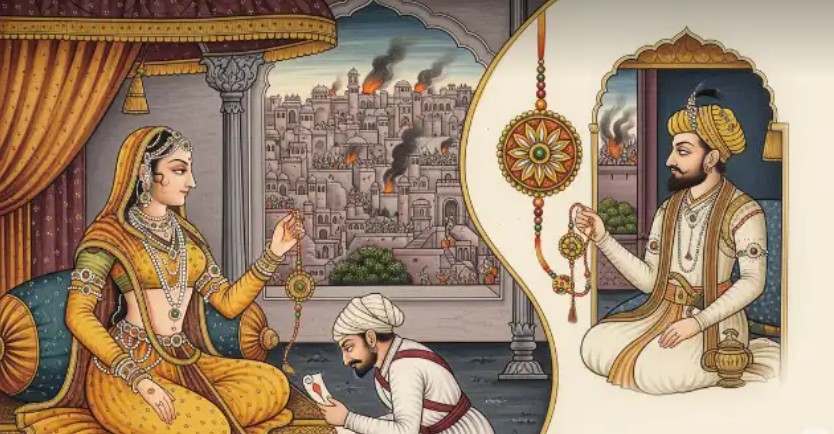
The festival also crossed religious and imperial lines. In the 16th century, Rani Karnavati of Mewar, under siege by Bahadur Shah of Gujarat, sent a rakhi to Mughal Emperor Humayun, seeking his protection. Despite being engaged in battle elsewhere, Humayun honored the sacred thread and rushed to help. Although he arrived too late to save the queen, he restored her son Vikramjit Singh to the throne – a historic gesture that underlined the sanctity of Rakhi beyond religion and politics.
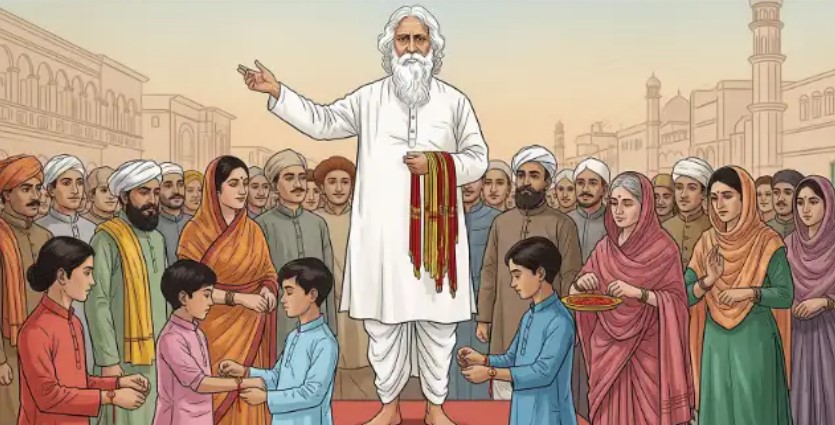
In more modern history, Nobel Laureate Rabindranath Tagore used Raksha Bandhan as a symbol of unity during the 1905 Partition of Bengal. As the British tried to divide communities along religious lines, Tagore urged Hindus and Muslims to tie rakhis on each other’s wrists, promoting brotherhood and harmony. The symbolic act turned a personal ritual into a public statement of national unity, proving that this thread could unite hearts in times of turmoil.
Each of these stories – whether from mythology, monarchy, or movements – highlights how Raksha Bandhan is not just a festival but a powerful expression of protection, love, and togetherness across all boundaries.
Leave a Reply