
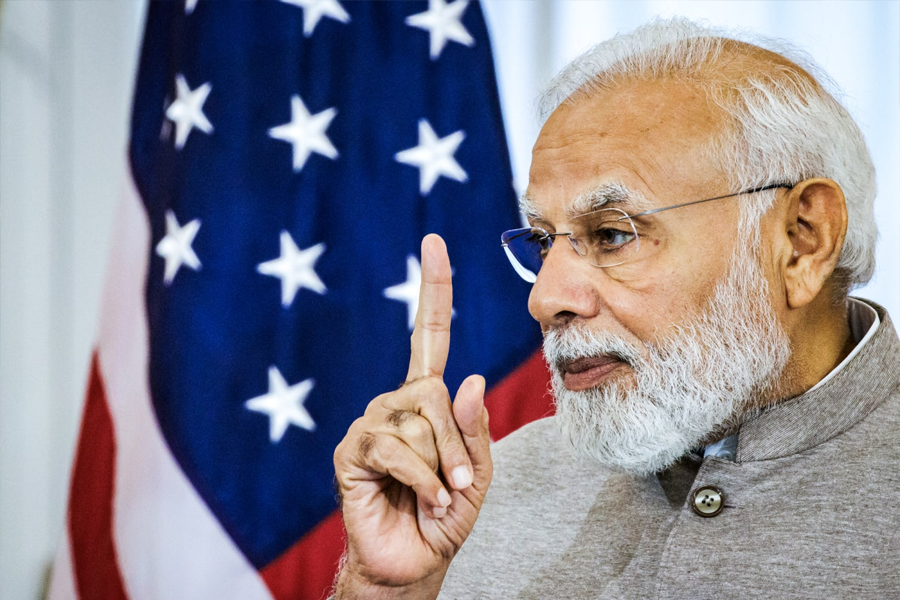
On Thursday, Prime Minister Narendra Modi stated that he is willing to absorb the costs associated with safeguarding India’s agricultural interests, particularly as the nation confronts rising trade tensions with the United States, which has imposed tariffs as high as 50%.
During his address at the MS Swaminathan Centenary International Conference, PM Modi emphasized, “The welfare of our farmers is our utmost priority. India will never compromise on the interests of farmers, fishermen, and dairy producers.”
Recognizing the potential repercussions of maintaining a firm stance on domestic issues, he remarked, “I understand that we may have to pay a significant price for this, and I am prepared for it. India is ready for it.”
These comments arise amidst a worsening trade conflict, initiated by US President Donald Trump’s declaration of a 25% import duty on Indian products, effective from August 7. The US has pointed to India’s ongoing purchases of crude oil and military equipment from Russia as justification for an additional 25% tariff increase, set to take effect on August 27.
Central to the current tensions is the proposed India-US Bilateral Trade Agreement (BTA), which has made little headway since discussions commenced in March 2025. A major point of contention is India’s unwillingness to grant duty concessions on agricultural products, dairy, and genetically modified (GM) food items, which the US has identified as critical in its negotiations.
Why is India steadfast on its agricultural and dairy sectors?
According to a report, government sources assert that India’s position is influenced by structural and livelihood issues. With over 700 million individuals linked to the agricultural sector in India, policymakers contend that tariff protections are essential to avert market disruptions caused by subsidized US agricultural exports, particularly during times of global price fluctuations.
In contrast to the US, where agriculture is predominantly corporatized, India perceives farming as a matter of livelihood. Officials contend that eliminating tariffs would subject Indian farmers to unfair competition and jeopardize food security.
Regarding dairy, India has resisted US demands, referencing its long-established regulatory standards. The US has expressed concerns over India’s GM-free feed certification and facility registration processes, which it argues prevent American dairy products from entering the market. Nevertheless, India asserts that these regulations are crucial, especially since imports from animals that have been fed animal-derived feed are deemed unacceptable due to religious considerations.
The upcoming round of BTA discussions is set for later this month, with US Assistant Trade Representative for South and Central Asia Brendan Lynch anticipated to arrive in India on August 25. As trade tensions escalate and tariff deadlines approach, both parties are feeling the pressure to reach a consensus.
Leave a Reply