
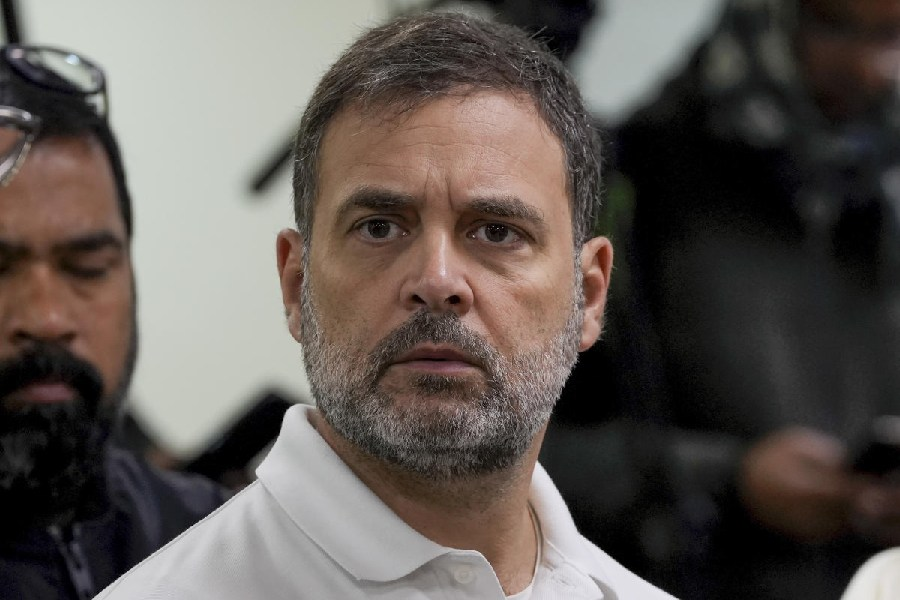
The Supreme Court on Monday strongly criticized Congress MP and Leader of Opposition in the Lok Sabha, Rahul Gandhi, over his alleged remarks about the Indian Army. The comments were reportedly made during the Bharat Jodo Yatra, where Gandhi claimed that “Chinese troops are thrashing Indian Army soldiers in Arunachal Pradesh” and alleged that China had occupied 2,000 square kilometres of Indian territory following the December 2022 Tawang sector clash.
A Bench comprising Justices Dipankar Datta and Joymalya Bagchi questioned the credibility of Gandhi’s statements, asking, “How do you know that 2,000 square kilometres of Indian territory were occupied by the Chinese? Were you there? Do you have any credible material? If you were a true Indian, you would not say all this.” The court further asked why such claims were being made on social media instead of being raised in Parliament.
The remarks were made during the hearing of Gandhi’s plea, where his counsel Abhishek Manu Singhvi argued that it would be “unfortunate” if an opposition leader is not allowed to raise issues of national concern publicly. Despite the stern observations, the apex court granted interim relief to Gandhi against the summoning order issued by a Lucknow court in a criminal defamation case.
The defamation complaint was filed by Udai Shankar Srivastava, a retired Border Roads Organisation Director, who alleged that Gandhi’s comments were false, baseless, and intended to demoralize the Indian Army. In May, the Allahabad High Court had dismissed Gandhi’s plea to quash the case, ruling that even third parties can be considered “aggrieved” if harmed by defamatory remarks. The court upheld the trial court’s decision to summon Gandhi under Section 500 IPC, stating that there was no illegality in the February 11, 2025 order.
Following the High Court ruling, Gandhi appeared before the MP-MLA court in Lucknow, where he secured bail by furnishing a personal bond of Rs 20,000 along with two sureties. He subsequently approached the Supreme Court challenging the High Court’s refusal to quash the defamation proceedings. The case continues to draw national attention as the apex court examines the broader issue of mandatory notice to the proposed accused at the pre-cognisance stage.
Leave a Reply