
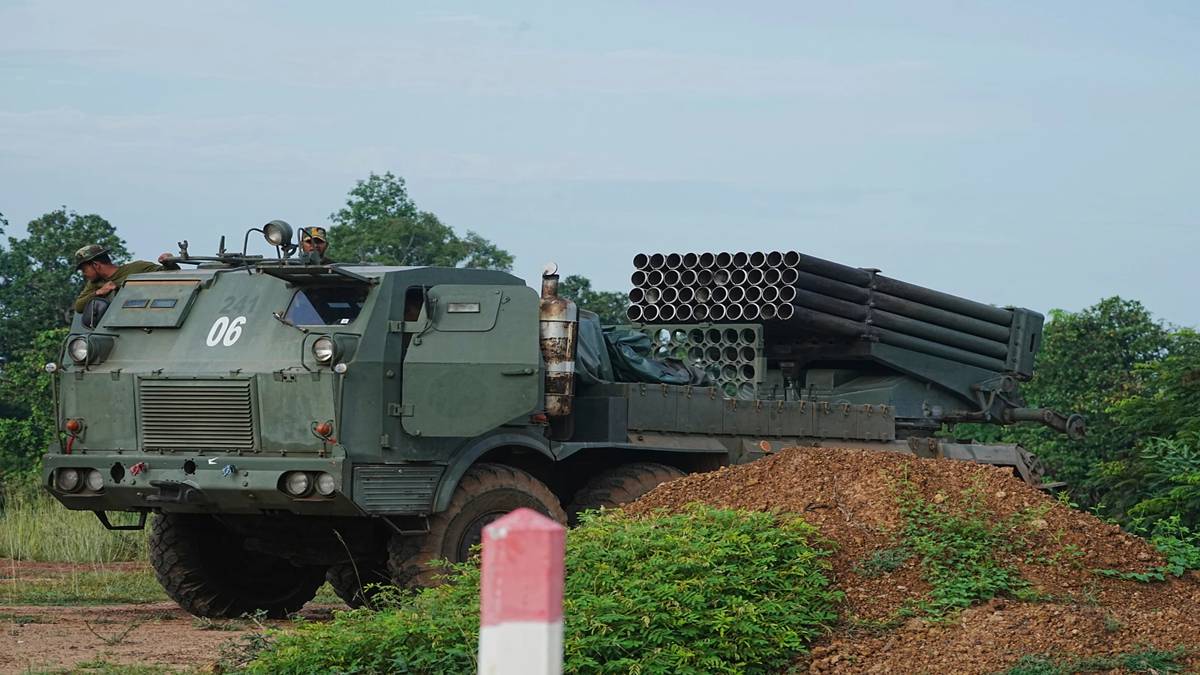
Thailand and Cambodia engaged in conflict for a third consecutive day on Saturday, with the death toll from their most violent clashes in years rising to 33, prompting Phnom Penh to demand an “immediate ceasefire”.
A longstanding border dispute escalated into severe hostilities involving aircraft, artillery, tanks, and ground forces on Thursday, leading the UN Security Council to convene an emergency meeting regarding the situation on Friday.
According to Cambodia’s defense ministry, 13 fatalities have been confirmed in the clashes, which include eight civilians and five soldiers, alongside 71 individuals injured.
In Thailand, the military reported that five soldiers were killed on Friday, raising the total there to 20, comprising 14 civilians and six military personnel.
The combined death toll in both nations now exceeds the 28 fatalities recorded during the last significant conflict from 2008 to 2011.
Both parties reported a confrontation around 5:00 am (2200 Friday GMT), with Cambodia accusing Thai forces of launching “five heavy artillery shells” into areas within Pursat province, adjacent to Thailand’s Trat province.
The ongoing fighting has led to the evacuation of over 138,000 individuals from Thailand’s border areas, with more than 35,000 displaced from their homes in Cambodia.
Following the closed-door session of the Security Council in New York, Cambodia’s UN ambassador Chhea Keo stated that his nation is seeking a ceasefire. “Cambodia has requested an immediate ceasefire — unconditionally — and we also advocate for a peaceful resolution to the dispute,” he informed reporters.
Border dispute
Thai Foreign Ministry spokesperson Nikorndej Balankura mentioned on Friday, prior to the UN meeting, that Bangkok is open to negotiations, potentially facilitated by Malaysia.
“We are prepared, should Cambodia wish to resolve this issue through diplomatic means, either bilaterally or with Malaysia’s assistance, we are ready to proceed. However, we have yet to receive any response,” Nikorndej told AFP.
Malaysia is presently leading the Association of Southeast Asian Nations (ASEAN) regional bloc, which includes both Thailand and Cambodia.
Acting Thai Prime Minister Phumtham Wechayachai has cautioned that if tensions rise, “it could escalate into war.”
Both nations have accused one another of initiating hostilities, with Thailand alleging that Cambodia targeted civilian facilities, including a hospital struck by shells and a petrol station hit by at least one rocket.
Cambodia has claimed that Thai forces employed cluster munitions.
At the United Nations, Cambodia’s representative challenged Thailand’s claim that his country, which is smaller and less militarily advanced than its neighbor, instigated the conflict.
“(The Security Council) urged both parties to exercise maximum restraint and seek a diplomatic resolution. That is our call as well,” stated Chhea Keo.
The recent clashes signify a significant escalation in a longstanding dispute between the two countries—both of which are popular tourist destinations for millions—over their shared 800-kilometer (500-mile) border.
Several areas spanning dozens of kilometers are disputed, and fighting occurred between 2008 and 2011, resulting in at least 28 fatalities and displacing tens of thousands.
A UN court ruling in 2013 resolved the issue for more than a decade, but the current crisis began in May when a Cambodian soldier was killed during a new confrontation.
Leave a Reply