
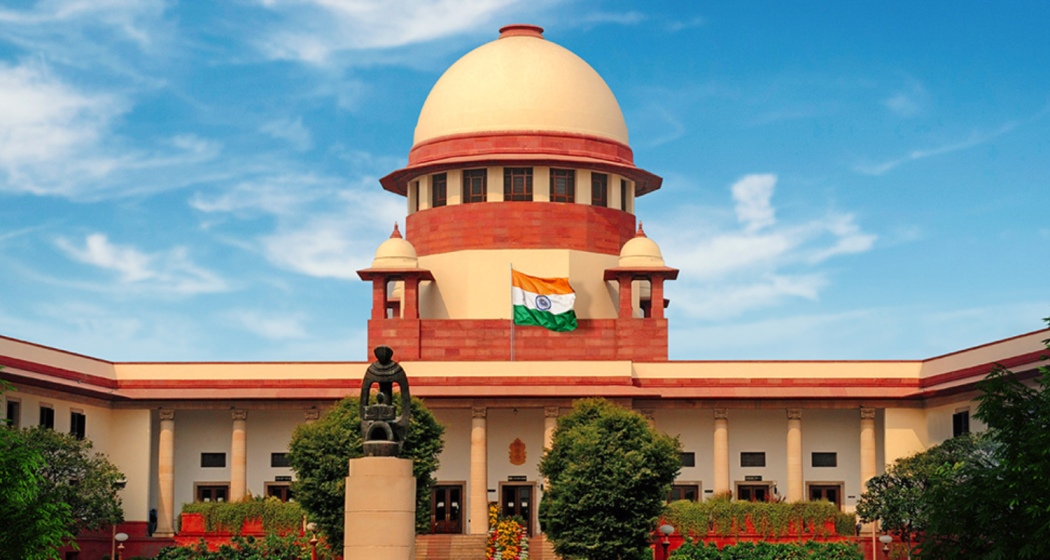
On Thursday, the Supreme Court criticized the Karnataka High Court’s ruling to grant bail to Kannada actor Darshan Thoogudeepa and six others involved in the Renukaswamy murder case, labeling it a “perverse exercise” of discretionary authority.
A bench consisting of Justices J.B. Pardiwala and R. Mahadevan has reserved its decision regarding the Karnataka government’s appeal against the high court’s bail order issued on December 13, 2024, which allowed the actor and his co-defendants to be released.
The apex court listened to arguments from senior advocates Siddhath Luthra, representing the state government, and Siddharth Dave along with others, who are defending the accused. The court acknowledged the written submissions made by the state and others, while requesting the remaining defendants’ counsel to submit brief notes within a week.
Justice Pardiwala, while questioning the rationale behind the bail decision, remarked to the defense counsel, “Do you not believe that the high court has effectively issued an acquittal order for seven defendants while addressing bail applications?”
He further stated, “What is concerning is the way the high court formulated the bail order… does the high court issue similar orders in all bail cases?” The bench also scrutinized how the high court handled the testimonies of two eyewitnesses, Kiran and Puneet, referring to them as “unreliable witnesses.”
Justice Pardiwala remarked, “This (the granting of bail) represents a perverse exercise of discretionary powers in the context of bail for the accused.”
Highlighting that all defendants are currently out on bail and that the trial has yet to commence, the court inquired, “Has the high court judiciously considered this matter?”
On July 17, the bench voiced its concerns regarding the high court’s decision to grant bail to the accused, stating it was “not at all convinced” by the way the discretionary power was exercised. Justice Pardiwala concluded, “To be frank, we are not persuaded by how the high court has utilized its discretion.”
Luthra contended that the bail granted by the high court was unwarranted, particularly in a case involving serious allegations under section 302 (murder) of the IPC. He maintained that the high court essentially provided a “pre-trial acquittal” without thoroughly reviewing crucial evidence, such as eyewitness statements and forensic results.
Luthra detailed how CCTV footage from the apartment complex, where the body was purportedly discarded, showed suspicious vehicle activity. He also emphasized forensic evidence, including bloodstains found on items associated with the crime scene and the accused.
He stressed the seriousness of the charges and the circumstantial evidence suggesting a conspiracy. In defense of the bail, Dave argued that the investigation was flawed and that the reliability of the eyewitnesses was questionable due to the delayed nature of their statements. He noted that charges had yet to be formally filed and that the trial had not yet begun.
The police reported that the victim was held in a shed in Bengaluru for three days in June 2024, tortured, and that his body was later recovered from a drain.
On 24 January, the top court issued notices to the actor, Pavithra Gowda, and others involved in the case following a plea from the state government. Darshan was arrested on 11 June 2024 for allegedly murdering Renukaswamy on 8 June of the same year.
The actor was initially held at the Parappana Agrahara Jail in Bengaluru, but after a photograph of him relaxing with other inmates went viral, he was transferred to Ballari Central Jail. The state appealed to the top court against the bail on 6 January this year.
The remains of 33-year-old Renukaswamy, an autorickshaw driver, were found on 9 June 2024. He reportedly died from injuries sustained after being attacked on the orders of Darshan, who allegedly encouraged his fans to confront and abduct Renukaswamy for posting derogatory comments about Gowda on social media.
Leave a Reply