
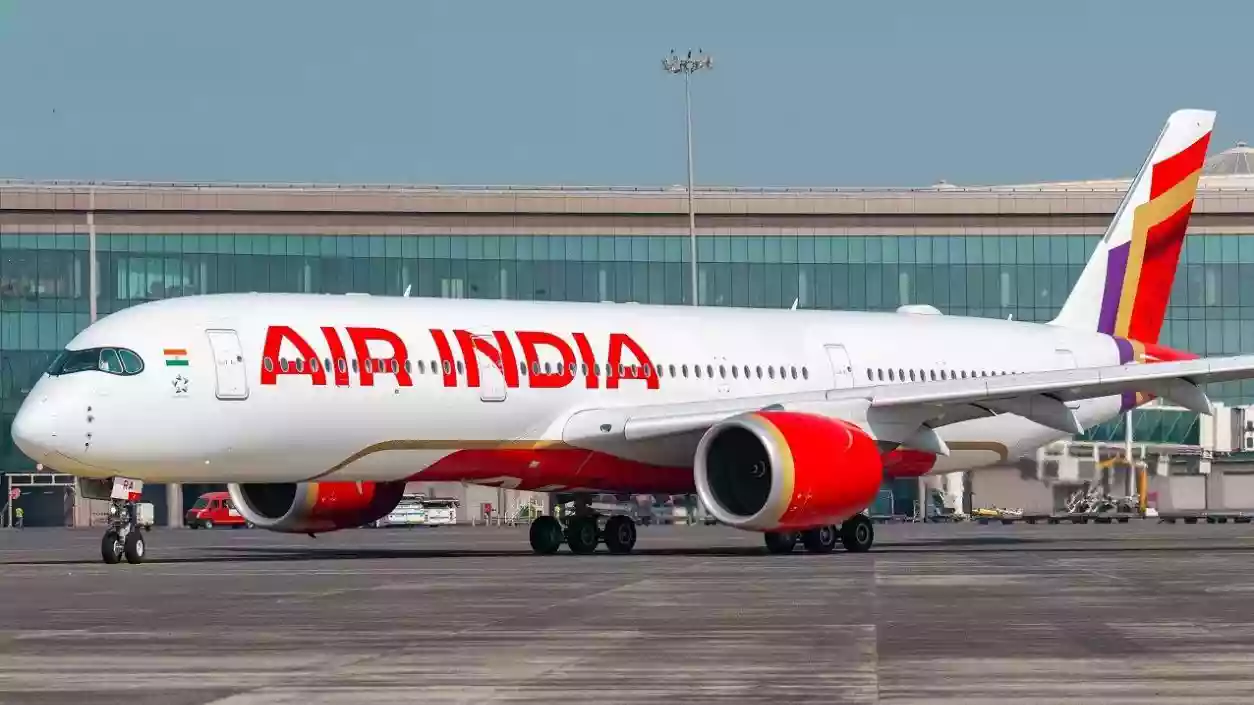
Air India has received a warning from India’s aviation regulator indicating that it may face enforcement actions due to violations of safety standards concerning crew fatigue management and training, as revealed by government notices to the airline obtained by Reuters.
The airline self-reported these issues, which occurred this year and the previous year, to the Directorate General of Civil Aviation (DGCA) last month, shortly after one of its Boeing 787 Dreamliners crashed in Ahmedabad city, resulting in 260 fatalities.
Four government notices, dated July 23, criticized Air India for its ongoing failures in safety compliance, following numerous prior warnings. Possible regulatory actions could involve fines or the removal of executives from their positions.
The notices detail a total of 29 violations, including the failure to provide pilots with mandatory rest, inadequate adherence to simulator training requirements, insufficient training for operations at high-altitude airports, and flying international routes with an inadequate number of cabin crew.
“Despite repeated warnings and enforcement actions for non-compliance in the past, systemic issues regarding compliance monitoring, crew planning, and training governance remain unaddressed,” one of the notices stated.
“The recurrence of such violations indicates a failure to implement and enforce effective control mechanisms,” it continued.
In a statement, Air India mentioned that the notices pertain to voluntary disclosures made over the past year, and it intends to respond to the regulator. “We are dedicated to ensuring the safety of our crew and passengers,” the airline added.
The DGCA did not provide a response to a request for comment from Reuters.
INVESTIGATIONS AND WARNINGS
Air India has faced significant scrutiny following the Ahmedabad crash, which marked the worst aviation disaster globally in a decade.
A preliminary report indicated that the fuel control switches were activated nearly simultaneously after takeoff, leading to confusion among the pilots in the cockpit. One pilot questioned the other about why he had cut off the fuel, to which the other replied that he had not done so, according to the report.
In a separate development, the EU’s aviation agency announced this month that it will investigate Air India Express, the airline’s low-cost service, after Reuters revealed that the airline failed to replace the engine parts of an Airbus A320 in a timely manner.
Additionally, India’s regulatory authority discovered in May that Air India operated three Airbus aircraft despite them being overdue for emergency equipment checks.
The crash and the subsequent warning notices have posed increased challenges for the Indian conglomerate Tata, which acquired the airline from the government in 2022 with the goal of transforming it into a world-class carrier. This week’s government notices were directed at senior executives, including the airline’s director of flight operations, Pankul Mathur, and its director of training, Amar Bhatia.
One of the notices indicated that there had been “weekly rest violations” identified for two pilots in June 2024 and one in June 2025, although it did not specify the number of additional hours the pilots had flown. Another notice mentioned that last year, two pilots completed simulator training but failed to commence flying within the required time frame, necessitating them to undergo training again.
In April of this year, a pilot departed from Kathmandu without the essential special simulator training mandated for that airport, the notice stated. Kathmandu features mountainous terrain and a high-altitude table-top runway, which has steep drops at one or both ends.
“This poses significant risks as Kathmandu is an airport that necessitates prior training… in the event of an emergency, pilots will not have the opportunity to consult a manual,” stated Vibhuti Singh, a former legal expert at India’s Aircraft Accident Investigation Bureau.
The alerts also raised issues regarding cabin safety teams, which have “consistently failed to comply” with regulations, as four international flights in April and May of this year operated with fewer cabin crew than the mandated 15.
A senior Indian government official, who is directly aware of the notices, expressed that the administration is worried that “Air India is becoming complacent,” further stating, “we have issued them numerous warnings.”
Air India has received nine warning notices over the last six months, as reported to parliament this week by the government. Last year, authorities issued warnings or imposed fines on airlines in 23 cases for safety breaches, with eleven of those cases involving the Air India group.
Leave a Reply