
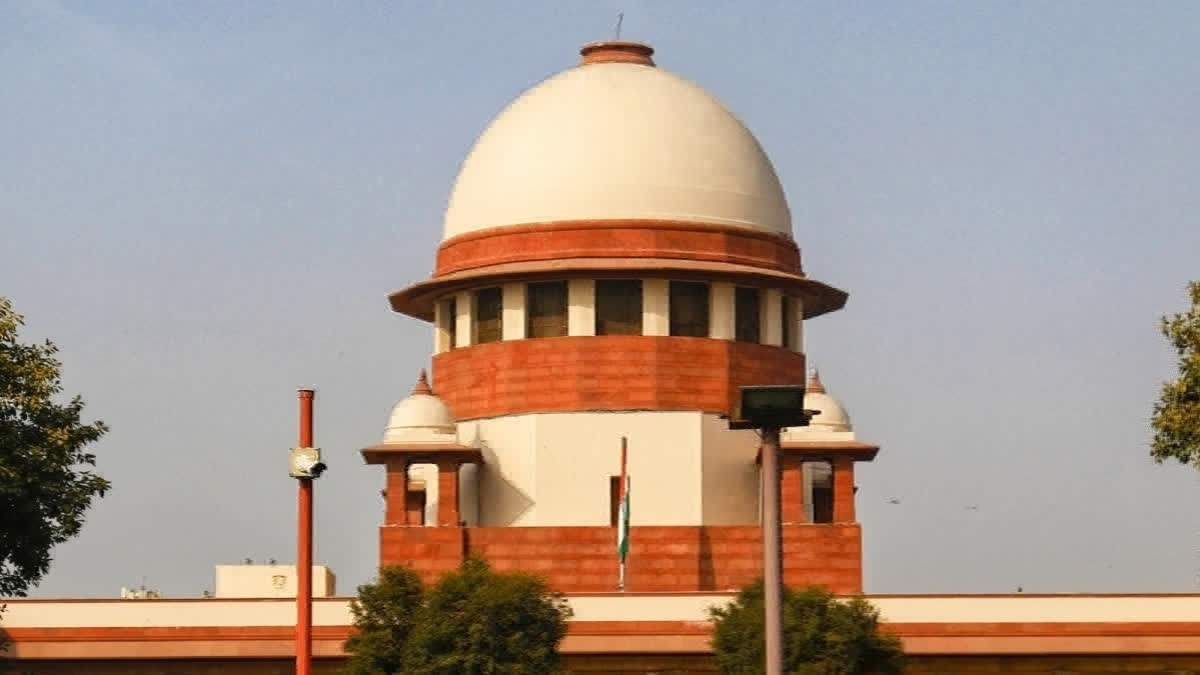
New Delhi: On Tuesday, the Supreme Court declined to suspend the “QR” code directive for restaurants along the Kanwar Yatra route in Uttar Pradesh and Uttarakhand, instructing all hotel proprietors in the area to display their licenses and registration certificates in accordance with legal requirements.
A panel of Justices M M Sundresh and N Kotiswar Singh stated that they would not address other matters regarding the display of the names of hotel or dhaba owners and the QR code, as Tuesday marked the final day of the Kanwar Yatra.
“We have been informed that today is the last day of the yatra. Regardless, it is expected to conclude shortly. Thus, at this moment, we will only issue an order mandating that all relevant hotel owners comply with the requirement to display their licenses and registration certificates as stipulated by law,” the bench remarked.
The Supreme Court was considering a petition submitted by academician Apoorvanand Jha and others.
Senior advocate Abhishek M Singhvi, representing the petitioners, argued that the UP government should have requested a modification of the court’s 2024 ruling prior to implementing the QR code directives.
Singhvi contended that the state government was attempting to marginalize and exclude minorities through its QR code directive for eateries along the Kanwar Yatra route.
“This is the most divisive initiative, aimed at ostracizing individuals during the yatra, as if these individuals are untouchables. Will my surname guarantee that ‘kanwariyas’ receive quality food rather than a menu card? This is the most divisive initiative imaginable,” the senior lawyer asserted.
Citing news reports regarding alleged assaults on certain shops by kanwariyas, the senior lawyer stated, “When you plant the seeds of division, the rest is managed by the public.” In response to his argument, Justice Sundresh noted that individuals have varied food preferences, and a vegetarian may opt to dine only at establishments that serve exclusively vegetarian cuisine, particularly during a religious pilgrimage.
Senior advocate Mukul Rohatgi, representing the Uttar Pradesh government, stated that directives were issued in accordance with the requirements set forth by the Food Safety and Standards Authority of India regulations.
“In this country, there are individuals who will refuse to eat at their brother’s house if meat is being prepared. There are the sentiments of devotees,” Rohatgi remarked, “and according to the regulations under the Act, they necessitate photo identification. Why are you hesitant to reveal your name? I fail to comprehend.” Senior advocate Huzefa Ahmadi, who is representing other petitioners, noted that the restaurants along this route exclusively offered vegetarian options during this time in compliance with local regulations.
Justice Sundresh pointed out that a customer should have the option to know if a venue is solely selling vegetarian food at all times.
“If a hotel operates as a vegetarian establishment consistently, then the need to indicate names and other details will not be necessary. However, if someone temporarily ceases to serve non-vegetarian food and only provides vegetarian options for the yatra, the consumer deserves to be informed,” the judge commented.
He added, “To that extent, consumers should have that flexibility. If a hotel previously served non-vegetarian dishes and, for the sake of improved business, decides to serve only vegetarian food during the yatra, it becomes a matter for consumer consideration. The choice ultimately lies with the consumer. The consumer is paramount.” The bench further indicated that it was not inclined to review the petition as the matter was rendered moot given that it was the final day of the yatra.
Last year, the Supreme Court had put a hold on similar directives issued by the governments of Uttar Pradesh, Uttarakhand, and Madhya Pradesh, which required eateries along the Kanwar Yatra route to display the names of their owners, staff, and other pertinent information.
Citing a press release from the UP government dated June 25, Jha stated, “The new regulations require QR codes to be displayed at all eateries along the kanwar route, which disclose the names and identities of the owners, thus reinstating the same discriminatory profiling that this court had previously suspended.” The petitioner argued that the state government’s order compelling stall owners to disclose their religious and caste identities under “lawful license requirements” infringes upon the privacy rights of shop, dhaba, and restaurant owners.
A significant number of devotees journey from various locations with “kanwars” carrying sacred water from the Ganga to conduct “jalabhishek” of Shivling during the Hindu month of “Shravan”.
Many practitioners abstain from eating meat throughout this month and often avoid dishes prepared with onion and garlic.
Leave a Reply